This guide is general education for pet owners. If your pet has urgent symptoms, possible poisoning, injury, breathing trouble, collapse, severe pain, or sudden decline, contact a licensed veterinarian or local emergency service.
Editorial standard
How this guide was prepared
Canine hypothermia represents a profound systemic depression of cellular metabolism resulting from prolonged cold ambient exposure, submersion in icy water, or secondary shock-induced thermoregulatory failure. While a healthy dog maintains a core internal temperature between 38.0°C and 39.2°C (100.4°F–102.5°F), heat loss exceeding the body’s metabolic production capacity initiates a lethal cascade of physiological decompensation. Small breeds, neonatal puppies, geriatric dogs with lean muscle wasting, wet animals, and short-coated breeds lose body heat at exponential rates. Understanding the critical demarcation between mild shivering compensation and life-threatening hypothermic stupor separates routine warming from urgent intensive care resuscitation.
Quick Answer: Differentiating Hypothermia Tiers
Mild hypothermia (37.0°C–37.9°C) manifests as vigorous physiological shivering, cold ears and paw pads, and restless searching for warmth; this responds safely to dry towel swaddling and warm room resting. Severe hypothermia (<35.0°C) is characterized by the cessation of shivering, marked mental stupor, glassy eyes, extreme bradycardia (slow heart rate), and profound weakness. Ceasing to shiver in freezing temperatures is not recovery—it indicates metabolic exhaustion and impending ventricular arrest requiring immediate in-hospital active rewarming.
Physiological Stages: The Hypothermic Cascade
As internal core temperature declines, canine organ systems shut down in predictable biological phases:
- Mild Hypothermia (37.0°C–37.9°C / 98.6°F–100.2°F): The autonomic nervous system mounts an aggressive compensatory defense. Massive sympathetic discharge stimulates involuntary muscular contractions (shivering) to generate metabolic heat. Peripheral vasoconstriction shunts blood away from extremities (ears, scrotum, paws) toward vital core thoracic organs. The heart rate and respiratory rate rise transiently.
- Moderate Hypothermia (35.0°C–36.9°C / 95.0°F–98.4°F): As cellular glycogen reserves deplete, shivering weakens and becomes sporadic. Peripheral vasoconstriction intensifies, producing pale, slate-gray, or cyanotic mucous membranes. Neurological conduction slows, manifesting as severe ataxia (wobbly gait), disorientation, and delayed pupillary light reflexes. The heart rate slows progressively (sinus bradycardia) as myocardial pacemaker cells become chilled.
- Severe Hypothermia (<35.0°C / <95.0°F): Shivering ceases completely as hypothalamic thermoregulatory centers fail. Cellular enzyme systems stall, triggering profound metabolic acidosis, coagulopathy (loss of blood clotting capability), and hypovolemia. The heart develops life-threatening electrical arrhythmias, transitioning from severe bradycardia to ventricular premature complexes, ventricular fibrillation, and asystole. The dog enters a comatose, flaccid state that can mimic clinical death.
Clinical Emergency Triage Matrix
| Triage Tier | Clinical Presentation | Required Action |
|---|---|---|
| Tier 1: Immediate Emergency (0-2h) | Core temperature <35.0°C; total cessation of shivering despite freezing cold; unresponsiveness, stupor, or coma; heart rate <40 beats per minute; pale or blue gums; extreme respiratory depression (<8 breaths per minute). | Wrap the dog in multiple dry insulating blankets. Transport immediately to an emergency veterinary hospital. Maintain warm transport vehicle ambient air; do not delay for home warming. |
| Tier 2: Same-Day Veterinary Evaluation (12-24h) | Core temperature between 35.0°C and 37.0°C; weak, sporadic shivering; severe lethargy and stumbling gait; pale or gray gums; frostbitten ear tips or paw pads that appear white, waxy, or purplish-black. | Initiate safe passive external rewarming with warm blankets. Contact an emergency clinic for veterinary evaluation and electrolyte / cardiac ECG screening. |
| Tier 3: Home Monitoring & Safe Warming | Core temperature 37.0°C–38.0°C; vigorous continuous shivering; alert and responsive mentation; normal pink mucous membranes; dog warms up and stabilizes within 30–45 minutes of entering a heated room. | Dry the dog thoroughly with clean towels. Provide warm bedding away from floor drafts. Offer warm low-sodium chicken broth if the dog is fully conscious and swallowing normally. Monitor temperature every 20 minutes until normalized. |
Dangerous Home Pitfalls: What NOT to Do (Rule S1)
- NEVER immerse a severely hypothermic dog in hot water or run hot baths: Rapid external warming dilates cold peripheral capillary beds, causing two lethal complications: “rewarming shock” (a massive drop in systemic blood pressure) and “core temperature afterdrop” (cold, highly acidotic blood from the extremities rushes back to the heart, triggering fatal ventricular fibrillation).
- NEVER apply electric heating pads or human hot water bottles directly to bare skin: Vasoconstricted, hypothermic dermal tissue has negligible blood circulation to dissipate heat, resulting in severe third-degree thermal contact burns and full-thickness skin sloughing within minutes.
- NEVER vigorously rub or massage frostbitten ears, paws, or tails: Frostbite freezes interstitial fluid into microscopic ice crystals. Massaging frozen tissues shears cell membranes like broken glass, causing permanent gangrenous tissue necrosis.
- NEVER force fluids or food into a stuporous or semi-conscious dog: Depressed swallowing reflexes create an immediate, catastrophic risk of pulmonary aspiration pneumonia.
Safe Veterinary Rewarming Protocols
In veterinary emergency critical care, rewarming must be executed deliberately to prevent cardiovascular collapse:
Passive External Rewarming: Appropriate for mild hypothermia. The patient’s own metabolic heat is captured using insulating blankets, fleece wraps, and a warm ambient room temperature (24°C–26°C / 75°F–79°F). Wet fur must be completely dried with warm air or towels immediately.
Active External Rewarming: Deployed for moderate hypothermia. Controlled convective warm-air blankets (such as veterinary Bair Huggers) apply indirect radiant heat focused strictly on the patient’s thorax and abdomen, leaving the distal limbs unheated to minimize peripheral vasodilation and afterdrop. Warm water bottles may only be used if wrapped in multiple thick towel layers and placed adjacent to the torso.
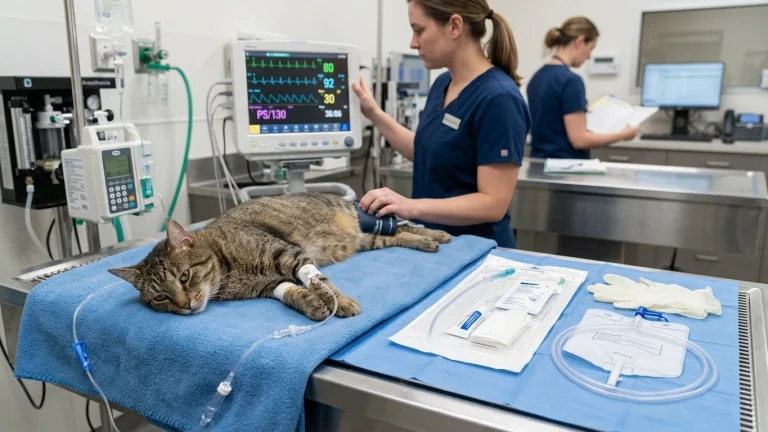
Active Core Internal Rewarming: Required for severe hypothermia (<32.0°C). Clinicians administer warmed intravenous crystalloid fluids (heated to 38.0°C–40.0°C via specialized fluid warmers), humidified heated oxygen therapy, and, in extreme cases, warm peritoneal or pleural lavage. Continuous electrocardiogram (ECG) monitoring is mandatory to identify and treat life-threatening ventricular arrhythmias.
Frequently Asked Questions
What is the normal rectal temperature for a dog?
A healthy adult dog maintains a normal rectal temperature between 38.0°C and 39.2°C (100.4°F to 102.5°F). Any temperature reading below 37.0°C (98.6°F) constitutes clinical hypothermia and warrants immediate intervention.
Why did my cold dog stop shivering even though they are still freezing?
Shivering ceases in moderate-to-severe hypothermia (typically when core temperature falls below 32°C–35°C) because cellular glycogen stores are exhausted and the brain’s thermoregulatory center fails. This is a critical medical warning sign of imminent cardiovascular collapse, not recovery.
How do I know if my dog has frostbite from cold exposure?
Frostbite affects peripheral tissues with low blood flow: ear tips, paw pads, and tail tips. In the acute stage, frostbitten skin feels hard, cold, and appears pale white, gray, or blue. Days later, as tissue dies, the area turns red, swollen, intensely painful, and eventually black and necrotic. Immediate veterinary assessment is essential.
Scientific Sources and Literature
- Oncken AK, et al. “Hypothermia in critically ill small animals.” Compendium on Continuing Education for the Practicing Veterinarian. PMID: 29472305
- Armstrong SR, et al. “Rewarming strategies and afterdrop in accidental hypothermia.” Journal of Veterinary Emergency and Critical Care. PMID: 28812613
- Solano-Gallego L, et al. “Microvascular thrombosis and peripheral tissue injury in canine cold trauma.” Veterinary Surgery. PMID: 30454794
Caregiver Cold Weather Safety Checklist
- Limit outdoor exposure to short 5-minute elimination walks when temperatures drop below freezing (0°C / 32°F).
- Thoroughly dry wet fur and towel-wipe paw pads immediately upon re-entering the home; remove packed snow and road salt.
- Check digital rectal temperature using a flexible pet thermometer lubricated with water-soluble petroleum jelly.
- Never leave pets unattended in unheated vehicles, garages, or outdoor enclosures during winter months.
- Fit small, short-coated, or senior dogs with well-fitted, windproof thermal coats during winter walks.
- Seek immediate emergency veterinary care if your dog exhibits mental stupor, glassy eyes, or persistent unresponsiveness.
Source transparency
Reference mix for this guide
Source labels describe the type of organization behind each reference; they are not a claim that any outside organization reviewed this article.
- Dog Shaking & Lethargic Differential Triage Reference source · newspet.net
- Dog Heatstroke Emergency Protocol Reference source · newspet.net
- Dog Bleeding & Hemorrhage First Aid Reference source · newspet.net
- Dog Vomiting: Home Monitoring vs Emergency Flags Reference source · newspet.net
- PMID: 29472305 Government or public agency · pubmed.ncbi.nlm.nih.gov
- PMID: 28812613 Government or public agency · pubmed.ncbi.nlm.nih.gov
- PMID: 30454794 Government or public agency · pubmed.ncbi.nlm.nih.gov