This guide is general education for pet owners. If your pet has urgent symptoms, possible poisoning, injury, breathing trouble, collapse, severe pain, or sudden decline, contact a licensed veterinarian or local emergency service.
Quick Answer
To measure your pet’s sleeping respiratory rate (SRR), wait until your dog or cat is in a deep, peaceful sleep in a cool, comfortable environment. Count the rise and fall of their chest as one single breath over 30 seconds, then multiply by 2 (or count for a full 60 seconds). A normal sleeping respiratory rate for healthy dogs and cats is consistently under 30 breaths per minute, typically resting between 15 and 25 breaths per minute. If your pet’s sleeping respiratory rate consistently exceeds 30 to 35 breaths per minute over multiple checks, contact your veterinary cardiologist immediately to evaluate for developing congestive heart failure or pulmonary disease.
Editorial standard
How this guide was prepared
Home monitoring of sleeping respiratory rate (SRR) has become one of the most clinically sensitive, non-invasive diagnostic tools available to modern veterinary medicine, particularly for pets diagnosed with heart murmurs, cardiomyopathy, valvular disease, or feline asthma. While dogs and cats often breathe rapidly in veterinary clinics due to stress, excitement, and novel smells, tracking their breathing rate while peacefully asleep at home provides an undistorted baseline of pulmonary function. Learning how to count breaths accurately enables owners to detect early subclinical pulmonary edema days before a pet enters acute congestive heart failure.
A change in sleeping respiratory rate provides an objective biological early-warning system. When the heart struggles to pump blood effectively, hydrostatic pressure backs up into pulmonary capillaries, causing fluid transudation into lung tissue (pulmonary edema) or the chest cavity (pleural effusion). Because this fluid buildup interferes with oxygen exchange, the animal’s brain stem reflexively accelerates resting respiratory rate long before overt clinical distress becomes visible.
The Clinical Science Behind Sleeping Respiratory Rate
Cardiologists emphasize sleeping respiratory rate over waking resting rate because waking animals are subject to environmental stimuli, ambient temperature shifts, dreaming, and cognitive arousal:
- Undistorted Cardiac Baseline: When a dog or cat is asleep, oxygen demand is minimal and autonomic tone is stable. Under these conditions, healthy lung mechanics require minimal effort and modest breathing frequency.
- Early Pulmonary Congestion Detection: In dogs with myxomatous mitral valve disease (MMVD) or dilated cardiomyopathy (DCM), and cats with hypertrophic cardiomyopathy (HCM), left atrial pressure rises. Elevated pulmonary venous pressure forces fluid into the pulmonary interstitium. The earliest physiological adaptation to reduced lung compliance is an elevated breathing rate during sleep.
- Preventing Critical Hospitalization: Studies published by the American College of Veterinary Internal Medicine (ACVIM) demonstrate that owners who systematically track SRR at home can alert their veterinary team to impending heart failure early, allowing safe outpatient adjustment of diuretic medications (like furosemide or torsemide) before acute respiratory crisis requires emergency oxygen cage admission.
Step-by-Step Protocol: How to Measure SRR Accurately

Follow these clinical guidelines to ensure your home respiratory log produces actionable, reliable medical data:
- Wait for True, Quiet Sleep: Your pet must be completely asleep, not merely lying down resting with eyes open. Wait at least 10 to 15 minutes after they fall asleep so their metabolic rate has stabilized.
- Ensure Environmental Neutrality: Avoid measuring immediately after vigorous exercise, high-excitement greetings, or in an excessively warm room where thermal panting may occur.
- Identify One Full Breath Cycle: Watch the chest or flank rise and expand (inhalation) and collapse back (exhalation). One expansion plus one contraction equals exactly ONE breath.
- Time with a Stopwatch: Using your smartphone or a clock, count the total number of breaths over 30 seconds and multiply that number by 2 to get breaths per minute (bpm). Alternatively, count for a full 60 seconds for maximum precision.
- Log the Count Daily: Record the date, time, and rate in a notebook or smartphone app once daily, preferably at the same time every day. Combine this with our pet symptom tracking timeline guide for comprehensive clinic preparation.
Interpreting the Numbers: Clinical Triage Thresholds
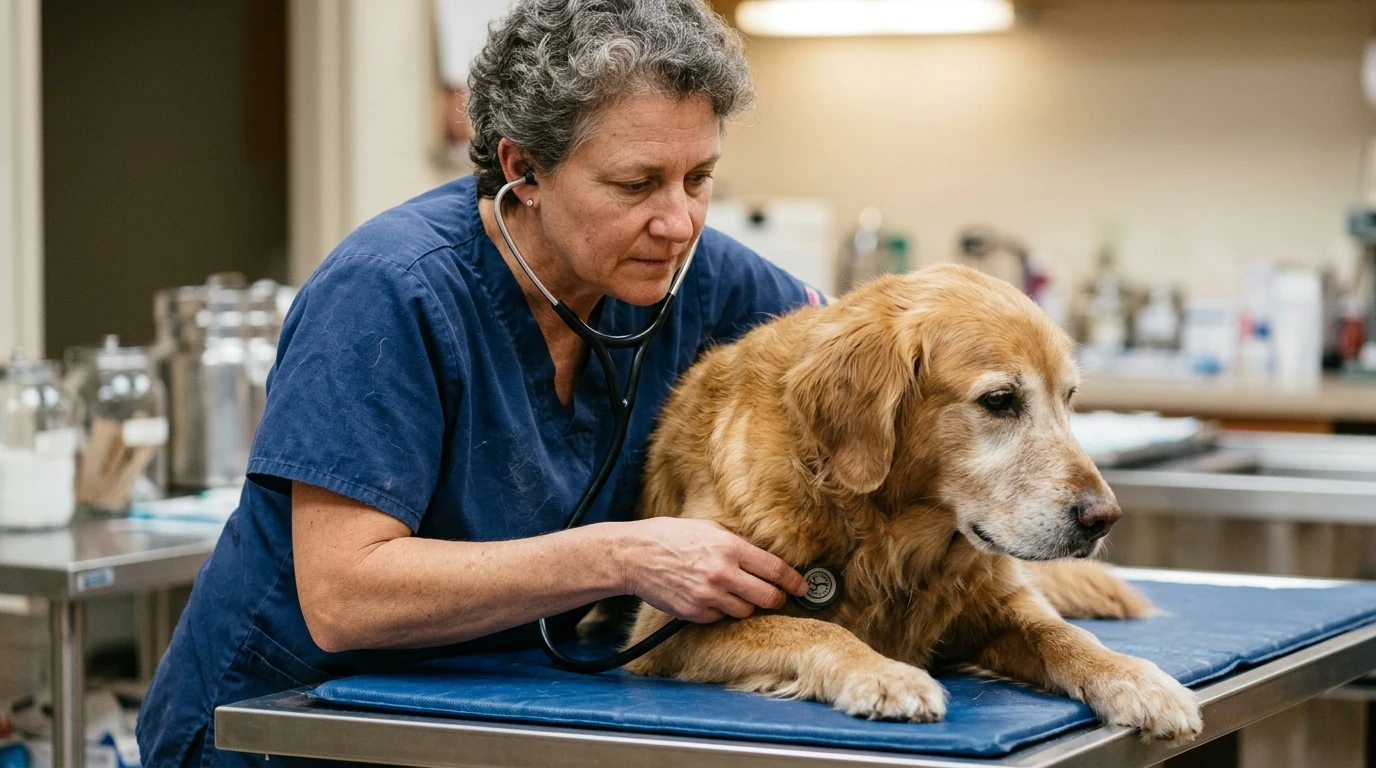
Veterinary cardiologists utilize standardized respiratory thresholds to guide owner action:
| Breaths Per Minute (SRR) | Clinical Classification | Recommended Action Plan |
|---|---|---|
| Under 25 bpm | Normal Baseline | Cardiopulmonary status is stable. Continue once-daily or weekly maintenance tracking as advised by your vet. |
| 25 to 30 bpm | Acceptable / Borderline | Within acceptable physiological limits, but approaching the upper threshold. Recheck in 12 hours. |
| 30 to 35 bpm | Elevated Warning Zone | Significant early warning marker. Recheck again in 1 to 2 hours when pet is calm. If consistently elevated, call your veterinary clinic to discuss medication adjustments. |
| Greater than 40 bpm | Critical Distress Red Flag | Impending or active pulmonary edema/effusion. Contact your veterinarian or transport pet to an emergency hospital immediately. |
Differentiating Normal Panting & Dreaming from True Respiratory Distress
Owners often confuse harmless physiological variations with serious clinical distress. Keep these key distinctions in mind:
- Dreaming and REM Sleep: During rapid eye movement (REM) sleep, pets may twitch paws, move whiskers, whimper softly, and display rapid, erratic breathing. If you suspect your pet is dreaming, wait until they settle into quiet slow-wave sleep before counting.
- Panting vs. Dyspnea in Dogs: Dogs pant with an open mouth and tongue hanging out to dissipate body heat through evaporative cooling. Panting is shallow, rapid (100–200 bpm), and occurs when warm or excited. True respiratory distress (dyspnea) involves exaggerated abdominal effort, flared nostrils, and difficulty breathing even when cool and calm.
- Feline Open-Mouth Breathing: Unlike dogs, cats NEVER pant as a normal response to mild warmth or excitement. Any open-mouth breathing, tongue protrusion, or abdominal pumping in a cat is an acute medical emergency requiring immediate veterinary oxygen therapy.
When to Contact a Veterinarian Immediately
If your pet demonstrates an SRR consistently exceeding 35 to 40 breaths per minute, has visibly laboured breathing with excessive abdominal heave, sits with their neck extended and elbows pointed outward, develops pale, bluish, or grey gum discoloration, coughs up pink-tinged frothy fluid, or collapses, seek immediate emergency veterinary hospital care. Do not wait for a routine appointment; acute pulmonary congestion requires immediate veterinary stabilization and diuretic therapy.
Clinical Practice Tool: Veterinary Visit Preparation Sheet
Track baseline sleeping respiratory rates (SRR) accurately for your clinician using our Veterinary Visit Preparation Sheet. Download and print your copy of the Veterinary Visit Preparation Sheet, or explore all practical pet care guides in the NewsPet Resource Center.
Sources
- American College of Veterinary Internal Medicine (ACVIM): Consensus Guidelines on Canine Mitral Valve Disease
- Texas A&M College of Veterinary Medicine: Resting and Sleeping Respiratory Rate Monitoring
- UC Davis School of Veterinary Medicine Cardiology Clinical Protocols
- VCA Animal Hospitals: Home Breathing Rate Monitoring for Dogs and Cats with Heart Disease
Interactive Resting Respiratory Rate (RRR) Counter
Count your resting or sleeping pet's breaths per minute using our timed clinical tap tool. Resting respiratory rate below 30 breaths/min is the veterinary baseline for canine and feline home monitoring.
Source transparency
Reference mix for this guide
Source labels describe the type of organization behind each reference; they are not a claim that any outside organization reviewed this article.
- American College of Veterinary Internal Medicine (ACVIM): Consensus Guidelines on Canine Mitral Valve Disease Veterinary organization · acvim.org
- Texas A&M College of Veterinary Medicine: Resting and Sleeping Respiratory Rate Monitoring Academic or extension · vetmed.tamu.edu
- UC Davis School of Veterinary Medicine Cardiology Clinical Protocols Academic or extension · vetmed.ucdavis.edu
- VCA Animal Hospitals: Home Breathing Rate Monitoring for Dogs and Cats with Heart Disease Reference source · vcahospitals.com