This guide is general education for pet owners. If your pet has urgent symptoms, possible poisoning, injury, breathing trouble, collapse, severe pain, or sudden decline, contact a licensed veterinarian or local emergency service.
Dosages must be calculated by a licensed veterinarian based on species, weight, and bloodwork. Never administer human medications or self-adjust prescription doses for pets.
Editorial standard
How this guide was prepared
In a 30-mph (48-km/h) automobile collision, an unrestrained 25-kg (55-lb) dog on the back seat is propelled forward with an impact force equivalent to approximately 750 kg (1,650 lbs), becoming a lethal projectile that suffers catastrophic thoracic and cranial trauma while striking human passengers. Even in minor fender-benders, unrestrained dogs and cats routinely bolt through shattered windows or opened doors into highway traffic before emergency responders arrive. Equally important, millions of dogs and cats suffer severe vestibular motion sickness and anticipatory travel nausea—drooling ropes of saliva, lip-smacking, yawning, and vomiting within 15 minutes of engine ignition—which rapidly sensitizes the animal into a lifelong car phobia unless treated with targeted vestibular antiemetics and counterconditioning.
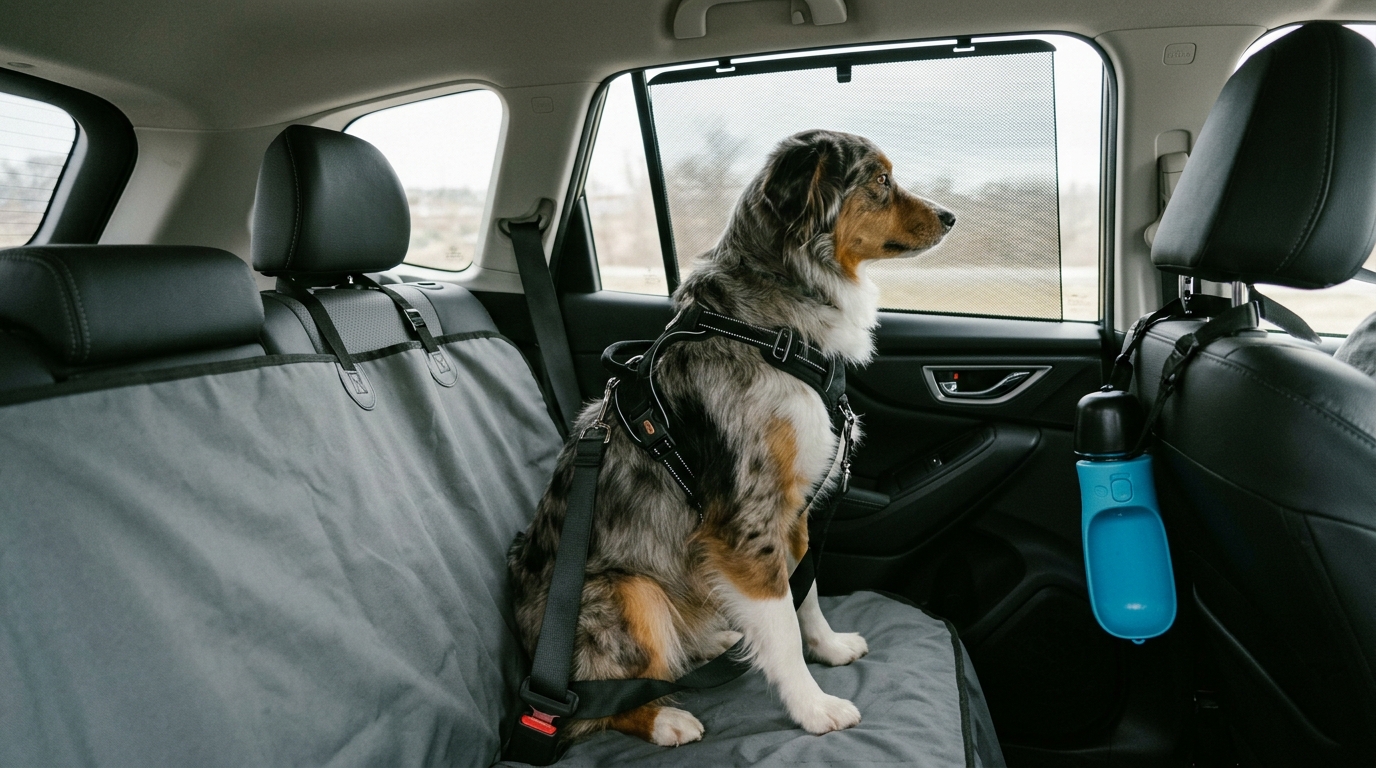
Clinical Quick Answer & Immediate Stabilization Protocol
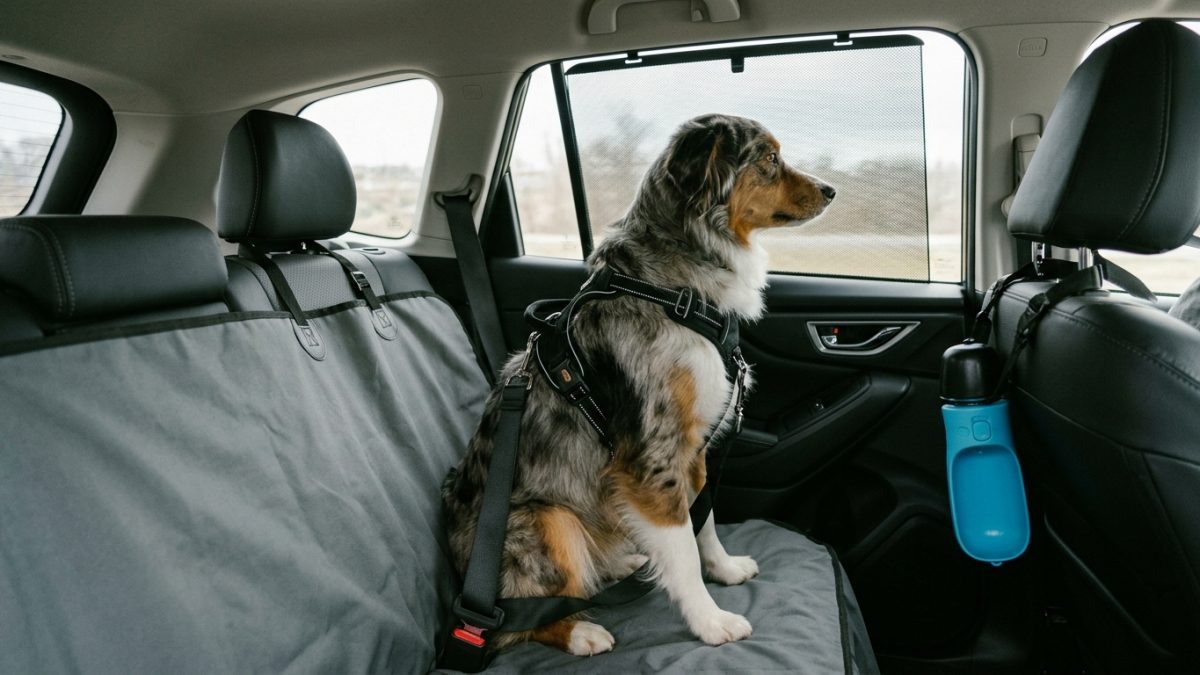
Primary Clinical Directive for Vehicular Collision Projectile Trauma, Vestibular Motion Sickness & Airline Travel Risk Triage: Secure every pet in the rear vehicle compartment using collision-engineered restraints verified by the Center for Pet Safety (CPS): place cats and small dogs (<10 kg) inside a hard-sided carrier strapped onto the rear seat or flat on the rear floorboard behind the front passenger seat, and secure medium-to-large dogs either inside a crash-tested rear cargo crate or a short-excursion broad-sternum crash harness threaded directly through the vehicle’s 3-point seatbelt (never long zip-line tethers). For motion sickness, withhold a large solid meal for 3 to 4 hours pre-departure and administer veterinary-prescribed maropitant citrate (Cerenia, which prevents vomiting without heavy sedation) 2 hours prior to travel.
Impact Kinetic Physics, Vestibular CRTZ Neurokinin-1 Signaling & Cargo-Hold Hypobaric Hypoxia
Independent sled crash testing at 30 mph using weighted canine crash-test dummies (conducted by the Center for Pet Safety) demonstrated that over 85 percent of retail “pet seatbelt tethers”—particularly long adjustable nylon straps with cheap zinc-alloy swivel clips or bungee cords—snap instantaneously or allow so much forward excursion (“head-toss distance”) that the dog slams violently into the front seatback and center console before rotating off the seat. A true crash-protective harness must utilize broad load-distributing chest webbing, all-steel load-rated hardware, and zero-extension integration directly with the vehicle’s locked 3-point pretensioner seatbelt (or LATCH/ISOFIX anchors within weight limits) to keep the dog’s torso pinned on the rear seat cushion during deceleration.
Physiologically, canine and feline travel motion sickness originates in the inner-ear vestibular labyrinth (specifically common in puppies and kittens under 12 months whose vestibular balance structures are still maturing). Conflicting sensory inputs between visual cabin walls and semicircular canal acceleration send signals via the eighth cranial nerve (CN VIII) to the vestibular nuclei and the Chemoreceptor Trigger Zone (CRTZ) in the brainstem area postrema. Within the CRTZ and emetic center, Substance P binds to Neurokinin-1 (NK-1) receptors to trigger hypersalivation, gastric relaxation, and forceful retching. Unlike older antihistamines (dimenhydrinate/diphenhydramine) that act weakly on peripheral H1 receptors and rely on drowsiness, maropitant citrate (Cerenia) selectively blocks central NK-1 receptors at the final common pathway of emesis, providing >90% prevention of motion vomiting while keeping the pet alert.
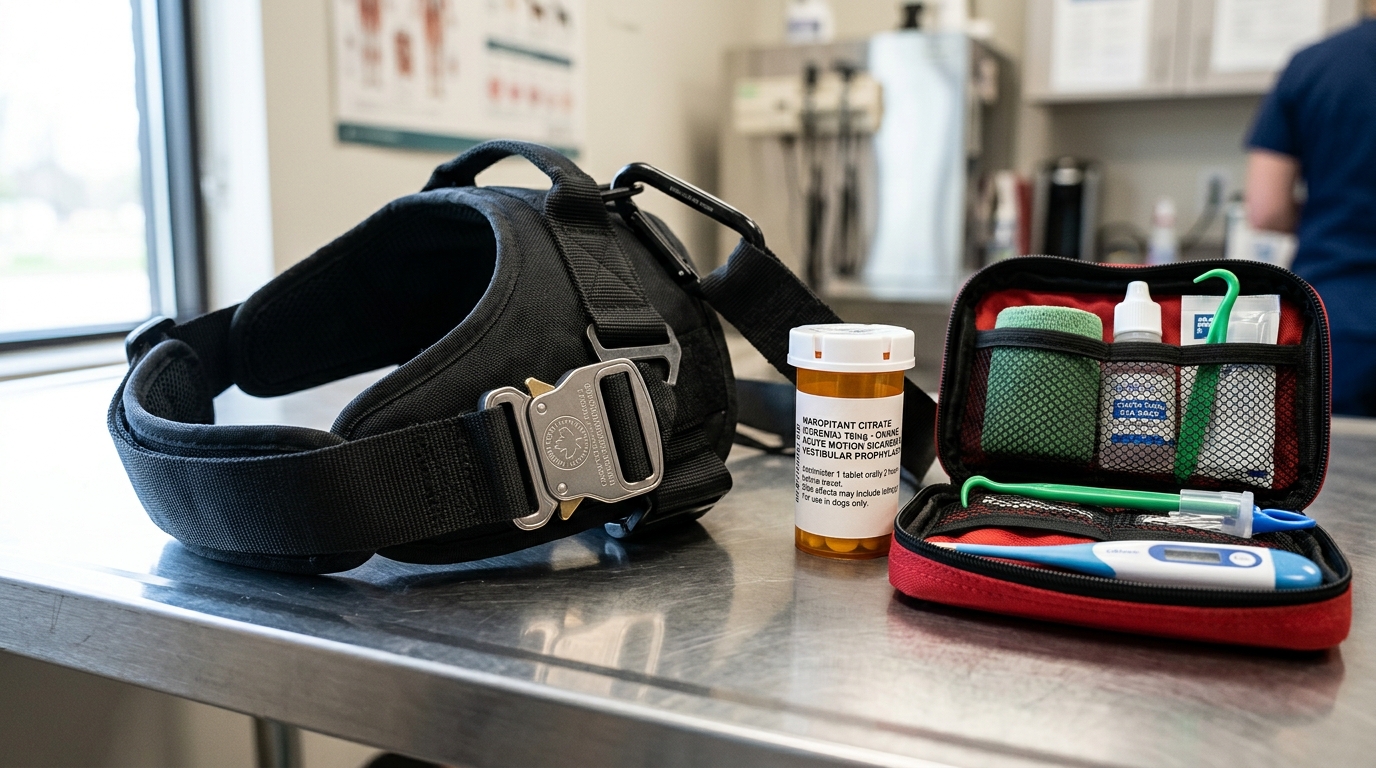
- Floorboard vs. Seat Placement for Small Carriers: Crash testing confirms that for small hard-sided carriers, placing the carrier flat on the rear floorboard snugly wedged behind the front passenger seat prevents forward launching far more effectively than strapping a thin plastic carrier shell across an adult seatbelt on top of the seat.
- Why Hanging One’s Head Out a Car Window Causes Corneal Trauma: Allowing a dog to stick its head out a moving car window at 45 mph bombards the cornea with high-velocity sand, asphalt grit, and insects—a leading cause of traumatic corneal ulceration and desiccative keratitis; keep windows cracked no more than 2 inches for fresh air.
- Anticipatory Conditioned Nausea (“Drooling in the Driveway”): After a puppy vomits in the car three times, the mere sight or smell of the car seat triggers Pavlovian conditioned nausea before the car even moves; breaking this loop requires giving maropitant for 3–4 calm stationary car-treat sessions before driving.
- Airline In-Cabin vs. Cargo Triage: Whenever flying with a small dog or cat (<8–10 kg), always travel in-cabin inside an airline-approved under-seat ventilated carrier; practice open-carrier naps for 4 weeks pre-flight and ensure all rabies titer, microchip (ISO 15-digit 11784/11785), and Certificate of Veterinary Inspection (CVI) timelines (typically issued within 10 days of flight) are verified.
Emergency Triage Matrix: Clinical Presentation & Required Response
| Triage Level | Clinical Signs & Presentation | Immediate Action Protocol |
|---|---|---|
| Tier 1: Post-Collision Vehicle Trauma or Parked-Car Heatstroke (0–15 Minutes) | Pet was inside a vehicle involved in any traffic collision (even if the pet walks around looking “fine” initially), or pet is discovered panting violently / collapsed inside a warm vehicle. | Clip a leash directly onto the harness BEFORE opening the car door so a panicked shock-adrenaline pet cannot bolt into highway traffic; transport every collision-involved pet immediately to a veterinary ER for AFAST ultrasound and thoracic radiographs to rule out delayed pneumothorax, pulmonary contusions, or splenic bleeding. |
| Tier 2: Profuse Travel Ptyalism (Drooling), Retching & Car Panic | Dog or cat begins lip-licking, yawning repeatedly, drooling thick ropes of saliva, trembling, howling, or vomiting bile/food within 10–30 minutes of car travel. | Consult your veterinarian 48 hours before your next trip for oral maropitant (Cerenia, dosed 2 hours pre-travel with a tiny tablespoon of food) paired with pre-visit gabapentin or trazodone if anxiety co-exists with nausea. |
| Tier 3: Stationary Counterconditioning & Long-Trip Hydration Stops | Pet enters the rear vehicle harness or carrier calmly and rests comfortably with cool cabin airflow directed to the back seat. | Stop every 2 to 3 hours in a safe area away from highway edges, clip the walk leash on BEFORE unbuckling the car harness/carrier, offer fresh water, and maintain rear air-conditioning. |
The Clip-Before-Unbuckle Escape Rule, Maropitant Timing & Stationary Car Desensitization
When dosing veterinary-prescribed maropitant (Cerenia) for canine or feline motion sickness, timing and stomach content dictate clinical success: administer the tablet 2 hours prior to departure alongside a very small snack (a single meatball of wet food or soft treat—never wrapped in a greasy piece of butter or cheese, and never on a completely empty stomach, as taking maropitant on an empty stomach frequently causes transient nausea of its own, while withholding a full meal for 3 hours pre-trip keeps gastric volume low). Because maropitant has a 24-hour duration of action, a single morning dose covers an entire day of road travel.
To prevent highway rest-stop escapes—one of the most tragic causes of lost pets on vacation—enforce the “Clip-Before-Unbuckle” household rule: before any car door or tailgate is opened at a gas station or rest stop, reach into the back seat and clip your 6-foot walking leash onto your dog’s harness D-ring and slip the leash loop over your wrist FIRST, before unbuckling the seatbelt tether or opening the crate latch. For cats on long road trips, never take a cat out of its carrier outdoors at a rest stop; offer water and a disposable travel litter tray inside the locked vehicle cabin with all doors and windows shut.
- Rear AC Vent Airflow Verification: Vehicle rear cargo areas (SUV trunks) and rear floorboards can be 10°F to 15°F hotter than the front driver’s zone when sunlight beats through the rear hatch glass; always angle center dashboard vents toward the back seat and use static-cling mesh sunshades on rear side windows.
- Two ID Tags on Long Trips (Home + Travel Cell/Destination): Attach a temporary travel tag with your cell phone number and destination hotel/campground address alongside your pet’s permanent tag and pack a printed copy of rabies vaccination certificates and current medications.
- Stationary Engine-Off Car Picnics for Car-Phobic Dogs: Recondition a car-sick dog by walking out to the parked, engine-off car in your driveway once daily, feeding a 2-minute jackpot of roast chicken on the back seat with the doors wide open, and walking right back inside the house without starting the engine for 5 days.
- Never Sedate an In-Cabin or Cargo Airline Pet With Acepromazine: The AVMA and IATA explicitly advise against sedating flying pets with phenothiazines (acepromazine); at 8,000-foot cabin pressure altitude, tranquilizers impair postural balance reflexes during turbulence, depress respiratory drive, and cause fatal hypothermia or hyperthermia.
Strict Rule S1 Clinical Red Flags: Vehicular Collision Projectile Trauma, Vestibular Motion Sickness & Airline Travel Risk Triage
Critical safety boundaries for Canine & Feline (Canis lupus familiaris & Felis catus — All Life Stages) caregivers:
- Zero Neck-Collar Seatbelt Tethers or Open Pickup Truck Transport: Never attach a car seatbelt tether to a neck collar (which decapitates or crushes the larynx during a sudden brake stop), and never carry a dog loose or tethered in an open pickup truck bed.
- Zero Airline Cargo-Hold Flights for Brachycephalic Breeds or Sedated Pets: Never ship a brachycephalic dog or cat in an aircraft cargo hold, and never administer heavy tranquilizers (acepromazine) before air flight without explicit veterinary clearance.
Clinical Preparation & Biosecurity Action Checklist
- Verify that your dog’s car harness or travel crate has passed dynamic crash testing (Center for Pet Safety certified) and secure it strictly in the rear seat or cargo zone away from front airbags.
- Withhold a full solid meal for 3 hours before road travel and administer vet-prescribed maropitant (Cerenia) with one small meatball of food 2 hours before departure.
- Enforce the “Clip-Before-Unbuckle” rule at every gas station and rest stop: attach your walking leash and secure your wrist grip before opening the crate or unbuckling the car harness.
- Pack a travel medical folder containing printed rabies/vaccine records, a 7-day buffer of prescription medications, your pet’s 15-digit microchip number, and a recent full-body color photo.
Related Clinical Guides & Triage Protocols
Peer-Reviewed Clinical References & Evidence Grounding
- Efficacy and safety of maropitant, a selective neurokinin-1 receptor antagonist, for the prevention of motion sickness and emesis in dogs (opens in new tab) (Journal of Veterinary Pharmacology and Therapeutics (2008) — Multi-center randomized clinical trial by Conder et al. indexed on NCBI PubMed (PMID: 18440529).)
- Evaluation of the antiemetic efficacy of maropitant citrate in cats experiencing motion-induced nausea and emesis (opens in new tab) (Journal of Veterinary Internal Medicine (2016) — Peer-reviewed feline clinical study indexed on NCBI PubMed (PMID: 26890517).)
- AVMA Traveling With Your Pet Guidelines: Crash Restraints, Cargo Air Sedation Contraindications, and Health Certificates (opens in new tab) (American Veterinary Medical Association clinical and regulatory travel safety standards.)
- Center for Pet Safety (CPS) Dynamic 30-mph Sled Crash Test Standards for Canine Harnesses, Carriers, and Travel Crates (opens in new tab) (Independent automotive safety engineering crash-test authority for pet restraint systems.)
Source transparency
Reference mix for this guide
Source labels classify the institutional category of the references cited above.