Editorial standard
How this guide was prepared
According to epidemiological surveys by the American Association of Feline Practitioners (AAFP), more than 50 percent of owned domestic cats do not receive annual veterinary wellness care—and the number-one barrier cited by caregivers is the severe psychological trauma of forcing a terrified cat into a carrier and listening to distress vocalizations during the drive. When a carrier lives in a dusty garage or closet 364 days a year and only materializes five minutes before a car ride, the cat rapidly learns via classical conditioning that the sight of the plastic box predicts capture, motion sickness, and needles. Transforming veterinary transport requires converting the carrier into a permanent piece of living-room furniture and a voluntary cooperative sanctuary.
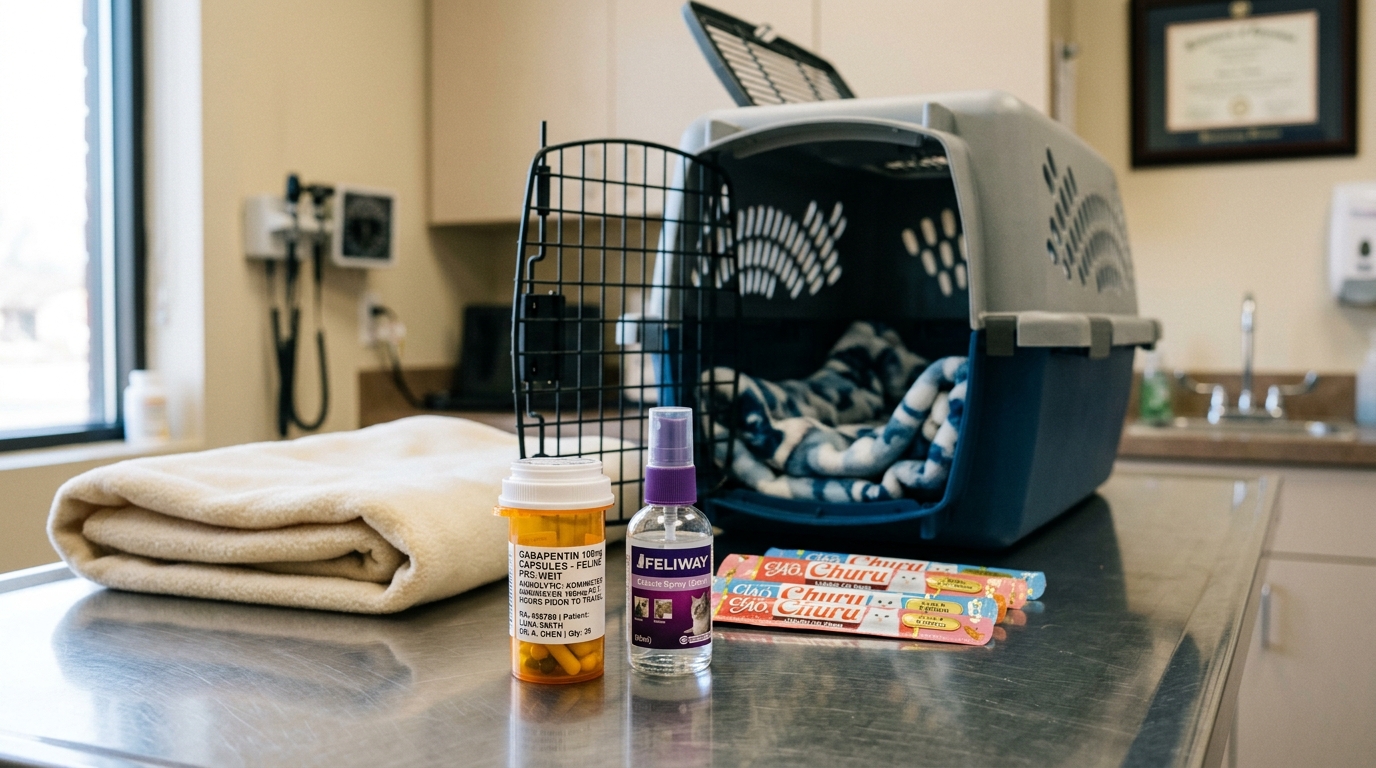
Clinical Quick Answer & Immediate Stabilization Protocol
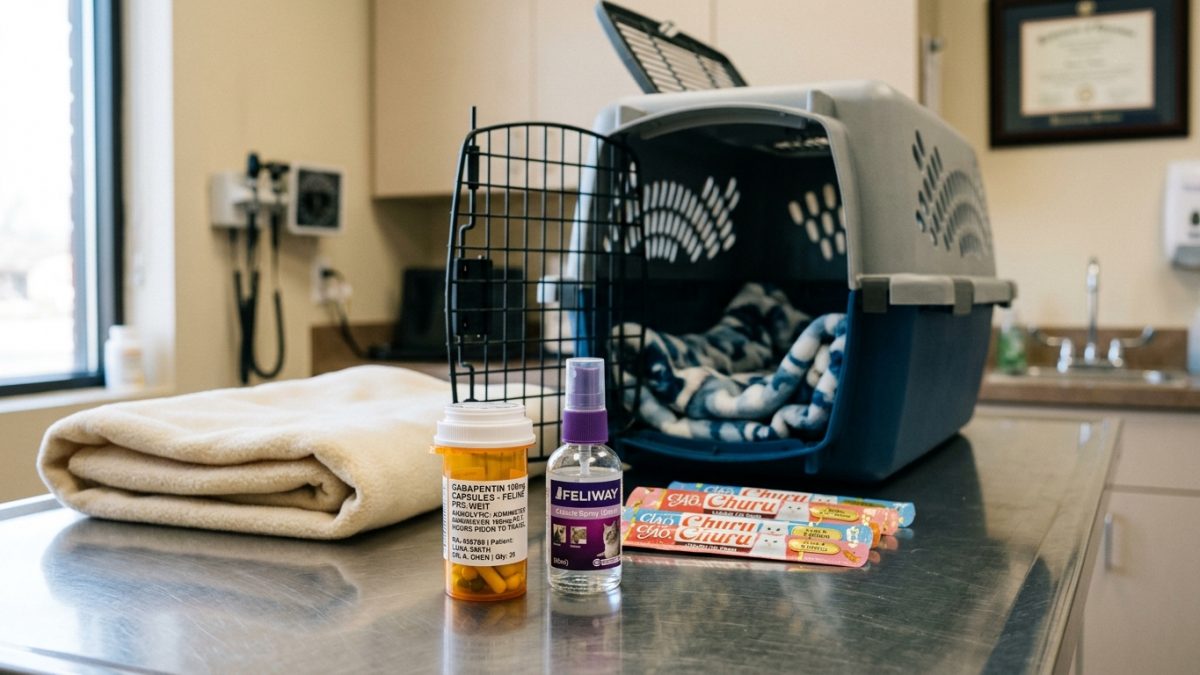
Primary Clinical Directive for Feline Transport Capture Panic, Vestibular Motion Nausea & Post-Clinic Non-Recognition Aggression: Leave a hard-sided carrier with an easily removable top shell open in your cat’s favorite quiet room year-round, lined with a familiar fleece blanket that carries your cat’s facial scent glands. Feed daily high-value treats or wet-food snacks inside the lower half of the carrier (starting with the top lid removed if your cat is fearful), mist a cover towel with synthetic F3 feline facial pheromone 15 minutes before departure (allowing the alcohol carrier to evaporate completely before the cat enters), carry the carrier level against your chest using both arms rather than swinging it by the top handle, and re-introduce returning cats to multi-cat housemates slowly to prevent clinic-odor non-recognition aggression.
Capture Stress Catecholamines, Vestibular Motion Sickness & Olfactory Non-Recognition Aggression
A cat’s stress trajectory does not start at the veterinary clinic door; it starts at home the moment the owner walks differently, closes bedroom doors to block hiding under the bed, and brings out the carrier. The subsequent chase and backward stuffing through a narrow front wire door activates an acute survival fight-or-flight cascade: serum epinephrine and cortisol surge within 60 seconds, splenic contraction elevates packed cell volume, stress hyperglycemia spikes blood glucose, and core temperature rises. During vehicle transit, swinging the carrier by its top plastic handle induces pendular vestibular motion sickness, while leaving the wire sides uncovered exposes a ground-level prey/predator animal to a terrifying 60-mph blur of passing trucks.
Furthermore, in multi-cat households, the trauma often continues AFTER returning home. Domestic cats recognize colony members primarily through a shared group olfactory profile (F3/F4 facial pheromones and sebaceous gland lipids) rather than visual facial features. When one cat returns from the veterinary hospital smelling of isopropyl alcohol, latex gloves, dog dander, and alarm pheromones from expressed anal sacs, resident housemates frequently fail to recognize the returning cat—triggering vicious “non-recognition aggression” that can shatter a peaceful multi-cat bond for months.
- Two-Halves Removable-Shell Architecture: A hard-sided carrier connected around its equator by quick-release bolts or latches allows the veterinary clinician to lift off the top roof quietly and examine the cat while it remains nestled inside its familiar, scent-marked bottom half.
- The Alcohol Evaporation Rule for Feliway (15 Minutes): Synthetic F3 pheromone sprays use an ethanol/isopropanol volatile vehicle; spraying a towel while the cat is inside—or loading the cat before waiting 15 minutes for the alcohol vapor to dissipate—triggers aversive sneezing and facial avoidance.
- Grocery-Bag Handle Pendulum Effect: Carrying a cat carrier by the single top handle causes the box to swing against the human’s knees with every stride, creating severe vestibular disorientation; always cradle the bottom base of the carrier horizontally with both forearms.
- Pre-Visit Gabapentin & Maropitant Synergy: Oral gabapentin administered 2 to 3 hours prior to carrier loading attenuates amygdala fear and neuropathic handling hyperesthesia, while maropitant (Cerenia) blocks NK-1 vomiting receptors in the brainstem for cats prone to car-ride ptyalism and emesis.
Emergency Triage Matrix: Clinical Presentation & Required Response
| Triage Level | Clinical Signs & Presentation | Immediate Action Protocol |
|---|---|---|
| Tier 1: Open-Mouth Panting, Cyanosis or Acute Transport Collapse | Cat begins open-mouth breathing (panting), exhibits blue/pale gums, collapses laterally, or thrashes violently enough to bleed from claws inside the carrier during transit. | Maintain air conditioning directed gently into the back seat, keep the carrier covered with a breathable towel, avoid opening the carrier door inside a car with unlocked doors/windows, and alert the clinic by phone for immediate oxygen triage upon arrival. |
| Tier 2: Severe Carrier Phobia, Ptyalism (Drooling) & Post-Visit Inter-Cat Hissing | Cat bolts under beds at the sight of the carrier, drools or vomits within 10 minutes of driving, or resident cats hiss and puff their tails when the patient returns home. | Administer vet-prescribed pre-visit gabapentin 2–3 hours before loading, fast food for 2–3 hours pre-trip to reduce nausea, and isolate the returning cat in a sanctuary bedroom for 12–24 hours while rubbing all cats with a shared dry washcloth to restore colony scent. |
| Tier 3: Voluntary Daily Sanctuary Den & Cooperative Entry | Cat naps voluntarily inside the open living-room carrier during the week and steps inside calmly to lick a squeeze-tube treat when the door is closed briefly. | Continue tossing 2–3 daily freeze-dried treats into the back of the carrier and practice 30-second level lifts followed by immediate reward release. |
Bottom-Half Desensitization, Level Seatbelt Securing & Post-Visit Scent Re-Integration
To rehabilitate a cat with established carrier trauma, start by disassembling the carrier completely: remove the wire front door and unlatch the top half, leaving only the open bottom plastic tray sitting in a sunny, quiet corner of the living room lined with a soft fleece mat. For the first 7 days, never touch the cat when it is near the tray; simply drop high-value treats, catnip, or silvervine onto the fleece twice a day so the cat discovers a “magic snack bed.” Once the cat naps voluntarily in the bottom tray, re-attach the top roof (still without the front door) for week two, and finally re-attach the front door and practice feeding a lickable puree tube through the side vents while latching the door for 5 to 30 seconds.
During vehicle transport, place the carrier on the flat rear floorboard behind the front passenger seat OR secure it level on the back seat using a rolled towel wedged underneath to counteract seat slope and thread the vehicle seatbelt through the carrier handle. Cover all four sides of the carrier with a lightweight, pheromone-pre-treated cotton towel to block alarming visual movement.
- Never Tip, Shake, or Reach Into a Carrier to Drag a Cat Out: If an urgent trip is required before full conditioning is complete, place the cat gently into the open bottom half of the disassembled carrier while wrapped in a familiar towel, then lower and latch the top half down over the cat—never shove a cat head-first or tail-first through a narrow front grate.
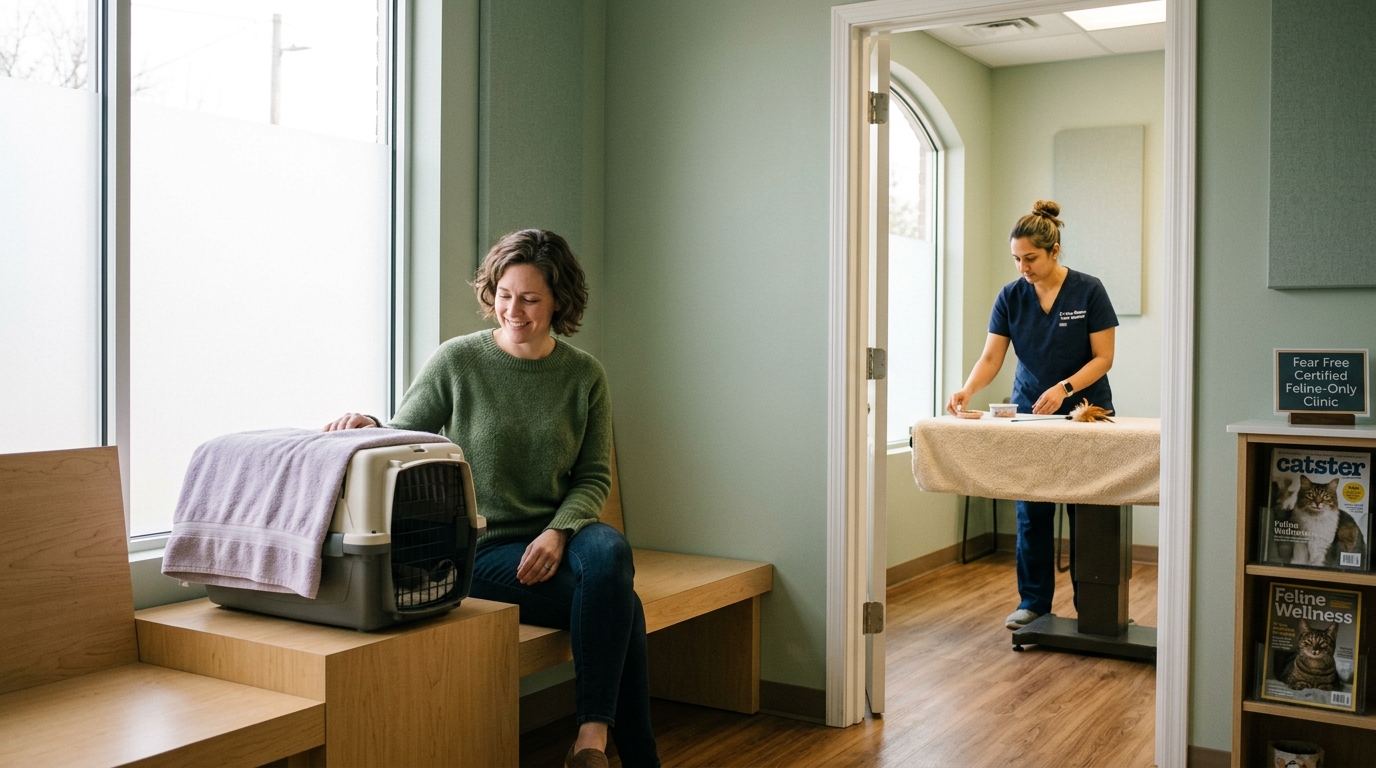
- Floor-Level Elevation in Clinic Lobbies: Never set a cat carrier on the clinic floor where passing dogs can sniff the grate; hold the carrier on your lap or place it on an elevated cat-only shelf with the towel cover facing away from lobby traffic.
- The Shared-Towel Scent Swap Protocol After Vet Visits: Before opening the carrier at home in a multi-cat house, take a clean dry towel from the laundry basket, rub the cheeks and flanks of the resident home cats, then rub the returning cat thoroughly with that same towel inside a closed bedroom to overwrite hospital antiseptic odors.
- Carrier Hygiene After Soiling Events: If a cat urinates or expresses anal glands inside a carrier during a stressful trip, wash the plastic shell thoroughly with an enzymatic cleaner and mild dish soap before returning it to the living room; leftover alarm pheromones will cause all household cats to avoid the carrier.
Strict Rule S1 Clinical Red Flags: Feline Transport Capture Panic, Vestibular Motion Nausea & Post-Clinic Non-Recognition Aggression
Critical safety boundaries for Feline (Felis catus — All Life Stages, Single & Multi-Cat Households) caregivers:
- Zero Acepromazine Monotherapy for Feline Transport Anxiety: Never use phenothiazine tranquilizers (acepromazine) alone to sedate a fearful cat for travel; acepromazine provides motor immobilization without anxiolysis (leaving the cat mentally terrified while physically unable to move) and causes hypotension and thermoregulatory instability.
- Zero Loose Vehicle Transport or Unventilated Car Parking: Never drive with an uncrated cat loose in the car cabin, and never leave a cat inside a parked vehicle even for 5 minutes; greenhouse solar heating raises cabin temperatures to lethal levels within minutes.
Clinical Preparation & Biosecurity Action Checklist
- Select a rigid hard-sided carrier featuring both a large top-loading hatch and perimeter bolts/latches that allow the entire top half to lift off in 15 seconds.
- Leave the carrier out permanently in a favorite quiet room as an open resting bed and toss 2 freeze-dried treats inside every evening.
- Spray a lightweight breathable cover towel with F3 facial pheromone 15 to 20 minutes before loading so all alcohol solvent evaporates prior to cat contact.
- Keep returning veterinary patients separated in a cozy sanctuary bedroom for at least 4 to 12 hours in multi-cat homes until hospital odors dissipate and gabapentin ataxia resolves.
Related Clinical Guides & Triage Protocols
Peer-Reviewed Clinical References & Evidence Grounding
- 2022 AAFP/ISFM Cat Friendly Veterinary Interaction Guidelines: Carrier Preparation, Transport, and In-Carrier Examination (opens in new tab) (Journal of Feline Medicine and Surgery (2022) — International consensus guidelines by Rodan et al. indexed on NCBI PubMed (PMID: 36346284).)
- Effects of single-dose oral gabapentin on fear and compliance during veterinary transport and examination in cats (opens in new tab) (Journal of the American Veterinary Medical Association (2017) — Randomized clinical trial by van Haaften et al. indexed on NCBI PubMed (PMID: 29094649).)
- Efficacy of carrier training in reducing stress-related behavior and examination time in domestic cats (opens in new tab) (Applied Animal Behaviour Science (2018) — Peer-reviewed study by Pratsch, Mohr, Hoy & Hammerschmidt (PMID: 29560802).)
- AAFP Cat Friendly Homes: Getting Your Cat to the Veterinarian and Preventing Post-Visit Aggression (opens in new tab) (American Association of Feline Practitioners caregiver and clinical transport protocol.)
Source transparency
Reference mix for this guide
Source labels classify the institutional category of the references cited above.