This guide is general education for pet owners. If your pet has urgent symptoms, possible poisoning, injury, breathing trouble, collapse, severe pain, or sudden decline, contact a licensed veterinarian or local emergency service.
Dosages must be calculated by a licensed veterinarian based on species, weight, and bloodwork. Never administer human medications or self-adjust prescription doses for pets.
Editorial standard
How this guide was prepared
Canine Pyometra is a hormone-driven, life-threatening bacterial infection of the uterus occurring in intact (unspayed) female dogs during the luteal phase (diestrus), typically 2 to 10 weeks after the conclusion of a heat cycle (estrus). Affecting roughly 20 to 25 percent of all unspayed female dogs before 10 years of age, pyometra develops when repeated cycles of prolonged ovarian progesterone exposure induce Cystic Endometrial Hyperplasia (CEH), enabling ascending vaginal bacteria—predominantly uropathogenic Escherichia coli—to colonize thefluid-filled uterine lumen. Without rapid intravenous fluid resuscitation and emergency surgical ovariohysterectomy, gram-negative lipopolysaccharide (LPS) endotoxemia, acute renal tubular dysfunction, and transmural uterine rupture rapidly prove fatal.
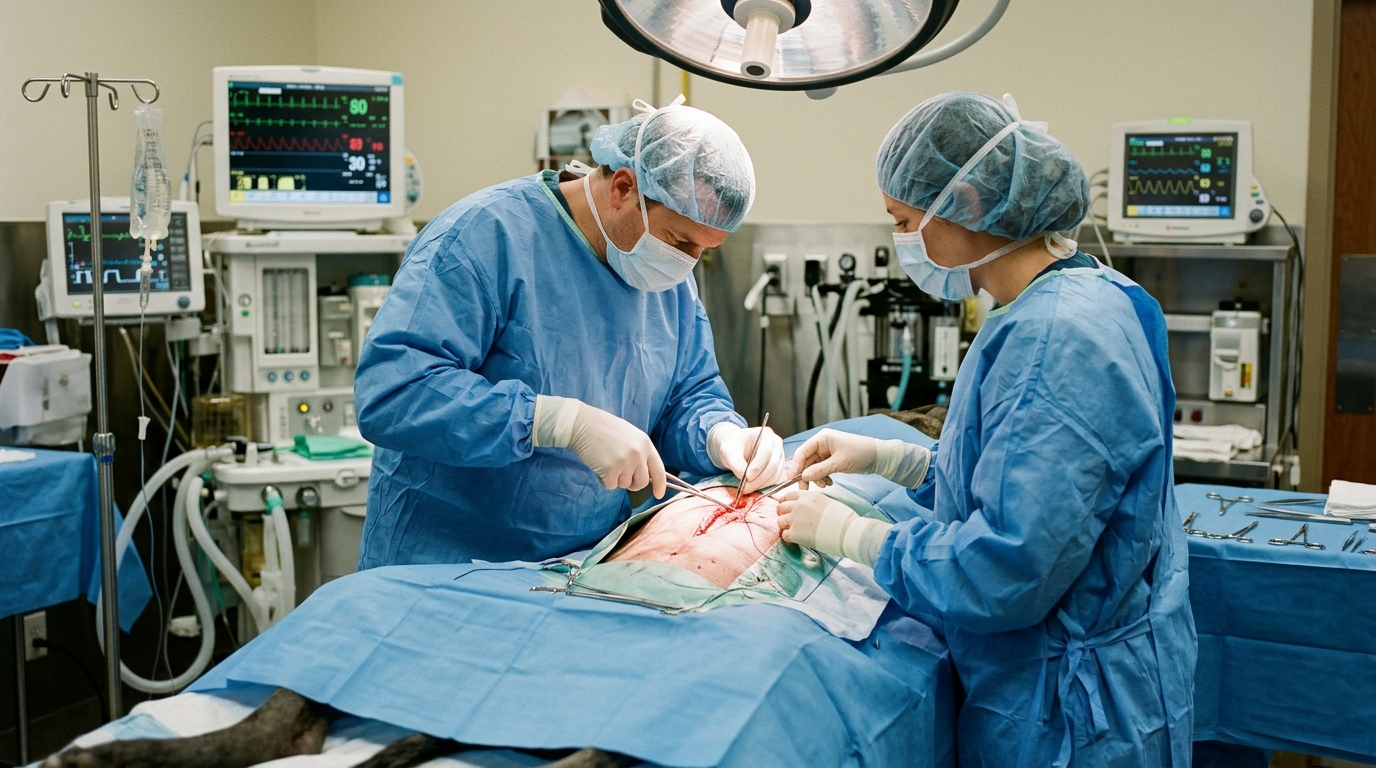
Clinical Quick Answer & Immediate Stabilization Protocol
Primary Clinical Directive for Canine Open-Cervix & Closed-Cervix Pyometra (Cystic Endometrial Hyperplasia–Pyometra Complex): Suspect pyometra immediately in any intact female dog presenting 2 to 12 weeks after her last heat cycle with sudden excessive water drinking and urination (polyuria/polydipsia), lethargy, anorexia, vomiting, or hindlimb weakness. In Open-Cervix Pyometra, a foul-smelling, purulent or sanguinopurulent (“tomato-soup” or cream-colored) discharge drains from the vulva. In Closed-Cervix Pyometra—the far more lethal presentation—the cervix remains tightly sealed under progesterone dominance, trapping liters of purulent exudate inside the uterine horns and driving severe abdominal distension, marked leukocytosis with a degenerative left shift, and septic shock. Definitive treatment of choice is immediate IV crystalloid and broad-spectrum bactericidal antibiotic stabilization followed by emergency ovariohysterectomy.
Luteal Progesterone Immunosuppression, E. coli Endotoxin Nephropathy & Closed-Cervix Rupture
Unlike most mammals, the canine corpus luteum secretes high concentrations of progesterone for 60 to 70 days following ovulation regardless of whether the bitch is pregnant. Under continuous progesterone stimulation (often compounded by exogenous estrogen “mismating” shots or progestin drugs), the endometrial lining proliferates and forms mucin-filled cystic glands (Cystic Endometrial Hyperplasia). Simultaneously, progesterone suppresses myometrial smooth muscle contractions, inhibits leukocyte migration into the uterine lumen, and functionally closes the cervical canal.
During late estrus while the cervix is still partially open, commensal fecal and vaginal Escherichia coli strains ascend into the progesterone-primed uterine cavity and adhere strongly to endometrial receptors via Type-1 fimbriae. As bacterial proliferation fills the uterine horns with pus, massive quantities of bacterial lipopolysaccharide (LPS) endotoxin enter the maternal bloodstream. Circulating Escherichia coli endotoxin directly antagonizes antidiuretic hormone (ADH / vasopressin) receptors in the renal medullary collecting ducts—causing an acquired nephrogenic diabetes insipidus characterized by striking polyuria and polydipsia—while immune-complex deposition in the renal glomeruli causes protein-losing membranoproliferative glomerulonephritis.
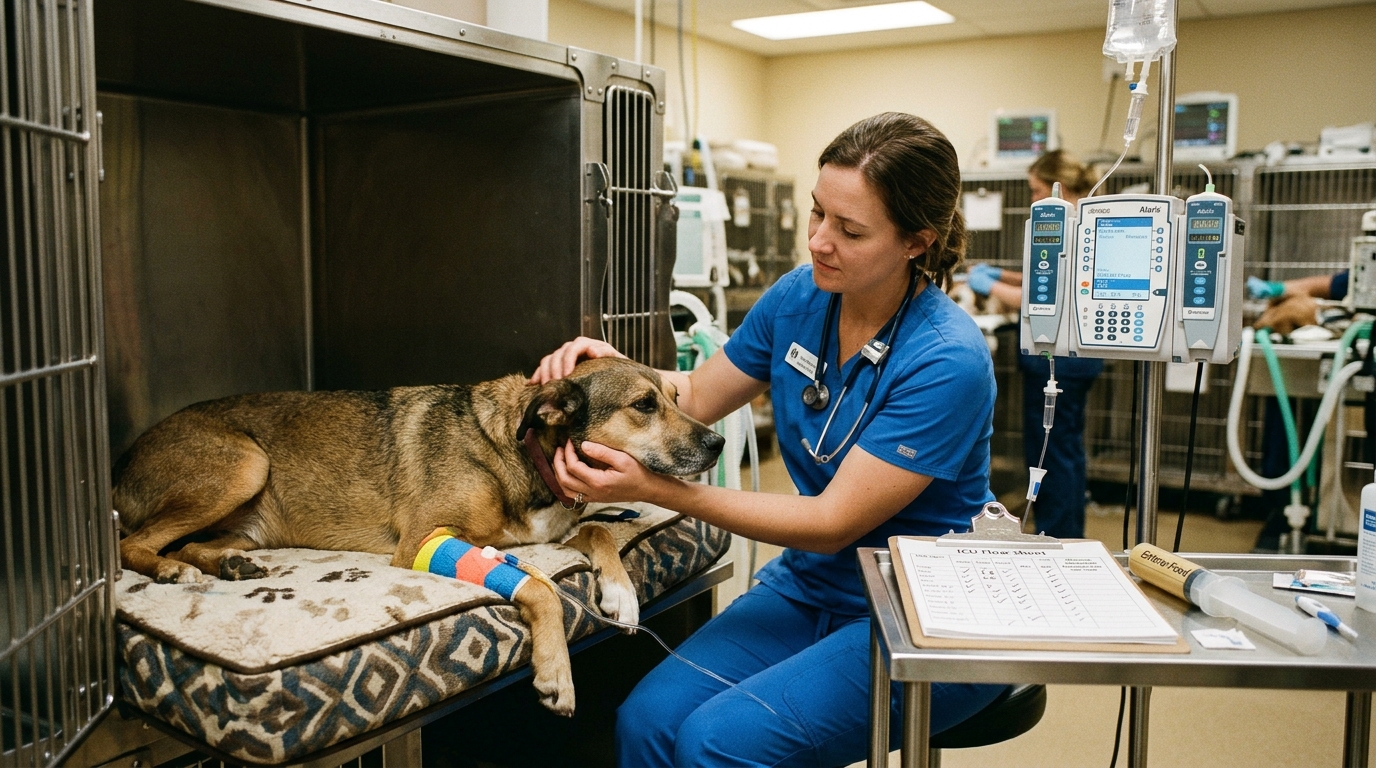
- Open-Cervix vs. Closed-Cervix Pathophysiology: When the cervix remains patent, pus drains externally, lowering intrauterine pressure; when the cervix is tightly closed, intrauterine pressure causes transmural ischemic necrosis, bacterial translocation across the uterine serosa, and catastrophic uterine rupture into the peritoneal cavity.
- Endotoxin-Induced Secondary Nephrogenic Diabetes Insipidus: Owners frequently mistake the earliest sign of pyometra—dramatic water consumption and dilute urine (USG 1.004–1.007)—for a simple bladder infection or diabetes mellitus.
- Leukemoid Reaction vs. Sequestration Leukopenia: Closed-cervix pyometra classically triggers an extreme neutrophilic leukocytosis (30,000 to >80,000 WBC/µL) with toxic band neutrophils, though peracute endotoxic sepsis or uterine sequestration can cause sudden leukopenia.
- Stump Pyometra in Incompletely Spayed Bitches: If residual functional ovarian tissue (ovarian remnant syndrome) or exogenous hormone exposure stimulates a retained uterine body remnant after a prior spay, purulent infection can develop in the uterine stump.
Emergency Triage Matrix: Clinical Presentation & Required Response
| Triage Level | Clinical Signs & Presentation | Immediate Action Protocol |
|---|---|---|
| Tier 1: Immediate Emergency (0–1 Hour) | Intact female dog (2–12 weeks post-heat) with abdominal distension, vomiting, collapse, pale/brick-red gums, fever (>103.5°F) or hypothermia (<99.0°F), or foul purulent/bloody vulvar discharge with lethargy. | Transport immediately to an emergency surgical hospital; avoid abdominal compression during lifting, initiate aggressive IV fluid boluses and parenteral broad-spectrum antibiotics, and proceed to emergency ovariohysterectomy. |
| Tier 2: Urgent Same-Day Evaluation (1–4 Hours) | Unspayed female dog post-estrus that is still alert and walking but showing new onset of excessive thirst/urination (PU/PD), decreased appetite, or licking at a mucopurulent vulvar discharge. | Schedule an immediate same-day veterinary abdominal ultrasound and CBC/chemistry evaluation; confirm uterine horn diameter and lumen fluid before endotoxic shock ensues. |
| Tier 3: Post-Ovariohysterectomy Sepsis & Renal Monitoring | Post-surgical pyometra patient during the first 48–72 hours after ovariohysterectomy. | Monitor in-hospital or at-home temperature, incision integrity, urine output, and CBC/albumin recovery while completing the full 10-to-14-day targeted antimicrobial course. |
Ultrasonographic Differentiation from Pregnancy, Pre-Op Resuscitation & En-Bloc Ovariohysterectomy
Because canine pyometra occurs during the exact same 4-to-8-week post-estrus window as normal gestation, transabdominal ultrasonography is the gold-standard diagnostic modality. Ultrasound rapidly visualizes convoluted, fluid-distended uterine horns with thickened, cystic endometrial walls and variable echogenic purulent debris, definitively ruling out viable fetal skeletons and cardiac activity without requiring forceful abdominal palpation or cystocentesis (which risks puncturing a turgid uterine horn).
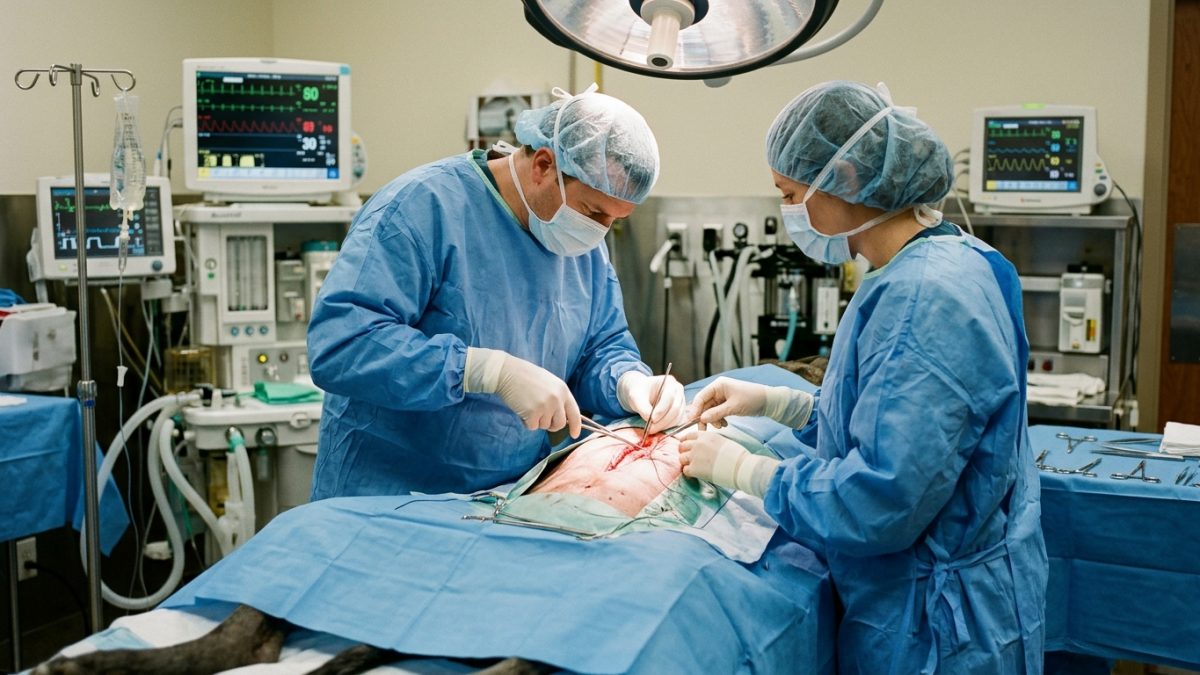
Attempting to take a pyometra patient directly to the operating table without pre-operative hemodynamic stabilization carries high anesthetic mortality. Before anesthesia induction, clinicians correct hypovolemia, prerenal azotemia, metabolic acidosis, and hypoglycemia using balanced intravenous crystalloids and initiate intravenous bactericidal antibiotics effective against Escherichia coli (such as fluoroquinolones combined with ampicillin-sulbactam or amoxicillin-clavulanate). Once cardiovascular parameters stabilize, emergency en-bloc ovariohysterectomy removes the entire septic organ source. Medical management with prostaglandin F2-alpha and aglepristone is reserved strictly for young, hemodynamically stable dogs with open-cervix pyometra under board-certified theriogenologist supervision due to high uterine rupture and recurrence risks.
- Strict Prohibition of Percutaneous Cystocentesis: When collecting urine from a bitch with suspected pyometra, never perform blind or even routine cystocentesis; a pus-distended uterine horn lies directly over the urinary bladder and needle puncture causes lethal septic peritonitis.
- Surgical Abdominal Lavage for Ruptured Pyometra: If transmural necrosis or uterine rupture has already contaminated the abdomen, the surgeon performs copious warm sterile isotonic saline peritoneal lavage and places closed-suction abdominal drains after excising the ovaries and uterine body.
- Resolution of Endotoxic Nephropathy Post-Surgery: Once the septic uterus is excised and intravenous fluid diuresis flushes circulating endotoxins, secondary nephrogenic diabetes insipidus (PU/PD) and glomerular proteinuria typically resolve within 7 to 14 days.
- Elective Spay Prevention Benchmark: Performing elective ovariohysterectomy or ovariectomy during anestrus eliminates 100% of de novo uterine pyometra risk while substantially lowering mammary carcinoma incidence when performed early in life.
Strict Rule S1 Clinical Red Flags: Canine Open-Cervix & Closed-Cervix Pyometra (Cystic Endometrial Hyperplasia–Pyometra Complex)
Critical safety boundaries for Canine (Canis lupus familiaris — Intact Unspayed Female Dogs Post-Estrus) caregivers:
- Zero Abdominal Squeezing or Lifting by the Belly: Never lift a dog with suspected pyometra by wrapping your arms under her abdomen; mechanical compression easily ruptures paper-thin, necrotic uterine walls.
- Zero Outpatient Oral Antibiotic Trial for Pyometra: Systemic oral antibiotics cannot penetrate a pus-filled, avascular uterine lumen to cure pyometra; delaying surgery to “try a week of antibiotics” leads to endotoxic shock and uterine perforation.
Clinical Preparation & Biosecurity Action Checklist
- Mark the start and end dates of every heat cycle on a household calendar for any unspayed female dog, and watch closely for excessive thirst or lethargy during the 8 weeks following heat.
- Support your dog’s chest (behind the front legs) and pelvis/hindquarters (behind the thighs)—never the mid-abdomen—when lifting her into a vehicle for emergency transport.
- Inform the admitting veterinary team immediately of the exact date of her last estrus cycle and whether she was bred or given any hormonal medications.
- Prevent all post-operative incision licking after emergency ovariohysterectomy by keeping a properly fitted Elizabethan collar in place 24/7 for 10 to 14 days.
Related Clinical Guides & Triage Protocols
Peer-Reviewed Clinical References & Evidence Grounding
- Pyometra in small animals: pathogenesis, clinical signs, diagnosis and surgical/medical treatment (opens in new tab) (Veterinary Clinics of North America: Small Animal Practice / Theriogenology Review by Hagman indexed on NCBI PubMed (PMID: 25266774).)
- Pyometra in Bitches Induces Elevated Plasma Endotoxin and Systemic Inflammatory Response Syndrome Biomarkers (opens in new tab) (Frontiers in Veterinary Science (2017) — Peer-reviewed clinical sepsis study indexed on NCBI PubMed (PMID: 29230179).)
- American College of Veterinary Surgeons (ACVS): Pyometra in Dogs and Cats Surgical Standard (opens in new tab) (Board-certified veterinary surgical college guideline on pre-operative resuscitation, ovariohysterectomy, and prognostic risk factors.)
- Merck Veterinary Manual: Cystic Endometrial Hyperplasia-Pyometra Complex in Small Animals (opens in new tab) (Verified veterinary reference on progesterone-induced endometrial pathology, Escherichia coli endotoxemia, and surgical management.)
Source transparency
Reference mix for this guide
Source labels classify the institutional category of the references cited above.