This guide is general education for pet owners. If your pet has urgent symptoms, possible poisoning, injury, breathing trouble, collapse, severe pain, or sudden decline, contact a licensed veterinarian or local emergency service.
Editorial standard
How this guide was prepared
Diabetic ketoacidosis (DKA) represents the most severe, complex, and life-threatening acute metabolic crisis in veterinary endocrinology. It occurs when a severe absolute or relative deficiency of circulating insulin coincides with an overwhelming surge of counter-regulatory stress hormones, specifically glucagon, cortisol, epinephrine, and growth hormone. Under normal physiology, insulin facilitates cellular glucose uptake for energy generation. In severe insulin deficiency, body tissues starve amidst abundant extracellular glucose. The body shifts into hyper-catabolism, activating hormone-sensitive lipase to break down adipose tissue into free fatty acids. In the liver, these fatty acids undergo uncontrolled beta-oxidation into acidic ketone bodies: beta-hydroxybutyrate, acetoacetate, and acetone. The accumulation of these organic acids overwhelms physiological buffer systems, precipitating severe high anion gap metabolic acidosis, profound dehydration, and systemic electrolyte collapse.
Quick Answer: Identifying Canine Diabetic Ketoacidosis (DKA)
If your diabetic dog suddenly begins vomiting, refuses food, becomes profoundly weak, or develops a sweet, fruity odor on their breath (resembling acetone or nail polish remover), they are likely experiencing diabetic ketoacidosis. Affected dogs display deep, labored breathing (Kussmaul respiration), dry sticky gums, extreme lethargy, and severe dehydration from osmotic diuresis. Do NOT attempt to fix this crisis at home by injecting additional insulin. Transport your dog immediately to an emergency veterinary intensive care unit for intravenous crystalloid resuscitation, electrolyte supplementation, and continuous regular insulin infusion.
Recognizing the “Acetone Breath” and Key Clinical Manifestations
One of the most distinctive physical indicators of advanced ketoacidosis is acetone breath odor. As acetoacetate spontaneously decarboxylates into acetone, volatile acetone vapors diffuse across alveolar membranes into exhaled breath. Many caregivers describe this as a sweet, sickly fruity aroma, reminiscent of nail polish remover, overripe apples, or pear drops. However, because the genetic ability to detect acetone scent varies among humans, the absence of an identifiable odor does not rule out severe DKA.
Beyond breath odor, dogs with DKA display signs of profound systemic toxicity. The excessive filtration of glucose and ketones through renal glomeruli overwhelms tubular reabsorptive capacity, inducing severe osmotic diuresis. Dogs lose tremendous volumes of water, sodium, potassium, and phosphorus in their urine. Consequently, clinical signs include relentless vomiting, complete anorexia, dull mental depression, severe muscle weakness, sunken eyes, skin tenting, and Kussmaul breathing—a physiological compensatory reflex characterized by deep, rapid, unlabored respirations designed to expire carbon dioxide and combat systemic metabolic acidosis.
Clinical Emergency Triage Matrix
| Triage Tier | Clinical Presentation | Required Action |
|---|---|---|
| Tier 1: Immediate Critical Emergency (0-2h) | Known or newly suspected diabetic dog in recumbent stupor or collapse; sweet acetone breath odor; intractable vomiting; dry tacky gums with capillary refill time >2 seconds; deep, rapid Kussmaul respirations; hypothermia (<99.0°F). | Call the emergency hospital immediately to prepare blood gas and electrolyte analyzers. Transport dog immediately. Withhold all oral food and water. Immediate large-bore IV catheterization, balanced fluid resuscitation, and electrolyte monitoring required. |
| Tier 2: Urgent Metabolic Evaluation (2-6h) | Diabetic dog exhibiting complete anorexia for 12 to 24 hours; vomiting once or twice; marked lethargy but able to stand; urine test strip reveals high glucose and moderate-to-high ketones; drinking excessively. | Proceed directly to an emergency veterinary clinic or full-service veterinary hospital. Early intervention before severe acidosis and hypokalemic collapse develop dramatically improves survival rates. |
| Tier 3: Same-Day Outpatient Monitoring (6-12h) | Diabetic dog with elevated blood glucose (>250 mg/dL) but remaining bright, active, eating normally, and displaying zero ketones on urine dipstick testing. | Maintain standard insulin dosing and scheduled feeding. Contact your primary veterinarian during regular clinic hours to schedule a blood glucose curve and dose adjustment. |
Dangerous Home Pitfalls: What NOT to Do (Rule S1)
- NEVER administer extra or double doses of insulin at home: When a diabetic pet is critically ill, caregivers often assume higher insulin doses will cure the problem. In reality, administering insulin without simultaneous intravenous potassium and phosphorus supplementation causes extracellular potassium to plunge rapidly into cells, precipitating fatal cardiac arrhythmias. Furthermore, rapid blood glucose drops induce fatal cerebral edema.
- NEVER force-feed water, broths, or sugar syrups: DKA patients suffer from intense nausea and delayed gastric emptying. Forcing oral liquids down a drowsy dog’s throat bypasses protective laryngeal reflexes, directly causing foreign material aspiration and fatal aspiration pneumonia.
- NEVER attempt home subcutaneous fluid administration for DKA: Subcutaneous fluids are absorbed through peripheral capillaries. In severe DKA, profound peripheral vasoconstriction and hypovolemia prevent subcutaneous fluid absorption. Only precision intravenous fluid resuscitation can restore glomerular filtration.
- NEVER withhold water from a diabetic dog: Osmotic diuresis produces massive fluid loss. Restricting water in a futile attempt to reduce urination accelerates severe hypovolemic shock within hours.
Electrolyte Derangements: The Hidden Lethal Threats
While hyperglycemia and ketonemia are the diagnostic hallmarks of DKA, electrolyte derangements represent the true immediate life threat during therapy:
Hypokalemia (Low Potassium): Osmotic diuresis flushes immense quantities of potassium into the urine, depleting total body stores. Although initial blood tests may show normal or even elevated serum potassium due to extracellular shifts in acidosis, insulin therapy and fluid rehydration rapidly drive potassium back into cells. If intravenous fluids are not aggressively supplemented with potassium chloride or potassium phosphate, severe hypokalemia develops, causing generalized flaccid muscle weakness, respiratory muscle paralysis, and fatal cardiac ventricular fibrillation.
Hypophosphatemia (Low Phosphorus): Like potassium, phosphorus shifts intracellularly as insulin promotes glycolysis. When serum phosphorus drops below critical thresholds, red blood cells become depleted of ATP and 2,3-diphosphoglycerate. This cellular energy starvation triggers acute intravascular hemolysis (rupture of red blood cells), acute hemolytic anemia, and sudden cardiovascular collapse.
Frequently Asked Questions
What concurrent illnesses trigger diabetic ketoacidosis in dogs?
In over 70 percent of canine DKA cases, an underlying concurrent disease acts as the primary trigger by stimulating counter-regulatory stress hormones. The most common concurrent conditions include acute pancreatitis, urinary tract infections, bacterial pyometra, hyperadrenocorticism (Cushing’s disease), and severe dental abscesses. Successfully treating DKA requires aggressively diagnosing and managing this secondary underlying trigger alongside metabolic stabilization.
How do veterinarians treat DKA in the emergency intensive care unit?
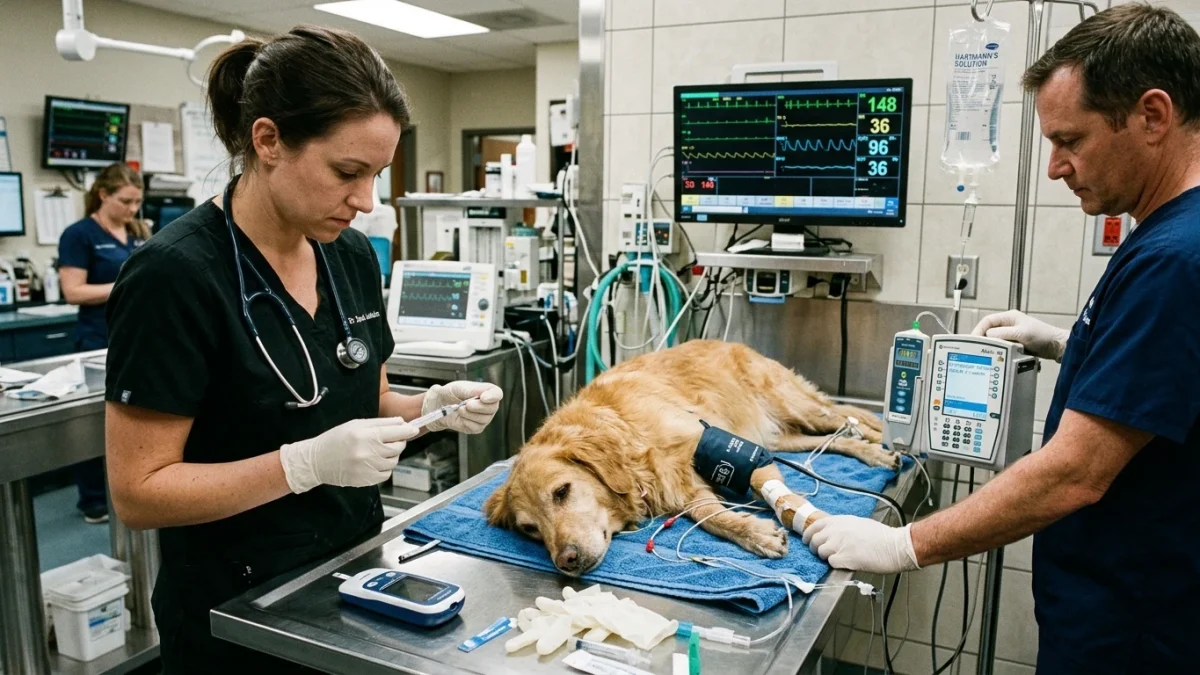
Veterinary treatment follows a phased protocol. Phase 1 focuses on volume resuscitation using balanced isotonic crystalloids over the first 4 to 6 hours to restore blood pressure and kidney perfusion before any insulin is given. Phase 2 introduces regular (short-acting) crystalline insulin administered via continuous rate infusion (CRI) or hourly low-dose intramuscular injections, accompanied by continuous potassium and phosphorus supplementation. Phase 3 transitions the dog back to subcutaneous maintenance insulin once ketones clear and appetite returns.
What is the prognosis for a dog hospitalized with DKA?
With aggressive 24-hour intensive care and appropriate fluid and electrolyte management, approximately 70 to 80 percent of dogs with DKA survive the acute crisis and are successfully discharged home. The long-term prognosis depends on the nature of any concurrent disease (such as pancreatitis or neoplasia) and the owner’s diligence in maintaining consistent daily insulin administration and blood glucose monitoring.
Scientific Sources and Literature
- Hume DZ, et al. “Outcome of dogs with diabetic ketoacidosis: 127 cases (1993-2003).” Journal of Veterinary Internal Medicine. PMID: 26031455
- DiTommaso M, et al. “Evaluation of a point-of-care blood beta-hydroxybutyrate meter in dogs with diabetic ketoacidosis.” Journal of Veterinary Emergency and Critical Care. PMID: 30129195
- Boysen SR. “Fluid and electrolyte therapy in diabetic ketoacidosis.” Veterinary Clinics of North America: Small Animal Practice. PMID: 28987125
Caregiver Emergency DKA Action Checklist
- Check breath odor: note any sweet, fruity, or acetone chemical scent on your dog’s breath.
- Measure urine ketones: if test dipsticks are available, test fresh urine and record ketone and glucose levels.
- Check hydration status: evaluate gum moisture, skin tent recoil time, and capillary refill time above the canine tooth.
- Never inject additional insulin doses at home without direct veterinary direction.
- Do not offer food, treats, or oral liquids if your dog is actively vomiting or unsteady on their feet.
- Proceed immediately to a 24-hour emergency veterinary hospital equipped for blood gas analysis, electrolyte panels, and continuous intensive care.
Source transparency
Reference mix for this guide
Source labels describe the type of organization behind each reference; they are not a claim that any outside organization reviewed this article.
- Dog Vomiting: Home Monitoring vs Emergency Red Flags Reference source · newspet.net
- Dog Shaking & Lethargic Differential Triage Reference source · newspet.net
- Dog Sudden Collapse & Internal Bleeding Triage Reference source · newspet.net
- Cat Chronic Kidney Disease & Uremic Crisis Reference source · newspet.net
- PMID: 26031455 Government or public agency · pubmed.ncbi.nlm.nih.gov
- PMID: 30129195 Government or public agency · pubmed.ncbi.nlm.nih.gov
- PMID: 28987125 Government or public agency · pubmed.ncbi.nlm.nih.gov