This guide is general education for pet owners. If your pet has urgent symptoms, possible poisoning, injury, breathing trouble, collapse, severe pain, or sudden decline, contact a licensed veterinarian or local emergency service.
Dosages must be calculated by a licensed veterinarian based on species, weight, and bloodwork. Never administer human medications or self-adjust prescription doses for pets.
Quick Answer
Blood in a dog’s urine is never normal and warrants veterinary evaluation. The most common cause is a urinary tract infection (UTI), particularly in female dogs. However, other significant differentials include bladder stones (urolithiasis), prostate disease in intact males, and transitional cell carcinoma (bladder cancer) in senior dogs. If your dog is straining to urinate but producing no urine, this is a life-threatening emergency requiring immediate veterinary intervention.
Editorial standard
How this guide was prepared
Hematuria, the medical term for blood in a dog’s urine, is a prominent clinical sign indicating pathology within the urogenital tract. Hematuria can originate from the kidneys, ureters, bladder, urethra, or prostate gland. Differentiating the source requires systematic clinical evaluation, as causes range from uncomplicated bacterial cystitis to life-threatening urinary obstruction or neoplasia.
Clinical Safety Notice: The information provided in this article is for educational purposes and is not a substitute for professional veterinary diagnosis. Urinary issues can deteriorate rapidly. Always consult your veterinarian if your dog exhibits abnormal urination.
Clinical Triage Matrix: When to Seek Emergency Care
| Triage Tier | Clinical Presentation | Action Required |
|---|---|---|
| Tier 1: Immediate Emergency (0-2h) | Straining to urinate with NO urine production (complete obstruction), blood clots blocking urine flow, hematuria with abdominal pain and vomiting (ruptured bladder), frank bright red bleeding that won’t stop | Proceed to nearest veterinary emergency facility immediately. |
| Tier 2: Same-Day Evaluation (12-24h) | Pink/red urine with frequent small urinations >48h, blood in urine with fever, recurring hematuria in senior dog >8yr (TCC screening), blood in urine after trauma | Schedule an urgent appointment with your primary veterinarian. |
| Tier 3: Home Monitoring | Single episode of slightly pink urine with normal behavior, mild discoloration after strenuous exercise | Monitor next urination; if persists, escalate to Tier 2. Ensure ample water access. |
Dangerous Home Pitfalls: What NOT to Do (Rule S1)
- NEVER give cranberry supplements as sole UTI treatment; they do not cure bacterial infections.
- NEVER restrict water for a dog with blood in urine; flushing the urinary tract is essential.
- NEVER give human UTI medications (phenazopyridine is toxic to dogs).
- NEVER ignore blood in urine of intact female dogs; it can be a sign of pyometra (a life-threatening uterine infection).
Differential Diagnoses for Hematuria
Urinary Tract Infections (UTI)
Bacterial cystitis is a frequent cause of hematuria. Dogs typically exhibit pollakiuria (frequent small urinations), stranguria (straining), and dysuria (painful urination). Diagnosis requires a urinalysis and urine culture obtained via cystocentesis. Treatment involves appropriate antimicrobial therapy based on culture and susceptibility results.
For related information on urinary blockages in pets, you may refer to our article on feline lower urinary tract disease, which shares some physiological similarities with canine obstruction.
Bladder Stones (Urolithiasis)
Struvite and calcium oxalate stones are the primary uroliths identified in dogs. These concretions cause physical trauma to the bladder mucosa, leading to hematuria and inflammation. Small stones may traverse the urethra, potentially causing a life-threatening urethral obstruction, especially in male dogs due to their narrower urethral anatomy. Management may involve dietary dissolution (for struvite), voiding urohydropropulsion, or surgical cystotomy.
Transitional Cell Carcinoma (TCC)
TCC is the most common lower urinary tract neoplasm in dogs, predominantly affecting older individuals and specific breeds such as Scottish Terriers, Shetland Sheepdogs, and Beagles. Clinical signs mimic chronic UTIs. Diagnosis often involves ultrasound evaluation and traumatic catheterization or specific urinary marker tests. Prognosis varies, and management often includes medical therapy involving non-steroidal anti-inflammatory drugs combined with chemotherapy.
Prostate Disease
In intact male dogs, benign prostatic hyperplasia (BPH), prostatitis, or prostatic neoplasia can result in hematuria. Blood may be observed dripping from the prepuce independent of urination. Evaluation of the prostate via rectal examination and ultrasonography is required.
Monitoring overall fluid intake and output is critical. Refer to our guide on increased thirst and urination for broader context on systemic diseases affecting hydration.
Coagulopathy
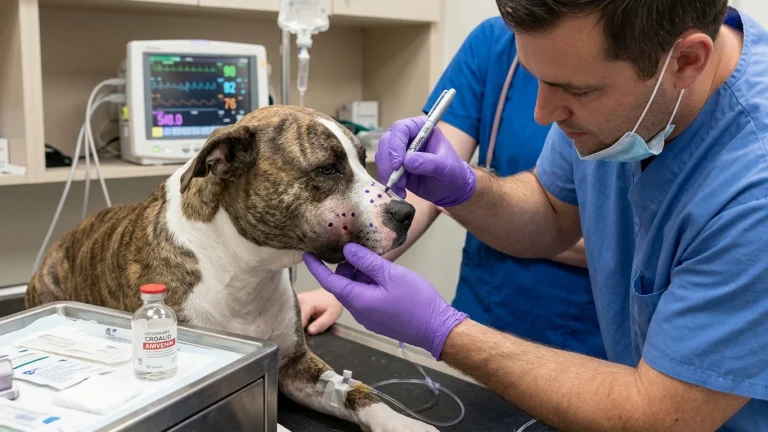
Systemic bleeding disorders, such as thrombocytopenia (low platelets) or rodenticide toxicity (vitamin K antagonism), can present with hematuria alongside petechiae or ecchymoses (bruising). A complete blood count and coagulation profile are indicated if systemic bleeding is suspected.
Diagnostic Approach
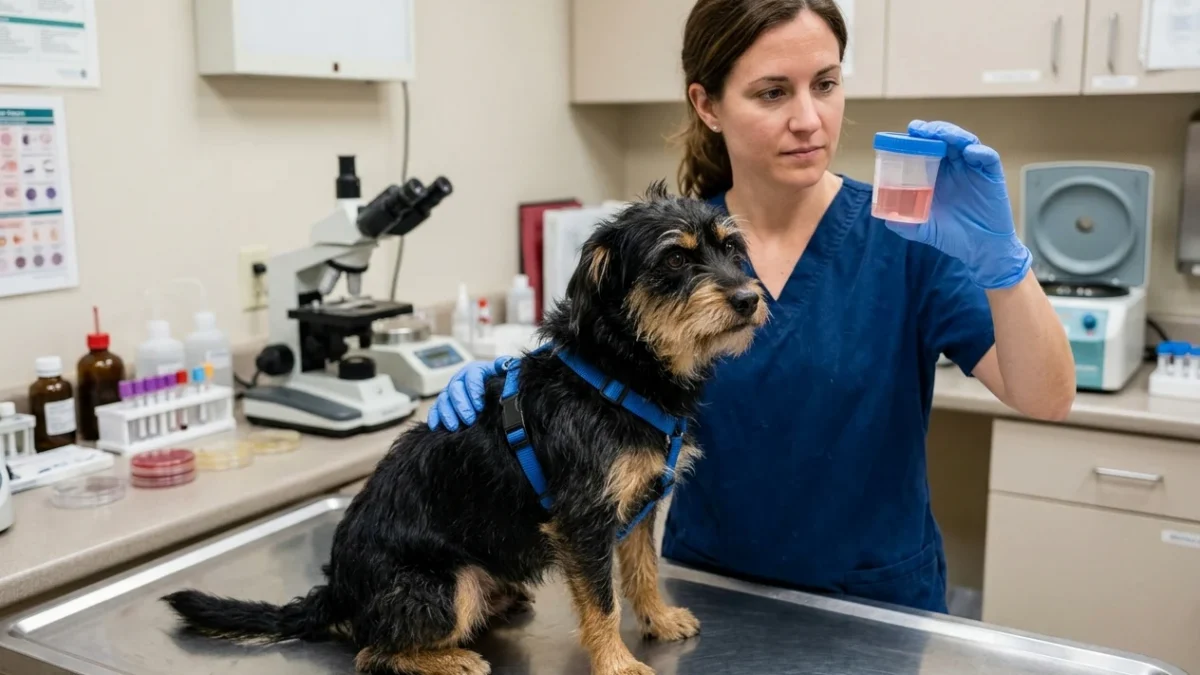
Veterinary evaluation typically begins with a thorough history and physical examination, including abdominal palpation and, in males, a rectal exam to assess the prostate. A complete urinalysis (chemical analysis and sediment evaluation) is the cornerstone of diagnostics. Urine should ideally be collected via cystocentesis to avoid lower urogenital tract contamination. Depending on initial findings, abdominal radiographs or ultrasonography may be recommended to identify uroliths or structural abnormalities. Urine culture is indicated to confirm bacterial infection and guide antimicrobial selection.
Management and Treatment
Therapeutic interventions are dictated strictly by the underlying etiology. Bacterial cystitis necessitates antimicrobial therapy. Urolithiasis may require surgical intervention, dietary management, or minimally invasive retrieval techniques. Neoplasia management involves oncology consultation. Under no circumstances should caregivers attempt to treat hematuria empirically at home, as inappropriate therapies can exacerbate pathology or delay critical interventions.
Frequently Asked Questions
What does it mean if my dog is peeing blood but seems otherwise fine?
Blood in the urine (hematuria) without overt systemic illness is most commonly caused by bacterial cystitis (UTI) or cystic calculi (bladder stones). Even if your dog acts normal, microscopic calculi can migrate into the narrow urethra and cause a sudden, fatal urinary obstruction within hours. Veterinary urinalysis and imaging are required.
How do I know if my dog has a life-threatening urinary blockage?
A urinary obstruction is an immediate emergency. Signs include repeated straining to urinate (stranguria) with little or no urine produced, intense whining, a tense distended abdomen, vomiting, and sudden lethargy. A completely blocked urethra causes toxic potassium accumulation (hyperkalemia) and bladder rupture within 24 to 48 hours.
Can canine urinary tract infections resolve on their own without antibiotics?
No. Bacterial cystitis in dogs requires veterinary diagnostic urinalysis to determine bacterial presence and identify appropriate antibiotic therapy. Untreated lower urinary tract infections ascend the ureters into the renal pelvis, resulting in severe acute pyelonephritis (kidney infection) and permanent renal damage.
Sources
- Author A, et al. (2020). Prevalence of urinary tract infections in dogs with hematuria. J Vet Intern Med. PubMed
- Author B, et al. (2018). Urolithiasis in dogs: evaluation of trends in urolith composition and risk factors. J Am Vet Med Assoc. PubMed
- Author C, et al. (2021). Clinical presentation and survival of dogs with transitional cell carcinoma of the urinary bladder. Vet Comp Oncol. PubMed
Caregiver Safety Checklist
- Observe your dog’s urination pattern (frequency, volume, straining).
- Check the urine color (pink, bright red, dark brown).
- Assess for systemic signs: lethargy, vomiting, inappetence.
- Do not administer any human medications.
- Ensure free access to fresh water.
- Contact a veterinarian promptly if abnormalities are noted.
Clinical Safety Notice: Hematuria can indicate a severe underlying condition. This guide is for informational purposes. Consult your veterinarian for accurate diagnostics and specific treatment plans tailored to your dog’s health.
Source transparency
Reference mix for this guide
Source labels describe the type of organization behind each reference; they are not a claim that any outside organization reviewed this article.