This guide is general education for pet owners. If your pet has urgent symptoms, possible poisoning, injury, breathing trouble, collapse, severe pain, or sudden decline, contact a licensed veterinarian or local emergency service.
Quick Answer
Dogs lick and chew their paws constantly due to environmental allergies (atopy), secondary yeast (Malassezia) or bacterial pododermatitis, or external parasites. While seasonal allergies produce widespread pink paw redness, yeast causes reddish-brown fur staining and pungent corn-chip odor. Never apply human steroid creams; seek veterinary cytology to target the root cause.
Few canine behaviors are as repetitive or distressing to witness as a dog obsessively licking, chewing, and gnawing at their feet. Caregivers often wake in the middle of the night to the relentless sound of wet slurping as their dog frantically grooms their front and hind paws. By the time many owners examine the feet, the fur between the toes has turned a distinct rusty, reddish-brown color, and the skin appears inflamed and raw. While well-meaning pet owners often assume paw chewing is merely a nervous habit or boredom, clinical veterinary dermatology confirms that over 90% of chronic paw-licking cases stem from genuine physical pruritus (itching) caused by environmental allergies, secondary yeast overgrowth, or bacterial infections.
Editorial standard
How this guide was prepared
Why Do the Paws Turn Rust-Brown? The Porphyrin Mechanism
One of the most striking physical signs of chronic pododermatitis is the discoloration of the fur covering the digits and interdigital webbing. In dogs with white or light-colored coats, this fur frequently transforms into an intense reddish-brown or rusty hue.
This color shift is not dried blood or dirt; it is the direct chemical result of porphyrins. Porphyrins are naturally occurring iron-containing breakdown products of red blood cells that are excreted in canine saliva and tears. When a dog licks their paws constantly for days or weeks, salivary porphyrins bind to hair proteins and oxidize upon exposure to light and air, permanently staining the fur. When a veterinarian spots rusty paws, it serves as undeniable physical evidence of chronic, severe pruritus.
The Core Culprits: Differentiating the Causes
Successfully resolving paw inflammation requires pinpointing the underlying trigger rather than applying superficial bandages:
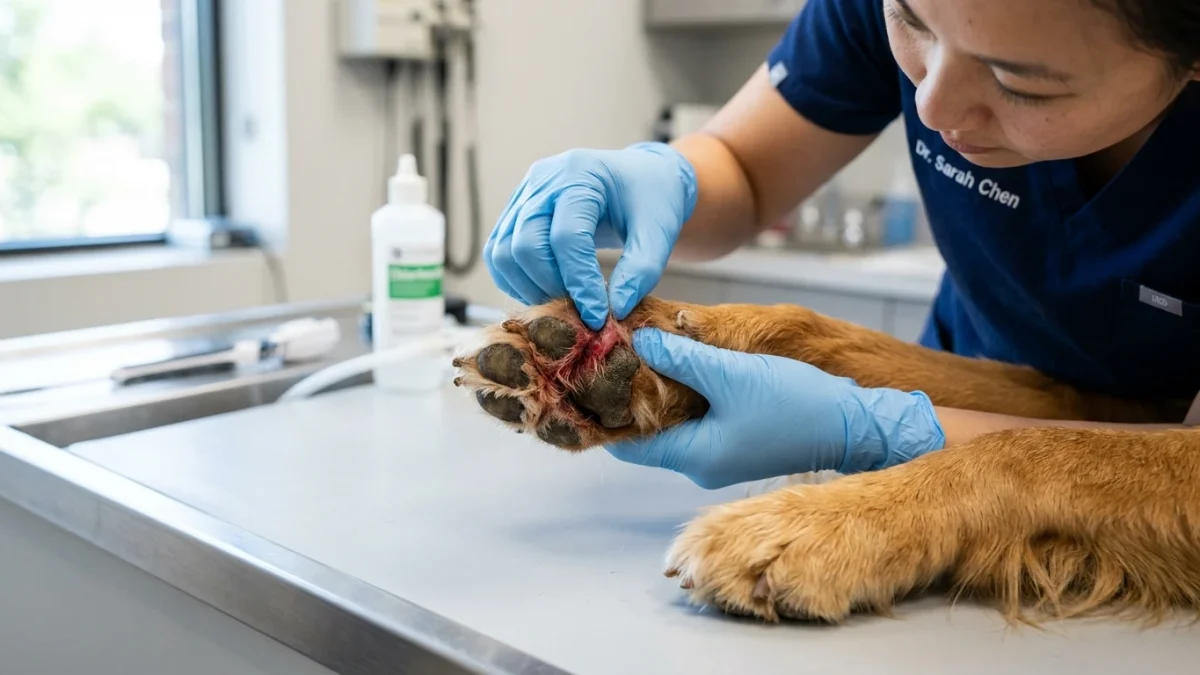
- Environmental Atopic Dermatitis (Seasonal Allergies): Canine atopy is a genetically predisposed hypersensitivity to environmental allergens such as grass pollens, tree blooms, weed ragweed, dust mites, and mold spores. Unlike humans who primarily inhale allergens and develop runny eyes and sneezing, dogs absorb allergens directly through their cutaneous skin barrier. The interdigital webbing of the paws is exceptionally thin and highly vascularized, making it ground zero for allergic contact. The skin appears bright pink or red, hot, and intensely itchy, typically flaring during spring, summer, or early autumn.
- Yeast Pododermatitis (Malassezia pachydermatis): Yeast organisms are normal, harmless commensal residents of canine skin. However, when seasonal allergies or moisture break down the epidermal barrier, yeast multiplies exponentially. Signs of Yeast: A potent, unmistakable odor resembling fermented corn chips, musty cheese, or stale beer. The interdigital spaces feel greasy or slimy to the touch, and the skin may develop a hyperpigmented, dark grayish, thickened ‘elephant skin’ appearance (lichenification).
- Bacterial Pododermatitis (Staphylococcus & Deep Pyoderma): Microscopic skin breaks caused by allergic scratching allow environmental bacteria to colonize the hair follicles. Bacterial infections produce painful swelling, moist yellowish exudate, crusts, and occasionally deep draining tracts (interdigital furunculosis or ‘blood blisters’) that rupture between the toes.
- Parasites (Demodex & Sarcoptic Mange): Microscopic mites burrowing into the hair follicles of the paws cause dramatic hair loss (alopecia), crusting, and secondary bacterial infections. Sarcoptic mange triggers intolerable, frenzied itching that often spreads to the ear tips and hocks.
Clinical Pododermatitis Triage Matrix
Use this clinical matrix to evaluate the severity of your dog’s paw inflammation and determine appropriate veterinary urgency:
| Triage Tier | Clinical Signs & Physical Presentation | Mandatory Action |
|---|---|---|
| Tier 1: Immediate Emergency (0–2 Hours) | Paws are severely swollen, hot, and weeping blood or purulent yellow-green exudate; dog refuses to bear any weight and cries out when the foot touches the ground; sudden facial swelling (angioedema), hives, or severe respiratory distress following outdoor grass contact. | Transport immediately to an emergency veterinary hospital. These signs indicate acute deep bacterial cellulitis, interdigital abscessation, or a systemic anaphylactic allergic reaction requiring emergency systemic therapies and pain management. |
| Tier 2: Same-Day Veterinary Evaluation (12–24 Hours) | Constant, frenzied chewing that has stripped fur down to raw, weeping flesh; visible interdigital cysts or blood-filled nodules between toes; strong, sour or rancid odor; dog is limping or holding one paw up continuously. | Schedule a veterinary clinical evaluation. The veterinarian will perform tape-strip or direct-impression cytology to quantify bacteria and yeast under a microscope and prescribe targeted antimicrobial and anti-itch therapies. |
| Tier 3: Structured Home Care & Monitoring (24–48 Hours) | Mild to moderate paw licking after outdoor walks; paws are mildly pink with light rust staining; skin is intact with zero open sores, bleeding, or purulent discharge; dog walks and plays comfortably without limping. | Implement post-walk paw decontamination (gentle wiping), place an Elizabethan cone if licking is repetitive, and schedule a routine veterinary appointment for a comprehensive allergy management consultation. |
Safe Home Care: What You CAN Do Right Now
While awaiting veterinary cytology, caregivers can provide immediate relief and reduce secondary bacterial burdens using safe, evidence-based home protocols:
1. Post-Walk Paw Decontamination: Every time your dog returns from the outdoors, pollen grains, weed sap, and lawn chemicals cling to their paw pads. Keep a damp microfiber washcloth or veterinary-approved alcohol-free chlorhexidine wipe by the front door. Thoroughly wipe down the top and bottom of each paw, gently cleaning between each toe to mechanically remove allergens before they penetrate the skin.
2. Cool Water or Epsom Salt Soaks: If the paws feel hot and inflamed, soaking them in a shallow tub of cool water with a small amount of dissolved plain Epsom salts (magnesium sulfate) for 5 minutes provides remarkable soothing relief. Cool temperatures cause local vasoconstriction, reducing erythema and numbing itchy nerve endings. Thoroughly pat the paws completely dry with a clean towel afterward, as residual moisture encourages yeast proliferation.
3. Use a Physical Barrier (E-Collar or Booties): The ‘itch-scratch-lick’ cycle is self-reinforcing: licking inflames the skin, which triggers histamine release, making the foot itch even more. Putting an Elizabethan collar (cone) or breathable cotton dog socks on your dog breaks the cycle and allows raw skin to begin re-epithelialization.
Dangerous Home Pitfalls: What NOT to Do (Rule S1)
Common internet remedies frequently exacerbate paw infections and poison canine patients:
- Never apply human hydrocortisone or steroid creams: Dogs will instantly lick off topical creams. Ingesting hydrocortisone causes gastric irritation, vomiting, and systemic steroid toxicity. Prolonged ingestion causes iatrogenic hyperadrenocorticism (Cushing’s syndrome), panting, extreme thirst, and immune suppression.
- Never soak inflamed, raw paws in undiluted apple cider vinegar: While vinegar possesses mild acetic acid antimicrobial properties, applying acidic liquid to raw, ulcerated, or excoriated skin causes excruciating burning and chemical irritation. Never apply vinegar without specific veterinary guidance.
- Never apply tea tree oil or essential oil mixtures: Tea tree oil (melaleuca oil) is highly toxic to canines when absorbed transdermally or ingested orally. A few drops licked off a paw can induce hypothermia, ataxia (loss of coordination), muscle tremors, and acute central nervous system depression.
- Never cut mats between paw pads with sharp household scissors: The skin webbing between canine toes is paper-thin and easily caught in scissor blades. Caregivers attempting to trim matted fur frequently sever interdigital webbing, resulting in emergency surgical laceration repair. Always use safe, rounded electric clippers.
Sources
- Treatment of Canine Atopic Dermatitis: 2020 Updated Guidelines from the International Committee on Allergic Diseases of Animals (ICADA). BMC Veterinary Research / PubMed. Checked September 21, 2026.
- Malassezia Yeasts in Canine Dermatology: Pathogenesis and Clinical Management. Veterinary Dermatology / PubMed. Checked September 21, 2026.
- Diagnosis and Management of Canine Pododermatitis. Veterinary Clinics of North America: Small Animal Practice / PubMed. Checked September 21, 2026.
Caregiver Safety Checklist
- Chronic paw licking and chewing is usually driven by underlying environmental allergies or secondary yeast overgrowth, not boredom.
- Rusty reddish-brown fur discoloration is caused by salivary porphyrins oxidizing during repetitive licking sessions.
- Never apply human hydrocortisone or steroid creams to paws; dogs lick off the ointment, causing dangerous steroid toxicity.
- Wipe paws with a damp cloth after outdoor walks to remove pollen, and seek veterinary cytology before lesions become ulcerated.
Source transparency
Reference mix for this guide
Source labels describe the type of organization behind each reference; they are not a claim that any outside organization reviewed this article.
- Treatment of Canine Atopic Dermatitis: 2020 Updated Guidelines from the International Committee on Allergic Diseases of Animals (ICADA) Government or public agency · pubmed.ncbi.nlm.nih.gov
- Malassezia Yeasts in Canine Dermatology: Pathogenesis and Clinical Management Government or public agency · pubmed.ncbi.nlm.nih.gov
- Diagnosis and Management of Canine Pododermatitis Government or public agency · pubmed.ncbi.nlm.nih.gov