
Editorial standard
How this guide was prepared
Maintaining daily oral hygiene for dogs and cats is one of the most effective preventive health investments a family can make. However, in households juggling work commutes, school schedules, and competing chores, traditional 10-minute pet brushing protocols routinely collapse within weeks. Worse, uncoordinated communication between family members often leads to multiple people handing out calorie-heavy dental treats or assuming someone else inspected the pet’s mouth. According to the American Animal Hospital Association (AAHA), periodontal disease remains the single most prevalent medical condition in adult pets. For fast-paced homes, sustainable dental care is built on high-yield micro-habits, rigorous chew safety, and structured family coordination.
- Habit Stacking for High Compliance: Anchor pet tooth brushing to existing daily human routines (such as morning coffee preparation or evening dishwashing) to achieve the necessary 3–5 sessions per week.
- Layered Passive & Active Oral Defenses: On days when manual brushing is skipped due to time constraints, deploy passive plaque-inhibiting tools including VOHC-certified dental chews and enzymatic drinking water additives.
- Quarterly Home Oral Inspections: Conduct brief 30-second quarterly examinations to monitor for red hyperemic gingival margins, calculus encrustation, fractured enamel, or unilateral chewing habits.
The Busy Household Paradox: Fragmentation and Treat Double-Dosing
When multiple family members care for a pet without a centralized tracking system, two common hazards emerge:
- Caloric Treat Stacking: A child gives a dental chew in the morning, a spouse offers another after work, and a teenager tosses a third after dinner. Dental chews are calorie-dense; multiple chews rapidly drive obesity and trigger pancreatitis from excessive fat intake.
- Silent Pain Progression: Unlike acute limping, dental disease is an insidious, chronic condition. Animals mask oral discomfort by swallowing food whole without chewing. Without a designated family member responsible for weekly mouth checks, loose teeth and periapical abscesses often progress undetected until an emergency occurs.
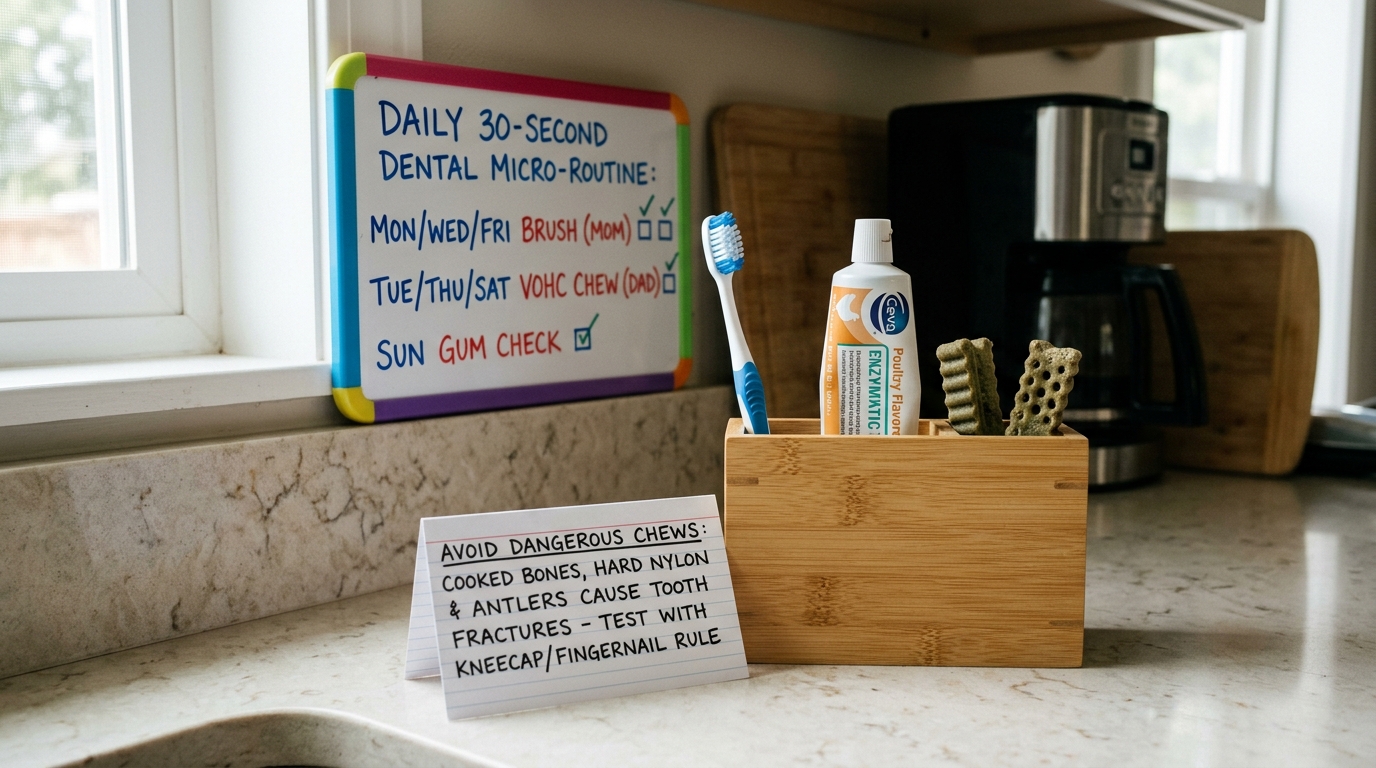
A simple whiteboard on the refrigerator where family members initial when the pet has received their single daily chew or brushing instantly eliminates treat duplication.
Red-Flag Triage Matrix: Differentiating Choking, Fractures, and Routine Tartar
Traumatic chew injuries and dental root infections require vastly different response speeds. Use this clinical triage matrix to guide family decisions:
| Triage Level | Clinical Signs | Required Action |
|---|---|---|
| Immediate Emergency (0–2 Hours) | Acute choking, coughing spasms, or frantic pawing at the mouth after chew ingestion; active, continuous oral hemorrhage; rapidly developing facial swelling below the eye; inability to close the jaw. | Transport immediately to the nearest 24/7 veterinary emergency hospital. If choking and pet is conscious, inspect the airway safely or perform pet Heimlich compressions. |
| Same-Day Visit (Within 12–24 Hours) | Freshly fractured tooth with visible pink, red, or black pulp center; complete refusal of food or dropping kibble accompanied by yelping; loose permanent tooth; visible pus along the gumline. | Contact your veterinarian for an urgent same-day dental evaluation. Soften food with warm water; withhold all chew toys. |
| Home Monitoring & Scheduled Care | Mild yellowish tartar on upper canine teeth; slight pink gingival margin without bleeding; mild halitosis in an otherwise playful, energetic animal. | Deploy the 30-second brushing routine every 48 hours, ensure all chews carry VOHC acceptance seals, and schedule a professional cleaning during annual wellness exams. |
Dangerous Pitfalls: Tooth-Breaking Chews, Metal Tools, and Toxic Pastes
When pressed for time or seeking easy shortcuts, busy caregivers frequently fall into hazardous dental traps:
- The ‘Knee-Cap Rule’ for Chew Toys: Hard chews such as natural cow hooves, deer and elk antlers, cooked soup bones, and rigid synthetic nylon toys do not clean teeth safely. In veterinary biomechanics, their elastic modulus exceeds the fracture threshold of tooth enamel. The fourth upper premolar (carnassial tooth) frequently suffers catastrophic ‘slab fractures’ when crushing these items. If an item cannot be indented with an adult thumbnail or flexed slightly, it is too hard for pet teeth.
- Never Scrape Teeth with Metal Picks: Online DIY kits advertising metal dental scrapers for home use are dangerous. Without general anesthesia, any sudden head movement can lacerate gums or puncture the soft palate. Furthermore, scraping removes enamel glaze, creating microscopic ridges where bacteria adhere faster.
- Strict Avoidance of Human Dental Products: Human toothpastes contain foaming detergents (sodium lauryl sulfate) that induce vomiting when swallowed, as well as fluoride. Many also contain Xylitol (birch sugar), which causes fatal acute hypoglycemia and liver failure in dogs within 30 to 60 minutes. Always use veterinary-formulated enzymatic paste.
- Never Administer Human Painkillers for Toothaches: Human NSAIDs (Advil, Aleve, Aspirin) and Acetaminophen (Tylenol) cause severe stomach ulcers, acute kidney failure, and fatal feline red blood cell lysis. Only use pain medications prescribed directly by a licensed veterinarian.
The 30-Second Micro-Routine: Realistic Brushing for Fast-Paced Lives
Daily exhaustive brushing of every tooth surface is an unrealistic expectation for most busy families. Fortunately, clinical dentistry reveals an evidence-based shortcut:
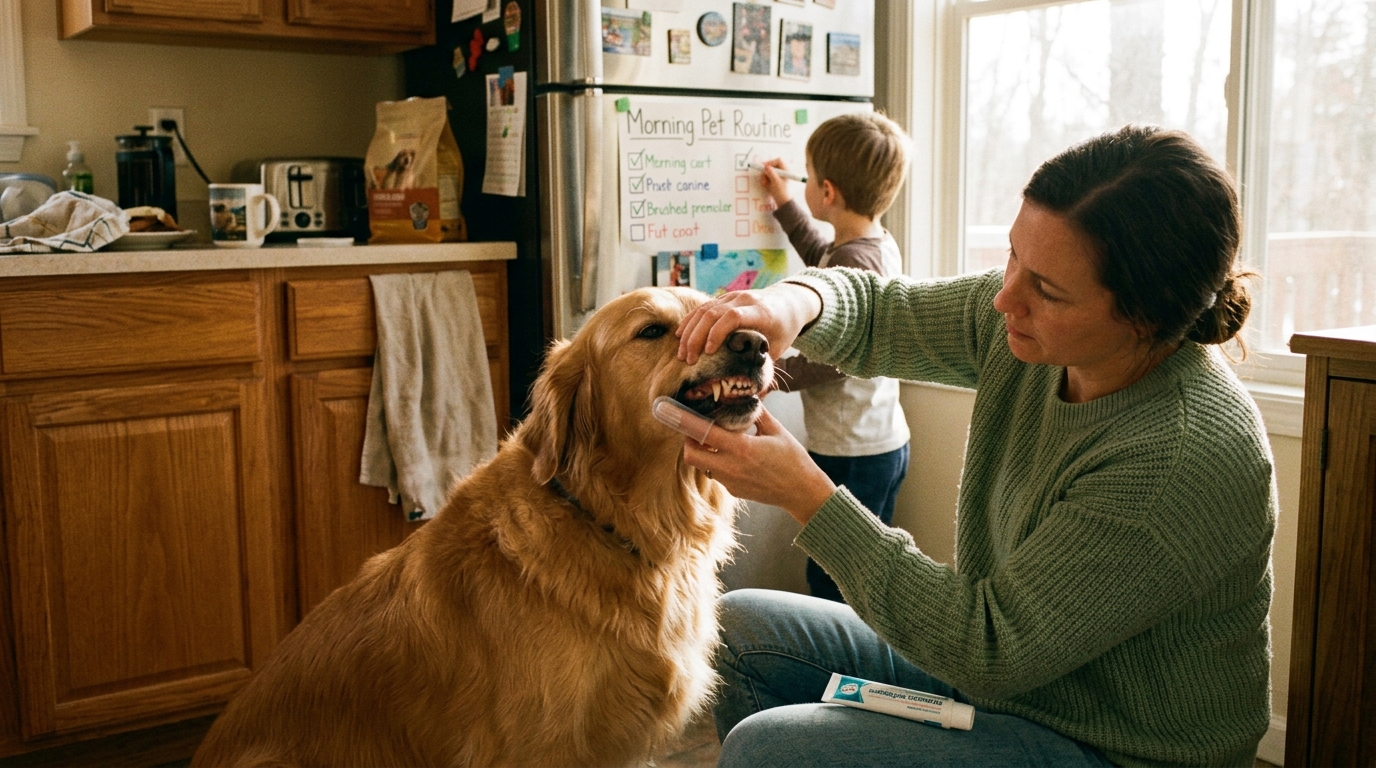
- Target the Buccal (Outer) Surfaces Only: Over 90 percent of calculus accumulates on the outer surfaces of the upper teeth where the salivary parotid ducts discharge. The pet’s tongue naturally keeps inner (lingual) surfaces cleaner. Do not struggle to pry the mouth open; simply slip your finger brush beneath the upper cheek.
- Every Other Day Is Sufficient: Soft bacterial plaque takes approximately 48 to 72 hours to mineralize into rock-hard calculus. Brushing thoroughly every 48 hours resets this biological timer, offering substantial protection even if daily brushing is missed.
- Use Enzymatic Toothpaste as a Reward: Veterinary enzymatic pastes (poultry or malt flavored) use glucose oxidase and lactoperoxidase to inhibit oral bacteria enzymatically. Even if brushing is brief, allowing the pet to lick the paste provides active antibacterial benefit.
The Family Communication Board: Shared Accountability and Safe Delegation
To ensure consistency without overburdening one person, establish clear household roles:
- Age-Appropriate Child Tasks: Young children should never brush a pet’s teeth due to bite risks and accidental gum injury. Instead, assign children safe supervisory duties, such as refreshing the water bowl daily or applying water additives approved by the Veterinary Oral Health Council (VOHC).
- Dedicated Brushing Champion: Designate one adult or older teenager as the primary brushing champion, pairing the routine with an existing habit (e.g., right before the pet’s evening meal).
- Emergency Vet Contact Display: Post the phone number and address of the nearest 24/7 emergency clinic on the family communication board so any caregiver or babysitter can respond instantly if a pet chokes on a chew.
Frequently Asked Questions
Why is general anesthesia required for thorough veterinary dental cleanings?
Over 60 percent of periodontal pathology resides beneath the gumline. General anesthesia with an endotracheal tube protects the airway from bacteria-laden water spray, allows full-mouth dental radiographs to uncover hidden tooth root abscesses, and permits pain-free subgingival curettage.
What are the most effective home care strategies for slowing dental tartar accumulation?
Daily brushing with a soft-bristled brush and pet-safe enzymatic toothpaste remains the gold standard. Additionally, Veterinary Oral Health Council (VOHC) accepted dental diets and chews provide proven mechanical plaque reduction.
What clinical symptoms indicate advanced, painful dental disease?
Drooling saliva tinged with blood, dropping kibble while chewing, chewing on only one side of the mouth, facial swelling, severe halitosis, and pawing at the muzzle indicate significant periodontal infection or tooth resorption.
Caregiver Home Dental Care Checklist
- Lift your pet’s lips weekly to inspect the molars and canines for yellow-brown tartar and red inflamed gumlines.
- Introduce pet-formulated enzymatic toothpaste gradually as a positive reward before using a soft toothbrush.
- Select chew toys that pass the fingernail test: if the material cannot be indented with a nail, it risks breaking teeth.
- Schedule an annual professional dental examination with intraoral radiography to assess subgingival roots.
- Contact your veterinarian promptly if you observe head-shying, blood on chew toys, or sudden refusal of dry food.
Sources
- . American Animal Hospital Association. Checked September 11, 2026.
- WSAVA Global Dental Guidelines: Standards of Care in Veterinary Dentistry. World Small Animal Veterinary Association. Checked September 11, 2026.
- Biomechanical Properties of Canine Chew Items and Epidemiology of Maxillary Premolar Slab Fractures. Journal of Veterinary Dentistry / PubMed. Checked September 11, 2026.
Source transparency
Reference mix for this guide
Source labels classify the institutional category of the references cited above.


