Health and Safety Boundary
Jump to Emergency Red Flags ↓
This guide is general education for pet owners. If your pet has urgent symptoms, possible poisoning, injury, breathing trouble, collapse, severe pain, or sudden decline, contact a licensed veterinarian or local emergency service.
Editorial standard
How this guide was prepared
Edited for decisions
NewsPet guides are structured around practical owner choices, tradeoffs, and safety boundaries.
Source policy
Sources are listed when a guide relies on outside references.
Veterinary boundary
This article does not diagnose or prescribe; urgent symptoms need veterinary care.
Corrections
Readers can flag unclear, outdated, or inaccurate information through our contact page.
Dog Drank Bleach: Chlorine Toxicity & Caustic Burn Triage
Clinical Verdict: MODERATE (Diluted Household) TO SEVERE (Concentrated Bleach/Pool Chlorine)
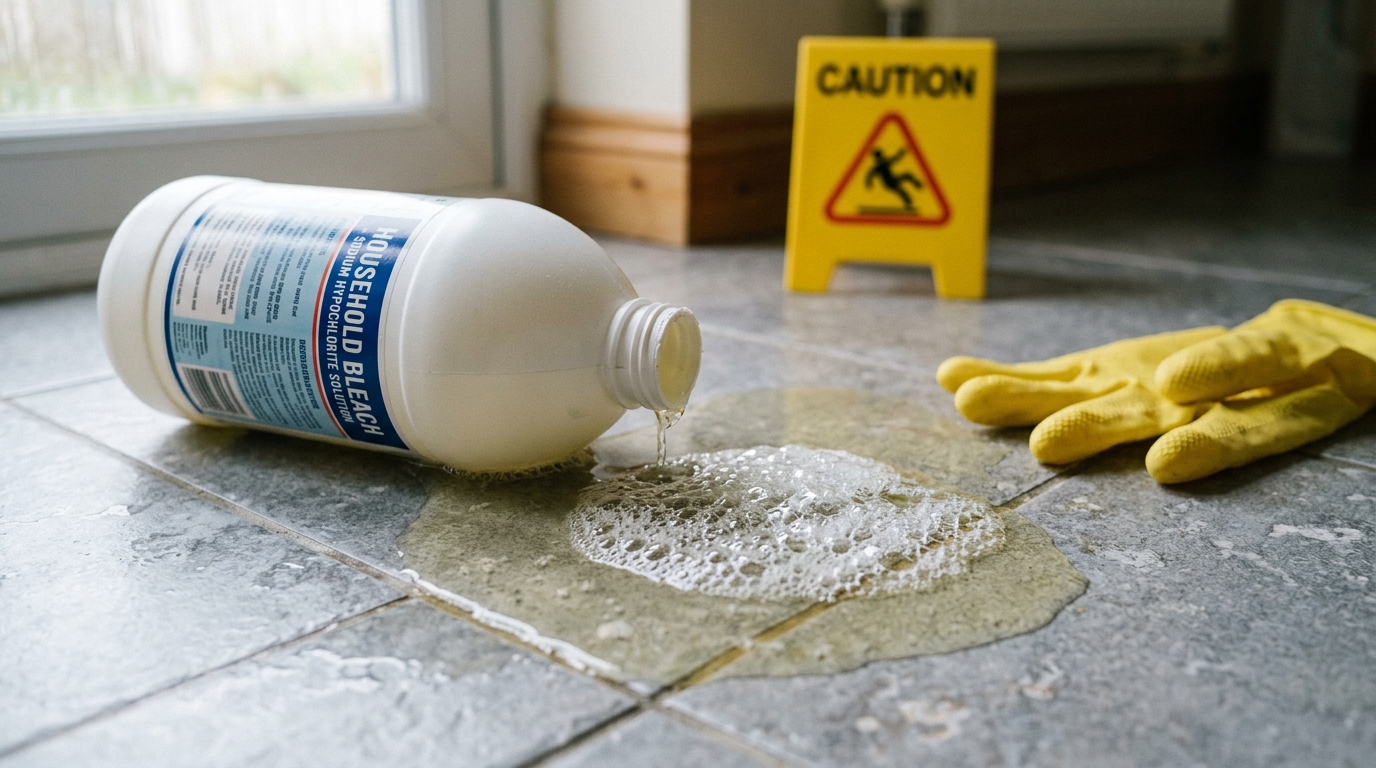
Dogs CANNOT consume bleach or pool chlorine tablets. Standard household bleach (3-6% sodium hypochlorite) causes painful chemical burns, while concentrated or industrial chlorine causes deep liquefactive necrosis of the digestive tract.
Toxic Mechanism & Agent
- Toxic Agent: Sodium Hypochlorite & Chlorine Gas Byproducts
- Mechanism of Action: Releases hypochlorous acid and free chlorine on contact with mucosal membranes, precipitating protein denaturation and severe chemical burns throughout the esophagus and stomach.
Clinical Signs & Timeline
- Onset Time: Immediate oral pain and drooling; gastrointestinal ulceration within 1 to 4 hours.
- Primary Symptoms: Profuse hypersalivation, pawing at mouth, white or gray burned oral mucosa, retching, hematemesis (bloody vomit), dyspnea, extreme abdominal guarding.
Emergency Triage Protocol
IMMEDIATE ER VISIT / DO NOT INDUCE VOMITING
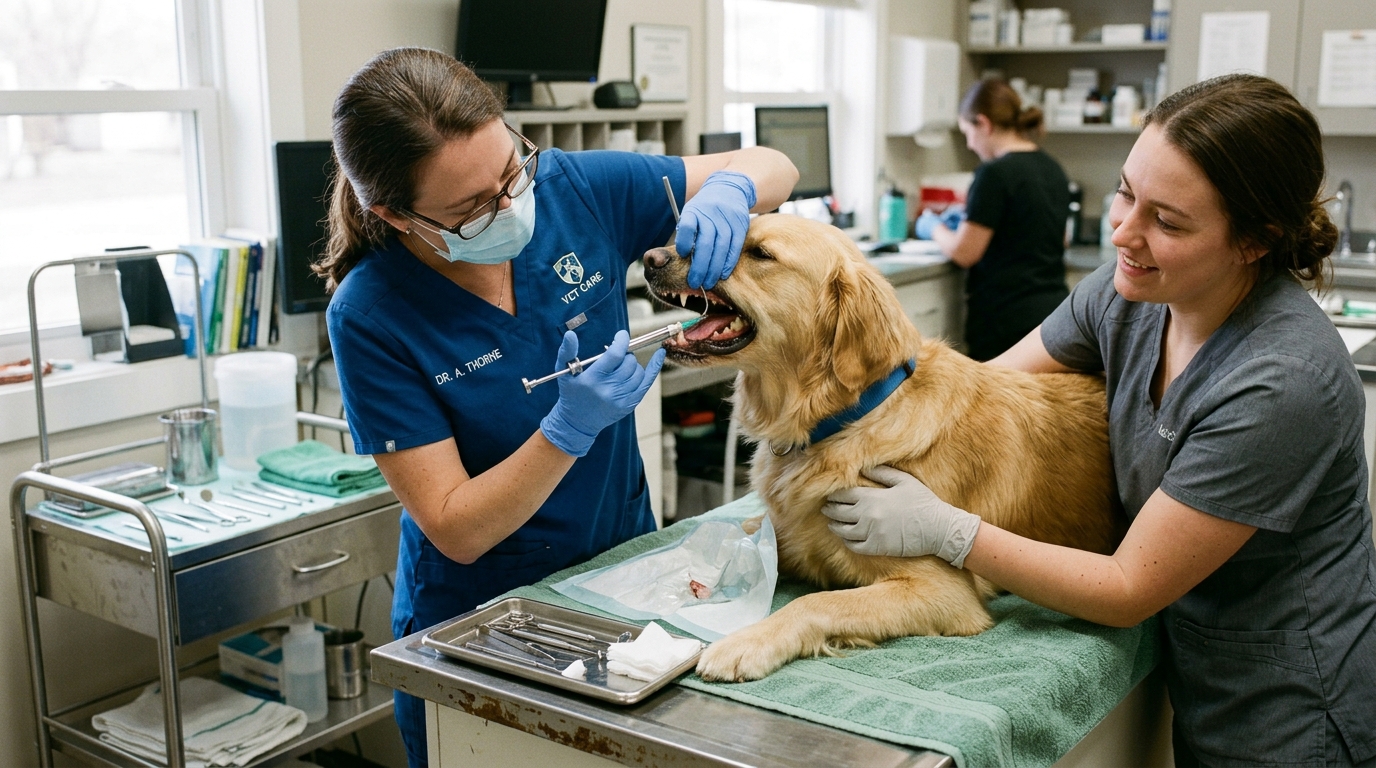
NEVER induce vomiting; corrosive bleach will re-burn the esophagus on the way back up. Flush the oral cavity with copious room-temperature water or offer small amounts of milk/water to dilute. Proceed directly to veterinary emergency.
Strict Rule S1 Warning
NEVER induce vomiting at home using hydrogen peroxide without direct instruction from a DVM. Inappropriate emesis can cause fatal aspiration pneumonia, esophageal chemical burns, or gastric rupture. Always seek professional veterinary diagnosis.
Printable tools