Editorial standard
How this guide was prepared
For decades, routine husbandry and veterinary procedures—nail trimming, ear flushing, subcutaneous injections, and cephalic blood draws—relied on physical immobilization: holding a struggling dog down on a slick metal table or scruffing a terrified cat. Modern veterinary behavioral medicine recognizes that forcible restraint triggers acute hypothalamic-pituitary-adrenal (HPA) axis panic, sensitizing the amygdala so that each subsequent clinic visit or grooming attempt provokes faster, more violent defensive aggression. Cooperative care transforms the animal from a helpless captive into an active participant through trained “start-button” and “stop-button” consent behaviors.
Clinical Quick Answer & Immediate Stabilization Protocol
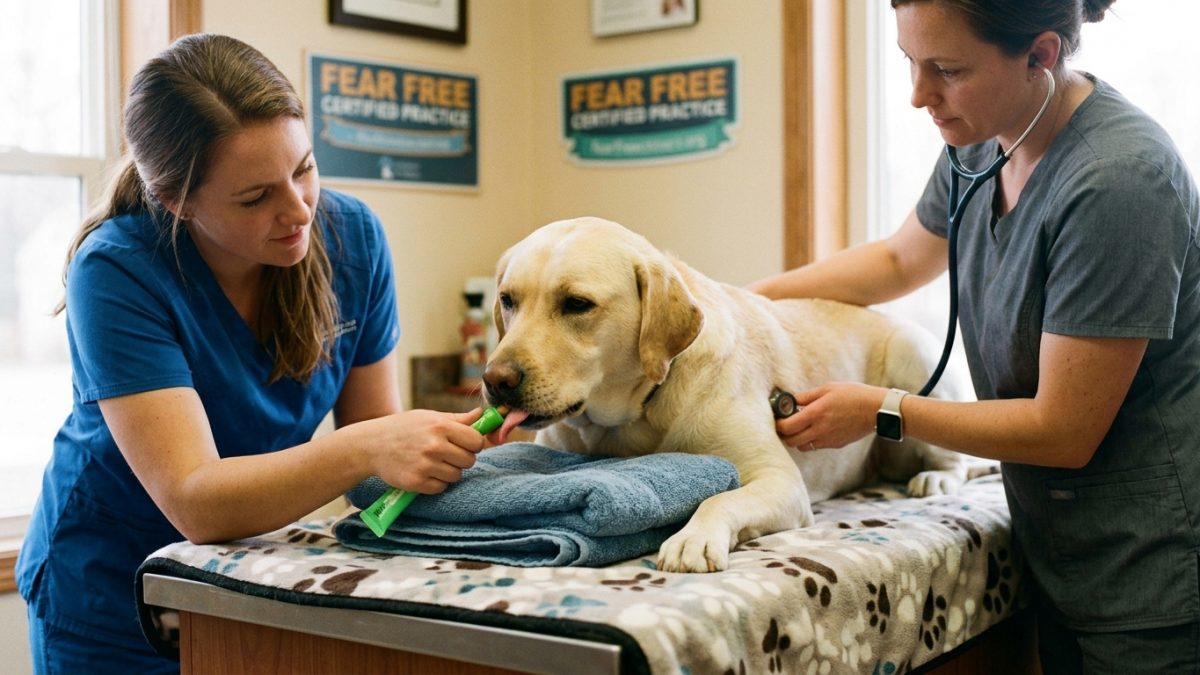
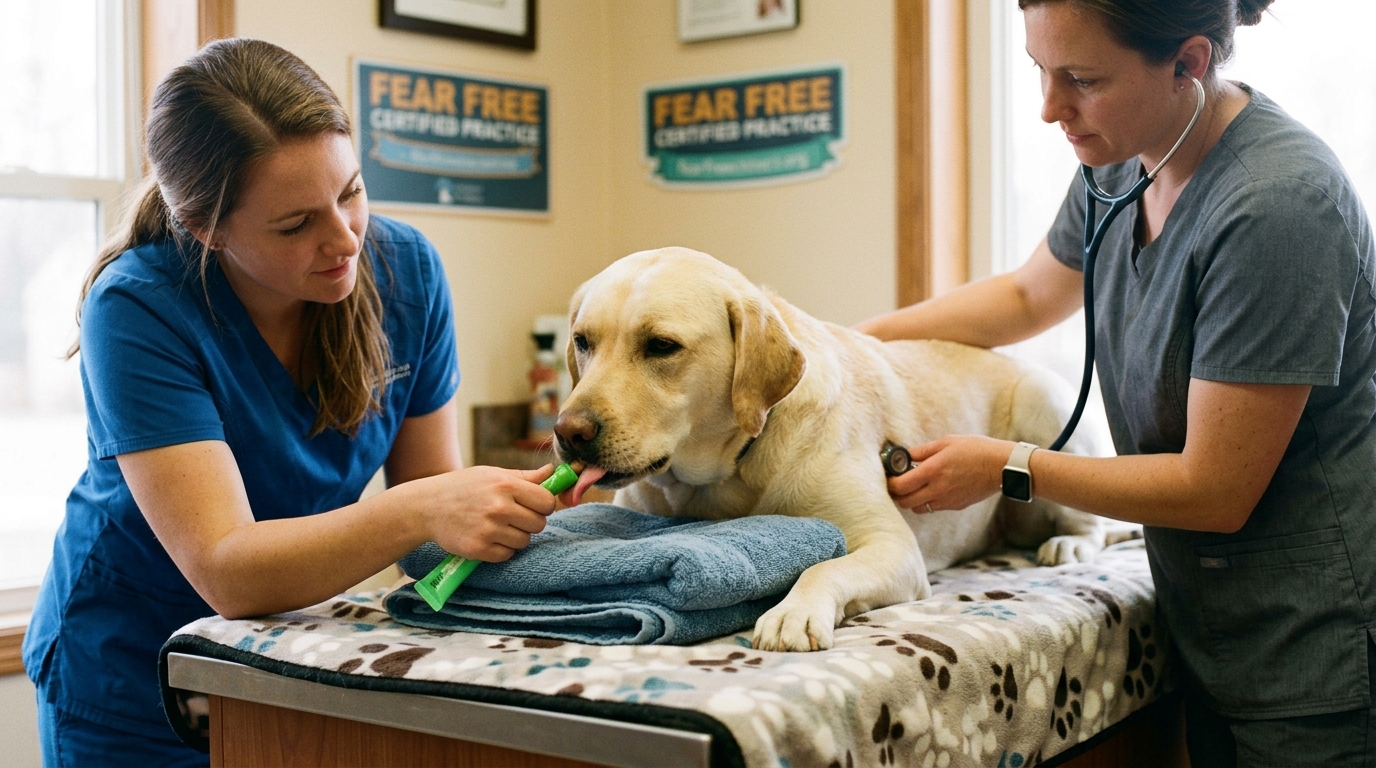
Primary Clinical Directive for Veterinary Handling Fear, Restraint Panic & Operant Consent Conditioning: Teach your dog or cat a voluntary stationary “start-button” posture—such as resting their chin on a folded towel/palm or stepping all four paws onto a designated rubber mat. The clinical contract is absolute: medical or grooming touch happens only while the pet actively holds the start-button position, and the instant the pet lifts its chin or steps off the mat (“stop button”), all instruments and hands withdraw immediately for a 5-second pause before the pet chooses to re-engage.
Perceived Agency, Amygdala Fear Sensitization & The Neurobiology of Restraint Panic
Neuroendocrine stress research demonstrates that identical physical discomfort produces vastly different cortisol, catecholamine, and heart-rate responses depending on whether the subject exercises perceived control (agency) over the onset and offset of the stimulus. When an animal discovers that a specific low-effort motor action—lifting its chin by two inches—reliably pauses an unfamiliar tactile sensation (the vibration of nail clippers or the touch of a stethoscope), panic-driven fight-or-flight escalation becomes biologically unnecessary.
Conversely, when early warning signals (head turns, ear flattening, paw withdrawal, or lip licking) are overridden by tighter human grip force, the animal learns that low-level communication fails. On subsequent encounters, the animal bypasses warning signals altogether and launches directly into high-intensity defensive biting or clawing—a phenomenon termed “ladder-skipping” sensitization. Furthermore, acute restraint stress causes transient physiologic hyperglycemia (especially in cats, often exceeding 250–300 mg/dL), stress leukograms, and white-coat systemic hypertension that confound diagnostic bloodwork.
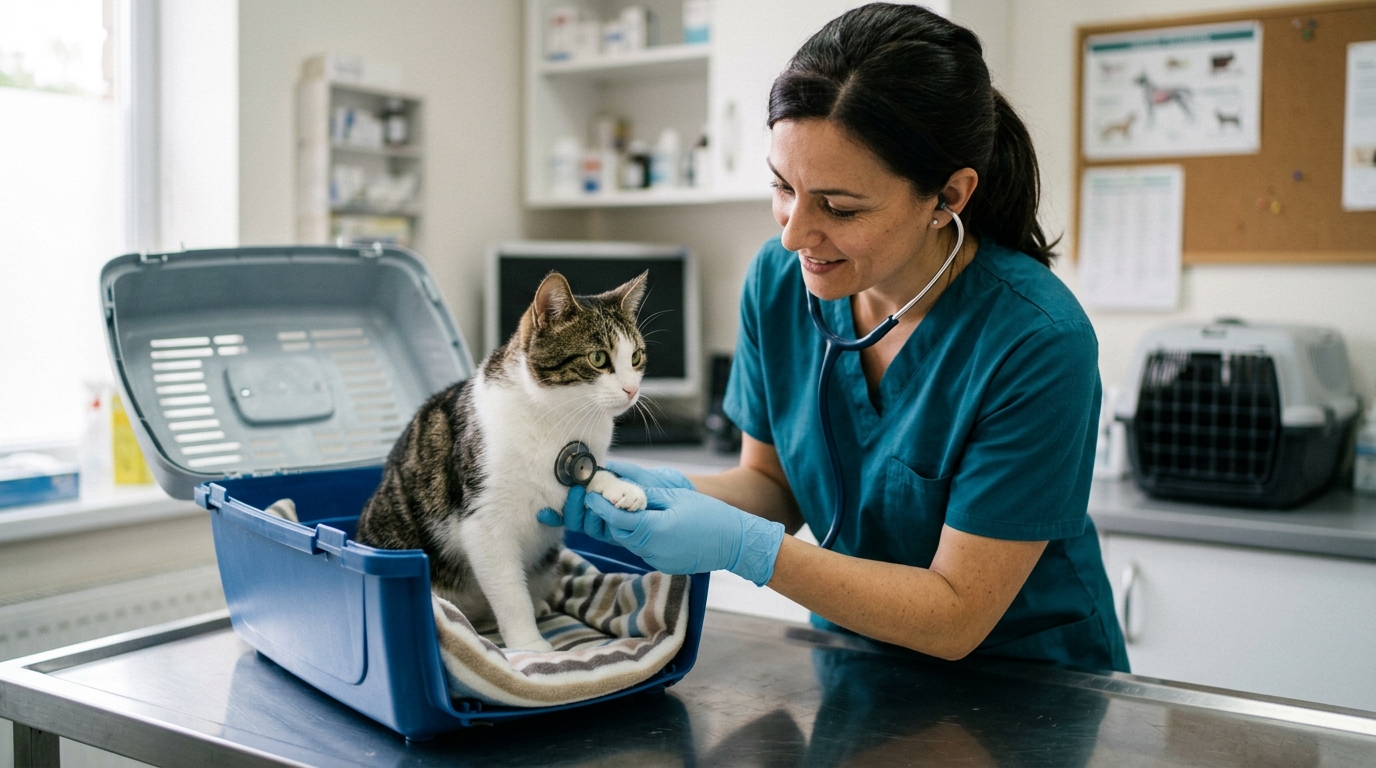
- Operant Start-Button Mechanics: A sustained chin rest on a block, pillow, or handler’s hand acts as an active “green light” toggle; it keeps the head biomechanically still for ophthalmic drops, otoscopy, or jugular venipuncture without external force.
- Predictive Audit Cues: Saying a consistent neutral label (“Touch ear”, “Clip nail”, “Poke”) 1 second before physical contact eliminates the startle reflex caused by unexpected blind-spot handling.
- Desensitization vs. Flooding: True systematic desensitization exposes the animal to the stimulus below the emotional fear threshold (e.g., touching the claw with closed clippers for 0.5 seconds), whereas holding a terrified pet while licking peanut butter is flooding that masks fear until the food runs out.
- Feline Scruffing Contraindication: AAFP/ISFM Cat Friendly Guidelines explicitly prohibit scruffing cats, as neck-skin clamping induces pain, respiratory restriction, and defensive rage rather than true maternal calming.
Emergency Triage Matrix: Clinical Presentation & Required Response
| Triage Level | Clinical Signs & Presentation | Immediate Action Protocol |
|---|---|---|
| Tier 1: Acute Panic / Defensive Aggression Halt | Pet thrashes violently, vocalizes, urinates/defecates in fear, snaps at hands, exhibits dilated pupils with open-mouth panting, or turns cyanotic during restraint. | Abort the procedure within 1 second; release all physical restraint safely, allow the pet to retreat into a covered carrier or quiet room, and reschedule with veterinary pre-visit oral anxiolytics or sedation. |
| Tier 2: Sub-Threshold Withdrawal & Stop-Button Activation | Pet lifts chin off the rest station, pulls paw back, freezes mouth around treats (stops eating), exhibits whale-eye sclera, or flicks ears backward. | Honor the stop button immediately by withdrawing the tool/hand to neutral position; wait 5 seconds, split the task into a smaller micro-step (e.g., touch shoulder instead of paw), and let the pet re-initiate. |
| Tier 3: Voluntary Consent & Micro-Step Progression | Pet eagerly re-offers the chin rest or paw target after each reward, maintains soft blinking eyes, and consumes treats immediately upon marker delivery. | Advance only one parameter at a time (either duration, pressure, or tool proximity—never all three simultaneously) across 3-minute daily micro-sessions. |
Step-by-Step Chin-Rest Conditioning, Basket Muzzle Positivity & Pre-Visit Pharmaceuticals
Building a cooperative chin rest proceeds through four structured splitting stages: (1) shape the dog or cat to place its lower jaw onto a rolled bath towel or foam yoga block for 3 seconds in exchange for a marker and treat; (2) introduce benign movement of your empty free hand near the pet’s shoulder or ear while the chin remains planted, marking and rewarding before the chin lifts; (3) introduce the sight and sound of the care instrument (nail grinder, ear cleanser bottle, or capped syringe) at a distance of 12 inches while the chin is down; and (4) touch the instrument gently to the body for 1 second, fire the marker, remove the tool immediately, and feed.
For dogs with a history of handling discomfort or painful medical emergencies (such as acute otitis externa or orthopedic fractures), conditioning a well-fitted basket muzzle (e.g., Baskerville or JAFCO) as a “treat bucket” using spray cheese or meat paste allows the dog to pant, drink water, and accept high-value rewards during veterinary triage while guaranteeing 100% bite safety for the clinical team.
- The Rule of Three Out of Five: If your pet activates the “stop button” (lifts chin or backs away) on more than 2 out of 5 repetitions, your current training step is too difficult—drop back two levels immediately.
- Tool-Withdraws-Before-Food Sequence: Always remove the nail clipper, brush, or syringe completely out of the pet’s personal space the instant you click/mark, before delivering the food reward; leaving the scary tool pressed against the pet while offering food creates approach-avoidance conflict.
- Pre-Visit Pharmacological Synergy (PVPs): Administering veterinary-prescribed oral gabapentin (or trazodone/dexmedetomidine transmucosal gel) 2 to 3 hours prior to travel lowers baseline amygdala reactivity so cooperative care cues remain accessible in the clinic.
- Non-Slip Surface Traction: Always place a rubberized bath mat or yoga pad beneath the pet during handling; slipping on cold stainless steel or tile triggers immediate postural panic.
Strict Rule S1 Clinical Red Flags: Veterinary Handling Fear, Restraint Panic & Operant Consent Conditioning
Critical safety boundaries for Canine & Feline (Canis lupus familiaris & Felis catus — All Life Stages) caregivers:
- Zero Scruffing or Lateral Stretch Restraint on Cats: Never lift, carry, or immobilize a cat by gripping the loose skin over the cervical spine; scruffing causes soft-tissue bruising and severe fear sensitization.
- Zero Tight Nylon Grooming Muzzles for Prolonged Procedures: Never leave a tight fabric or nylon sleeve muzzle that holds a dog’s jaws shut for more than a few minutes or during warm weather/stress; dogs thermoregulate via open-mouth panting, and occlusive muzzles precipitate fatal hyperthermia and aspiration if the dog vomits.
Clinical Preparation & Biosecurity Action Checklist
- Practice a 3-second voluntary chin rest on a folded towel once daily at home with zero grooming tools present so the station remains overwhelmingly positive.
- Bring your pet’s own familiar non-slip rubber mat, pheromone-sprayed towel, and favorite squeeze-tube treat to every veterinary appointment.
- Condition every dog to happily insert their nose into a breathable basket muzzle coated inside with wet dog food long before an injury or emergency occurs.
- Ask your veterinary team to perform physical examinations on the floor on a non-slip mat (for dogs) or inside the bottom half of a top-opening carrier (for cats).
Related Clinical Guides & Triage Protocols
Peer-Reviewed Clinical References & Evidence Grounding
- 2022 AAFP/ISFM Cat Friendly Veterinary Interaction Guidelines: Approach and Handling Techniques (opens in new tab) (Journal of Feline Medicine and Surgery (2022) — International consensus handling guidelines indexed on NCBI PubMed (PMID: 36346284).)
- Reducing fear and stress in veterinary patients through cooperative care and pre-visit anxiolytics (opens in new tab) (Veterinary Clinics of North America: Small Animal Practice (2018) — Peer-reviewed clinical review indexed on NCBI PubMed (PMID: 30056898).)
- AAHA Behavior Management Guidelines: Systematic Desensitization, Counterconditioning, and Low-Stress Handling (opens in new tab) (American Animal Hospital Association clinical guidelines on patient consent and fear reduction.)
- Merck Veterinary Manual: Low-Stress Handling and Desensitization to Veterinary Procedures (opens in new tab) (Verified veterinary reference on operant agency and avoidance of forcible physical restraint.)
Source transparency
Reference mix for this guide
Source labels classify the institutional category of the references cited above.