This guide is general education for pet owners. If your pet has urgent symptoms, possible poisoning, injury, breathing trouble, collapse, severe pain, or sudden decline, contact a licensed veterinarian or local emergency service.
Editorial standard
How this guide was prepared
Normal core rectal temperature in healthy adult dogs and cats ranges between 100.0°F and 102.5°F (37.8°C to 39.2°C). When prolonged winter exposure, accidental immersion in icy water, neonatal maternal separation, or prolonged general anesthesia overwhelms hypothalamic thermogenesis, core temperature plummets into clinical hypothermia. Toy-breed dogs (Chihuahuas, Yorkshire Terriers), short-coated sighthounds, geriatric cats with low muscle mass, hypothyroid patients, and pediatric neonates under 4 weeks of age (who lack a functional shivering reflex and brown adipose reserves) are exquisitely vulnerable to rapid thermal collapse alongside peripheral frostbite of the ear pinnae, tail tip, scrotum, and digital paw pads.
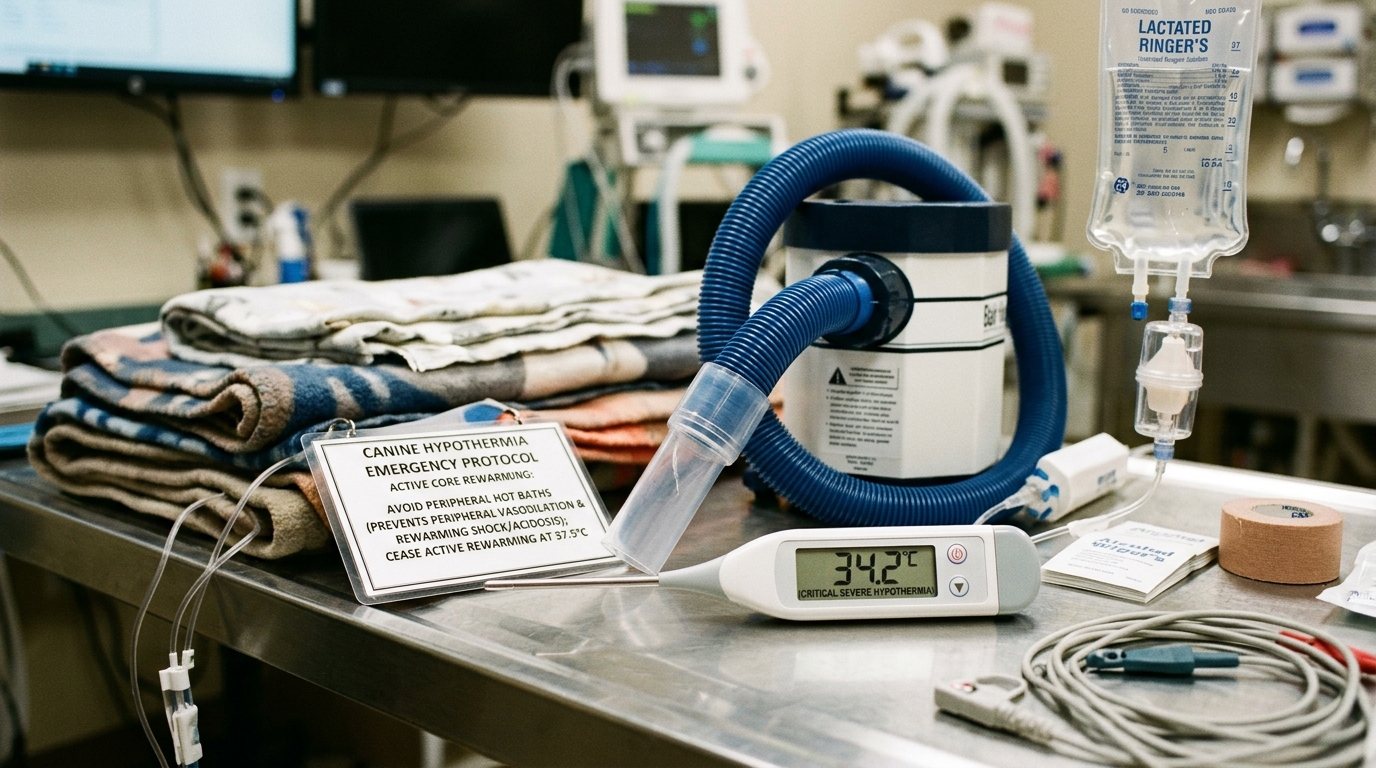
Clinical Quick Answer & Immediate Stabilization Protocol
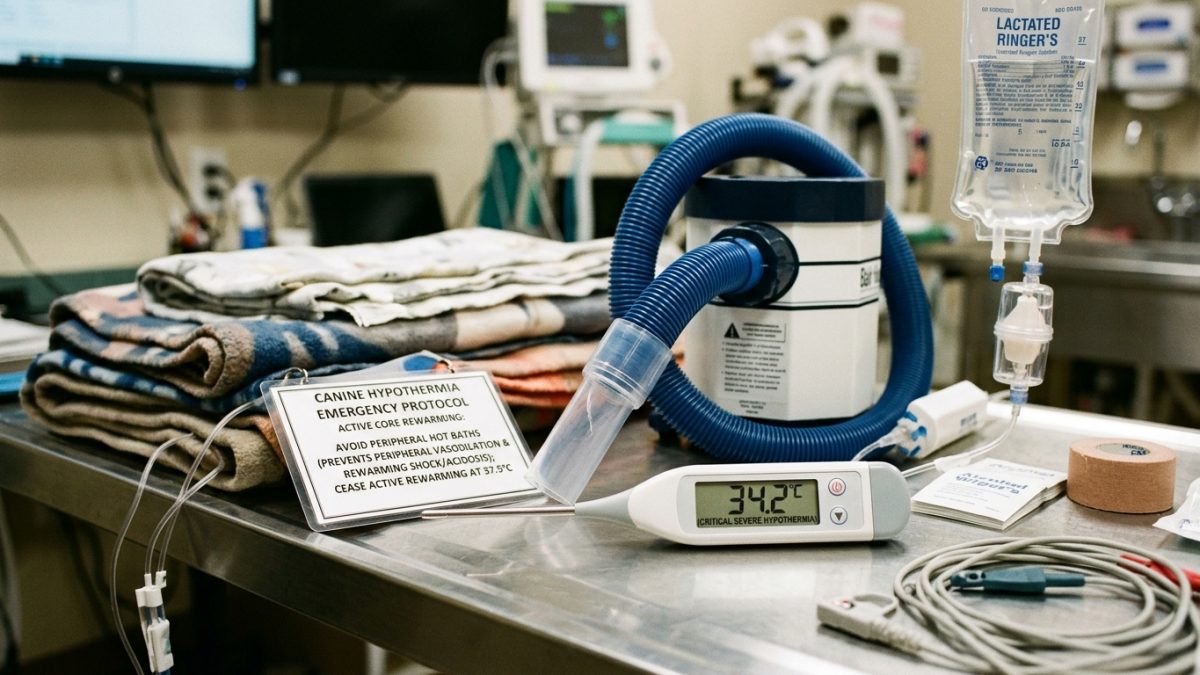
Primary Clinical Directive for Systemic Hypothermia (Mild, Moderate & Severe) and Peripheral Tissue Frostbite: Stratify hypothermia by accurate rectal digital thermometry and apply stage-matched rewarming: for Mild Hypothermia (95.0°F–99.0°F / 35.0°C–37.2°C, vigorous shivering, alert), bring the pet indoors, dry wet fur thoroughly, and wrap in warm dryer-heated blankets (passive + gentle external warming). For Moderate (90.0°F–95.0°F, muscle rigidity, stops shivering, stupor) or Severe Hypothermia (<90.0°F / <32.2°C, bradycardia, fixed pupils, unconsciousness), wrap the pet’s chest/abdomen (core first, leaving cold legs unheated) in warm blankets and transport immediately to an emergency veterinary ICU for convective forced-air warming (Bair Hugger), warmed IV fluids, dextrose verification, and frostbite analgesia.
Loss of Shivering Thermogenesis, Core Afterdrop Shock & Intracellular Frostbite Crystal Lysis
During mild hypothermia (95°F–99°F), the preoptic anterior hypothalamus triggers peripheral cutaneous vasoconstriction (shunting warm blood away from the ears, paws, and skin to preserve heart and brain perfusion) and violent skeletal muscle shivering, which temporarily boosts metabolic heat production fivefold. However, once core temperature drops below approximately 93°F to 94°F (34°C), glycogen depletion and cold-induced enzymatic slowing abolish the shivering reflex entirely. When an owner notices a freezing pet has “stopped shivering,” the animal is not warming up—it has slipped into life-threatening moderate-to-severe poikilothermic hypothermia. Below 88°F to 90°F, myocardial sodium-potassium-ATPase pumps slow dramatically, producing atropine-refractory sinus bradycardia, Osborn (J) waves at the QRS-ST junction, atrial fibrillation, cold-diuresis hypovolemia, and impaired hepatic drug clearance.
Concurrently, in peripheral tissues exposed to sub-freezing ambient temperatures (<32°F / 0°C)—most notably the thin ear pinnae, distal tail, scrotum, and wet paw pads—severe vasoconstriction allows tissue temperature to drop below freezing. Extracellular and intracellular ice crystals form, drawing water out of cells and causing hyperosmolar cellular dehydration and mechanical membrane shearing. When frostbitten tissue thaws, massive release of thromboxane A2, prostaglandins, and reactive oxygen species triggers microvascular thrombosis and progressive ischemic demarcation over 7 to 21 days.
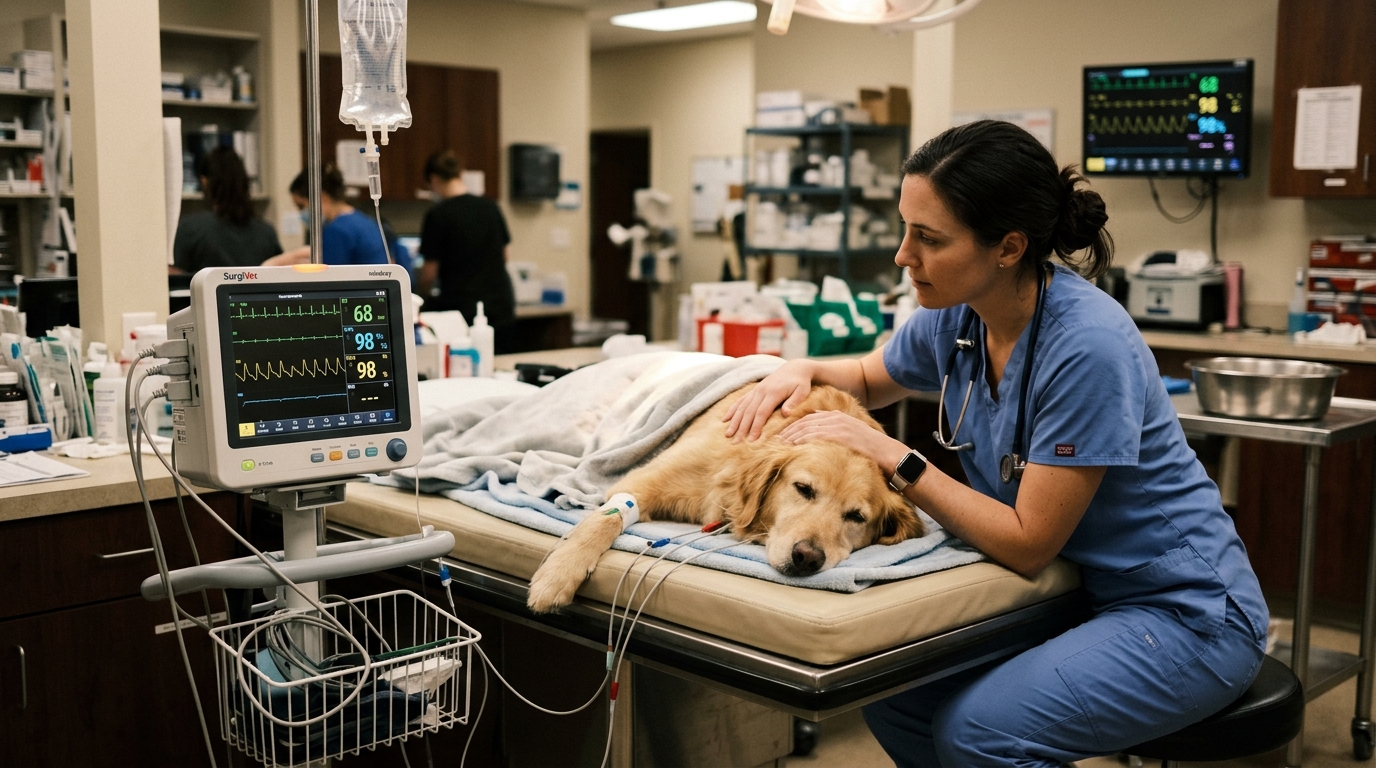
- The Core-Afterdrop Paradox (Why Extremity Heating Kills): If you place a hot pad against the legs of a hypothermic pet, peripheral arterioles dilate all at once; warm core blood rushes out into freezing limbs while icy, hyperkalemic, acidic peripheral blood dumps back into the cold myocardium, dropping core temperature a further 2°F–4°F and precipitating ventricular fibrillation.
- The Freeze-Thaw-Refreeze Catastrophe in Frostbite: Never thaw frostbitten ears or paws in the field if there is any chance the tissue could re-freeze during transport; thawing and re-freezing forms giant destructive ice crystals that guarantee tissue amputation.
- Radiant Burn Susceptibility (“Thermal Pad Burns”): Vasoconstricted hypothermic skin cannot dissipate heat via blood flow; an ordinary electric heating pad set on “High” causes deep third-degree necrotic burns on a cold dog or cat within 20 minutes.
- Neonatal Hypothermic Ileus Rule: Never tube-feed or bottle-feed milk replacer to a chilled puppy or kitten whose rectal temperature is below 96°F (35.5°C); gastrointestinal peristalsis ceases during hypothermia, causing milk to ferment in the stomach and aspirate into the lungs.
Emergency Triage Matrix: Clinical Presentation & Required Response
| Triage Level | Clinical Signs & Presentation | Immediate Action Protocol |
|---|---|---|
| Tier 1: Moderate-to-Severe Hypothermia (<95.0°F) or Pale/Hard Frostbitten Tissue | Rectal temperature <95.0°F (or thermometer reads “Lo”), absence of shivering despite cold body, slow heart rate, weak femoral pulse, stupor/coma, or pale gray/waxy hard ear tips, tail, or paws. | Wrap a warm dry blanket around the pet’s TORSO (neck to pelvis) while avoiding direct hot bottles or rubbing of cold ears/paws; pre-warm the car cabin and transport immediately to an emergency veterinary ICU for core convective warming, warmed IV fluids, and blood glucose support. |
| Tier 2: Mild Hypothermia (95.0°F–99.0°F) or Chilled Neonate | Alert dog or cat shivering vigorously after cold rain/snow exposure with rectal temperature between 95.0°F and 99.0°F; or neonate crying and cool to touch. | Move indoors immediately, towel-dry wet coat completely, wrap in blankets warmed in a clothes dryer (check temperature against your inner wrist first), recheck rectal temperature every 15 minutes, and call a vet if temperature fails to rise by 1°F–2°F per hour. |
| Tier 3: Winter Walk Prevention & Paw-Pad Salt Care | Dog lifts paws briefly on salted icy sidewalks while maintaining normal core temperature (100.5°F–102.0°F) and bright energy. | Shorten sub-freezing walks, fit an insulated windproof coat and booties on short-haired/toy dogs, and rinse de-icing rock salt (calcium/magnesium chloride) off paws with lukewarm water after every walk. |
Torso-First Convective Rewarming, Warm Water Immersion for Frostbite & Rewarming Monitoring
In the veterinary ICU, moderate-to-severe hypothermia is reversed at a controlled rate of 1.8°F to 3.6°F (1°C to 2°C) per hour using warm-air convective blankets (Bair Hugger) focused over the thorax and abdomen coupled with warmed (102°F–104°F) intravenous isotonic crystalloids and serial blood glucose checks (as intense early shivering frequently exhausts hepatic glycogen, causing severe hypoglycemia). Active rewarming is discontinued once core rectal temperature reaches 99.0°F to 99.5°F (37.2°C) to prevent rebound iatrogenic hyperthermia.
Once systemic core hypothermia is stabilized, localized peripheral frostbite is thawed by gentle immersion or compresses using circulating lukewarm water strictly calibrated with a thermometer to 100°F to 104°F (37.8°C to 40.0°C)—never hot tap water—for 15 to 20 minutes until the pale, waxy tissue flushes pink. Because frostbite thawing is intensely painful as nerve endings reperfuse, systemic veterinary opioid analgesia is administered prior to thawing, and an Elizabethan collar is placed immediately to prevent the pet from chewing or self-mutilating the tingling, demarcating digits or tail tip.
- Delayed Surgical Demarcation Rule (“Frostbite in January, Amputate in July”): Because superficial dermal blistering and black eschar often overlie viable deep granulation beds, veterinary surgeons wait 2 to 4 weeks for a clear line of dry gangrenous demarcation before performing conservative debridement or amputation.
- Warm-Wrist Safety Barrier for Home Bottles: If using warm water bottles during emergency car transport of a chilled pet, wrap at least two thick bath towels around the bottle, test it against your inner forearm for 30 seconds, and place it against the chest wall—never directly against bare skin.
- Atropine Inefficacy in Cold Bradycardia: Sinus bradycardia caused by hypothermia is mediated by direct cold depression of sinoatrial pacemaker cells rather than vagal tone; it resolves spontaneously with core rewarming and does not respond to atropine.
- Cat Engine-Block Winter Hazard: Outdoor and feral cats frequently climb up into warm automobile wheel wells and fan shrouds on freezing mornings; always bang firmly on your car hood before turning the ignition key in winter.
Strict Rule S1 Clinical Red Flags: Systemic Hypothermia (Mild, Moderate & Severe) and Peripheral Tissue Frostbite
Critical safety boundaries for Canine & Feline (Canis lupus familiaris & Felis catus — Toy Breeds, Neonates, Seniors & Winter Exposure) caregivers:
- Zero Friction Rubbing or Snow Rubbing on Frostbitten Ears/Paws: Never rub, massage, or squeeze cold, pale ear tips or paws; mechanical friction fractures frozen cell membranes laced with ice crystals and turns reversible frostnip into full-thickness tissue loss.
- Zero Unbuffered Electric Heating Pads or Hair Dryers on Hypothermic Pets: Never lay a lethargic hypothermic animal directly onto an electric heating pad or blow a hot hair dryer into a crate; localized thermal burns cause massive skin sloughing and septic shock.
Clinical Preparation & Biosecurity Action Checklist
- Keep a digital flexible-tip rectal thermometer and water-based lubricant in your pet first-aid kit (normal dog/cat temperature is 100.0°F–102.5°F).
- Dry a wet dog or cat immediately with absorbent microfiber towels and warm the torso with dryer-warmed blankets before attempting to warm the legs.
- Rinse chemical de-icers and antifreeze (ethylene glycol) residues off paws with lukewarm water immediately after winter walks.
- Bring all outdoor cats indoors and limit toy-breed, senior, and short-coated dog bathroom breaks to 5 minutes wearing an insulated coat when windchill drops below 20°F (-6°C).
Related Clinical Guides & Triage Protocols
Peer-Reviewed Clinical References & Evidence Grounding
- Pathophysiology, clinical staging, and active rewarming protocols for accidental hypothermia in small animals (opens in new tab) (Journal of Veterinary Emergency and Critical Care (2012) — Peer-reviewed critical care review by Oncken, Kirby & Rudloff indexed on NCBI PubMed (PMID: 23216634).)
- Accidental hypothermia and frostbite in dogs and cats: core afterdrop mechanisms and microvascular thawing management (opens in new tab) (Compendium on Continuing Education for the Practicing Veterinarian (2001) — Peer-reviewed clinical review indexed on NCBI PubMed (PMID: 11424576).)
- AVMA Cold Weather Animal Safety Guidelines: Hypothermia Recognition, Frostbite Triage, and De-Icer Toxicity Prevention (opens in new tab) (American Veterinary Medical Association clinical guidance on winter thermal hazards.)
- Merck Veterinary Manual: Hypothermia and Frostbite in Small Animals (opens in new tab) (Verified veterinary clinical reference on core-first rewarming, Osborn J-waves, and delayed frostbite demarcation.)
Source transparency
Reference mix for this guide
Source labels classify the institutional category of the references cited above.