This guide is general education for pet owners. If your pet has urgent symptoms, possible poisoning, injury, breathing trouble, collapse, severe pain, or sudden decline, contact a licensed veterinarian or local emergency service.
Editorial standard
How this guide was prepared
When an acute medical crisis strikes a companion animal, seconds dictate clinical outcomes. Determining whether an observed symptom represents an immediate, life-threatening emergency or a condition that can safely await a scheduled consultation requires clear, decisive triage criteria. Start emergency transport immediately, while placing an advance notification call to the nearest 24-hour veterinary emergency facility, for severe respiratory distress, acute collapse or unresponsiveness, a seizure lasting longer than five minutes (or clustered seizures), uncontrolled hemorrhage, catastrophic blunt trauma, complete inability to pass urine, acute heatstroke, or confirmed ingestion of lethal neurotoxins or organophosphates. Do not lose critical minutes deliberating over home remedies or completing secondary online checklists before initiating physical transit.
If your pet’s clinical signs are concerning but do not involve acute airway compromise, cardiovascular collapse, or progressive neurological failure, contact your primary veterinary care provider the same day. Veterinary triage teams will assign an operational urgency level based on species-specific risk factors, chronological progression, and vital organ stability. This clinical guide establishes explicit decision thresholds; it does not replace hands-on medical triage by licensed veterinary emergency professionals.
Quick Answer: Immediate Red Flags Requiring Rapid Veterinary Transit
Seek immediate emergency veterinary care if your dog or cat displays any of the following critical indicators: stark white, muddy grey, or cyanotic blue mucous membranes; open-mouth or laboured abdominal breathing (an absolute crisis in felines); non-productive retching paired with a tense, rapidly expanding tympanic abdomen (hallmark of GDV); sudden flaccid collapse or persistent inability to stand; active seizures lasting five minutes or repeating without return to consciousness; suspected ingestion of human pharmaceuticals, anticoagulant rodenticides, ethylene glycol, or toxic lilies (in cats); or repetitive, painful straining in the litter box without urine expulsion (signaling fatal urethral obstruction).
Clinical Action Matrix: Emergency Red Flags vs. Critical Home Actions
Emergency medicine prioritizes airway, breathing, and circulation (the clinical ABCs). When a red-flag condition presents, every second directed toward secondary concerns diminishes the likelihood of successful resuscitation.
| Clinical Observation | Immediate Emergency Action | Crucial Actions to Avoid (Do Not Lose Time On) |
|---|---|---|
| Acute Respiratory Distress: Gasping, exaggerated abdominal heave, orthopneic extended neck posture, cyanotic blue or pale gums, or open-mouth panting in a cat. | Place pet in a carrier or flat surface with neck unbent, initiate vehicle transit, and call ahead to request an oxygen cage or flow-by mask upon arrival. | Offering food or water, performing repeated oral checks, attempting rectal temperature measurement, or forcing the animal into a seated or compressed position. |
| Cardiovascular Collapse or Severe Stupor: Sudden loss of consciousness, flaccid weakness, inability to bear weight, or deep unresponsiveness to auditory stimuli. | Transport immediately on a flat, firm blanket or board. Notify the emergency hospital of suspected shock, hemorrhage, or cardiac arrhythmia. | Attempting to force walking, administering home electrolytes, shaking or shouting at the pet, or waiting for a second collapse episode before moving. |
| Status Epilepticus or Cluster Seizures: An active seizure extending beyond 5 minutes, or multiple discrete seizures occurring within a 24-hour window without consciousness recovery. | Clear hazardous furniture away, protect the head from impact with soft towels, time the duration precisely, and transport immediately in a darkened, quiet vehicle. | Placing fingers, spoons, or objects inside the jaw (animals do not swallow their tongues), restraining thrashing limbs, or delaying transit to capture extended smartphone video. |
| Uncontrolled Hemorrhage or Major Trauma: Pulsatile arterial bleeding, open penetrating wounds, vehicular impact, fall from height, or exposed bone fractures. | Apply firm, continuous direct pressure with sterile gauze or clean towels; maintain constant pressure throughout transit without lifting the dressing. | Probing the depth of puncture wounds, removing deeply embedded impalement objects, repeatedly lifting bandages to check clotting, or washing open wounds at home. |
| Complete Urethral Obstruction: Repetitive straining in litter box or outdoors with vocalization, penis licking, painful caudal abdomen, and zero urine production. | Transport directly to emergency care. Complete urethral blockage in male cats results in fatal hyperkalemia and cardiac arrest within 24 to 48 hours. | Waiting for a subsequent litter box visit, palpating or squeezing the painful bladder, or mistaking stranguria for simple constipation. |
| Severe Hyperthermia (Heatstroke): Ambient heat exposure with thick hyper-salivation, brick-red gums, vomiting, ataxia, petechial hemorrhages, or rectal temp >104°F (40°C). | Remove from heat source, apply room-temperature or cool tap water over torso and paws, turn car air conditioning on maximum, and drive immediately to the clinic. | Submerging the animal in ice water baths (causes peripheral vasoconstriction and shivering that traps core heat), forcing cold water ingestion, or delaying transit to find cooling pads. |
| Gastric Dilatation-Volvulus (GDV / Bloat): Retching with unproductive dry-heaving, excessive salivation, severe restlessness, and a tight drum-like cranial abdomen. | Proceed immediately to surgical emergency hospital. Gastric rotation compresses the caudal vena cava, inducing irreversible obstructive shock within hours. | Offering anti-gas simethicone drops, attempting to pass a stomach tube at home, waiting to see if burping occurs, or delaying surgical decompression. |
| Lethal Toxin Ingestion: Confirmed access to rodenticides, human painkillers (NSAIDs/acetaminophen), ethylene glycol antifreeze, chocolate, xylitol, or Easter lilies. | Contact ASPCA Animal Poison Control or Pet Poison Helpline and emergency hospital immediately. Have packaging, active ingredients, and ingested volume ready. | Waiting for clinical symptoms to manifest, administering hydrogen peroxide or salt to induce vomiting without veterinary authorization, or administering raw milk or charcoal. |
Respiratory Distress: Recognizing the Subtle Onset of Dyspnea
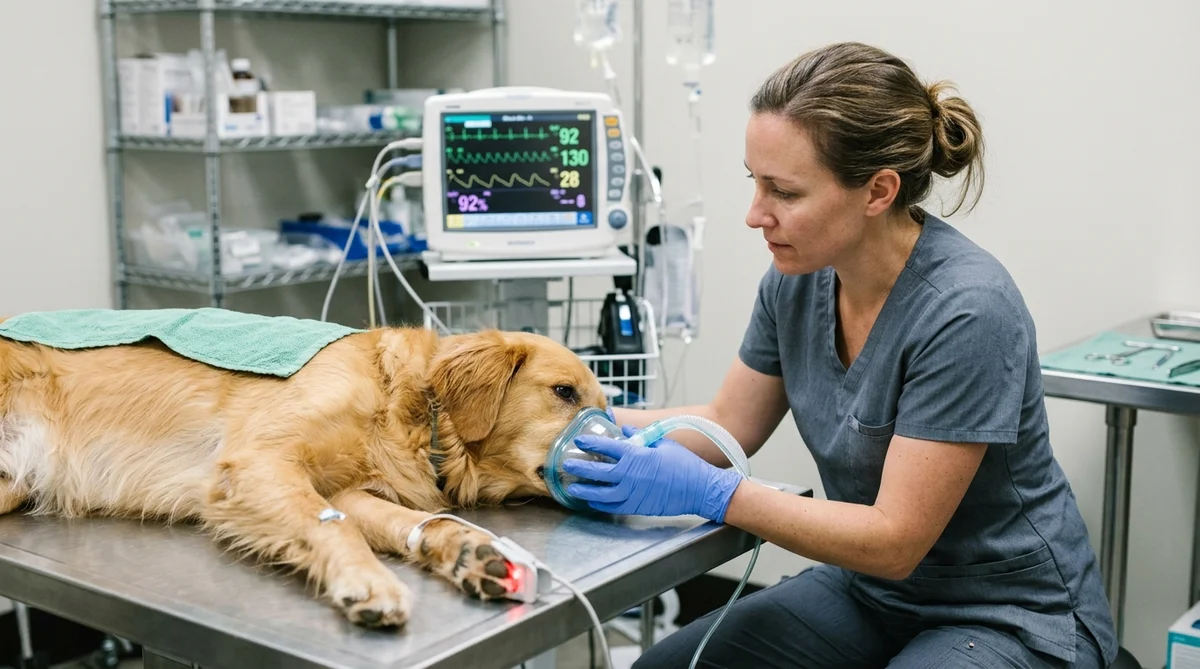
Canine and feline respiratory distress ranks among the most rapidly fatal medical emergencies. Unlike humans, dogs and cats possess minimal physiological reserves when oxygenation fails. In feline patients, open-mouth breathing is never a benign response to exercise or mild warmth; it represents acute pulmonary decompensation stemming from conditions such as feline asthma, congestive heart failure (secondary to hypertrophic cardiomyopathy), pneumothorax, or severe pleural effusion.
Clinicians evaluate respiratory distress across three primary mechanical presentations:
- Inspiratory Dyspnea: Marked effort during the inhalation phase, frequently characterized by audible high-pitched stridor or stertor. This clinical presentation points toward upper airway obstruction, including laryngeal paralysis, brachycephalic airway obstructive syndrome (BAOS), tracheal collapse, or obstructing pharyngeal foreign bodies.
- Expiratory Dyspnea: Pronounced abdominal contraction during the exhalation phase, often accompanied by an audible end-expiratory grunt or wheeze. This classic “abdominal push” is characteristic of lower airway obstruction, particularly feline bronchial asthma and chronic obstructive bronchitis.
- Rapid Shallow Tachypnea: Extremely fast, shallow chest oscillations without stridor. This pattern indicates restrictive lung disease, such as pleural space disease (fluid or air compressing lung lobes), pulmonary contusions following blunt vehicular trauma, or fulminant pulmonary edema.
When transporting a dyspneic animal, maintain an unobstructed airway by keeping the neck in a natural, neutral extension. Avoid compressing the rib cage or wrapping tight blankets around the thorax. Minimize handling to reduce systemic oxygen consumption until the clinical team can place the animal into a temperature-controlled oxygen chamber or administer flow-by oxygen via face mask.
Cardiovascular Shock & Perfusion: How to Assess Mucous Membranes
Cardiovascular shock occurs when systemic tissue perfusion falls below the threshold required to sustain cellular metabolism. Shock rapidly progresses through three distinct phases: compensated shock, uncompensated shock, and terminal decompensation. Pet owners can detect early circulatory collapse by evaluating mucous membrane color and Capillary Refill Time (CRT) inside the mouth.
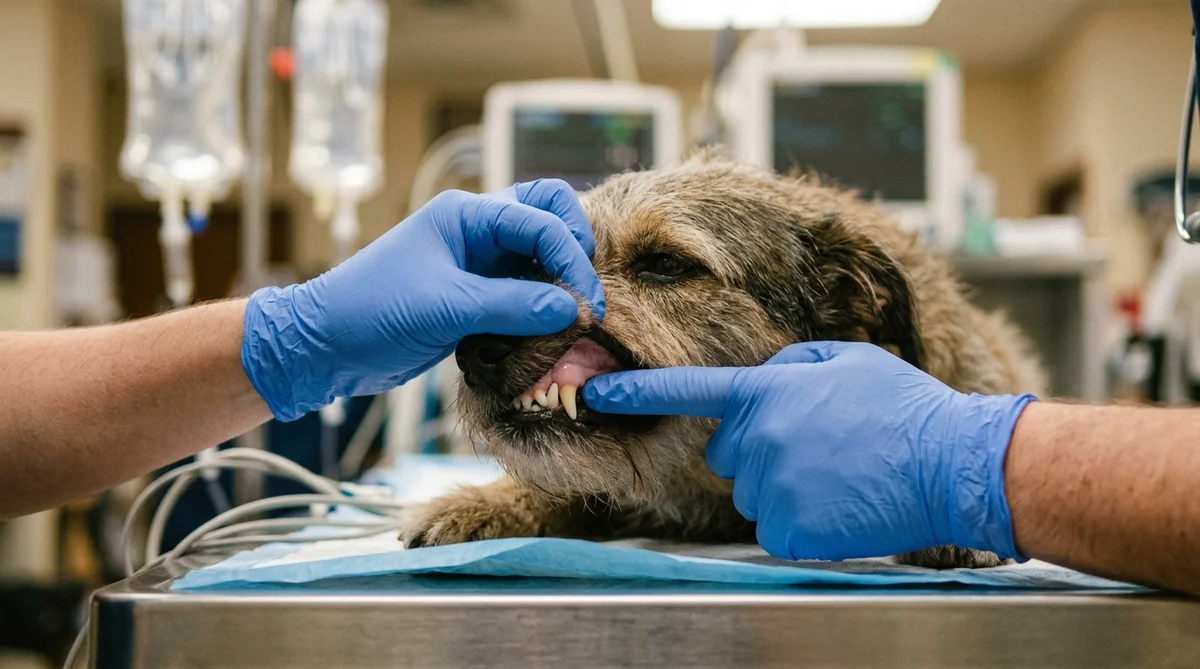
To safely evaluate capillary refill time:
- Gently roll up the upper lip to expose the pink gingival mucosa above the canine teeth (avoiding areas with natural black pigment).
- Note the baseline color of the gingiva: healthy canine and feline gums display a clear, salmon-pink coloration with a glistening, moist surface.
- Firmly press your index finger against the gum tissue for two seconds until the area blanches white, then release.
- Count the exact seconds required for the pink capillary color to return:
- Normal Perfusion: 1.0 to 1.5 seconds. The blanched area flashes back to pink immediately.
- Prolonged CRT (>2.0 to 3.0 seconds): Indicates poor peripheral vascular perfusion, severe vasoconstriction, dehydration, hypovolemia, or early cardiogenic shock.
- Rapid CRT (<1.0 second with hyperemic brick-red gums): Suggests hyperdynamic distributive shock, often seen in systemic sepsis, heatstroke, or acute anaphylaxis.
- Porcelain White or Pale Grey Gums: Severe acute hemorrhage (ruptured splenic hemangiosarcoma, rodenticide coagulopathy), hemolytic anemia, or advanced circulatory collapse.
- Cyanotic Slate-Blue Gums: Extreme deoxygenation, severe hypoxia, or upper airway obstruction requiring immediate intubation.
- Icteric Yellow Gums: Acute hepatic necrosis, severe bilirubinemia, or intravascular hemolysis.
Seizures: The 5-Minute Rule and Status Epilepticus
Witnessing a pet experience a grand mal seizure—characterized by lateral recumbency, violent tonic-clonic muscle contractions, jaw champing, sialorrhea (foaming salivation), and involuntary urination or defecation—is profoundly distressing for caregivers. However, clinical management demands calm, objective action rather than physical intervention.
Veterinary neurologists distinguish between isolated self-limiting seizures and true neurological emergencies:
- Isolated Epileptic Event (<3 Minutes): The vast majority of canine idiopathic seizures resolve spontaneously within 60 to 90 seconds. While requiring urgent veterinary consultation to determine underlying etiology, an isolated seizure lasting under three minutes rarely causes permanent thermal or neurological damage. Keep the pet safe from falls, extinguish bright lights, eliminate loud sounds, and record the exact duration.
- Status Epilepticus (>5 Minutes): If tonic-clonic activity persists continuously for five minutes, the event transitions into status epilepticus. Continuous muscular contractions generate severe endogenous hyperthermia (body temperatures frequently spike above 106°F / 41°C), causing irreversible excitotoxic neuronal death, systemic lactic acidosis, and cerebral edema. Status epilepticus requires immediate intravenous anticonvulsant therapy (such as midazolam or propofol) administered in a clinical setting.
- Cluster Seizures: Two or more discrete seizures occurring within a single 24-hour period represent a medical emergency, even if the individual episodes last less than two minutes. Cluster seizures indicate severe progressive cerebral irritation that frequently escalates into refractory status epilepticus without parenteral anticonvulsant loading.
Feline Urethral Obstruction: An Absolute Metabolic Emergency
Feline Lower Urinary Tract Disease (FLUTD), feline idiopathic cystitis (FIC), and crystalline urethral plugs present an existential danger to male cats. Due to the long, narrow, tapering conformation of the male feline penile urethra, inflammatory mucous, blood clots, and struvite or calcium oxalate crystals readily form a complete physical plug.
When the bladder cannot empty, urine backs up into the ureters and renal pelvis, halting glomerular filtration. Within 24 hours of complete obstruction, toxic metabolic waste products accumulate in the bloodstream (post-renal azotemia). Most critically, serum potassium levels skyrocket (hyperkalemia). Serum potassium concentrations exceeding 7.0 to 8.0 mEq/L disrupt myocardial electrical conduction, producing severe sinus bradycardia, sinoatrial block, ventricular arrhythmias, and sudden fatal cardiac arrest.
Never assume a male cat repeatedly visiting the litter box, crying in discomfort, and producing tiny dribbles is merely constipated. If no sizable urine clump is produced, consider the situation an acute metabolic emergency requiring immediate urethral desobstruction, intravenous calcium gluconate cardioprotection, and catheterization under sedation.
Acute Abdominal Crises: GDV, Hemoperitoneum, and Septic Peritonitis
The canine abdomen houses vital vascular structures and parenchymal organs susceptible to rapid, catastrophic failure. Two abdominal emergencies demand instantaneous surgical intervention:
Gastric Dilatation-Volvulus (GDV)
Commonly known as bloat, GDV primarily strikes large, deep-chested canine breeds (such as Great Danes, German Shepherds, Standard Poodles, and Weimaraners). In GDV, the stomach distends with gas, fluid, and foam, then rotates along its long axis (typically clockwise 180 to 360 degrees). This torsion pinches the lower esophageal sphincter and duodenum, trapping gas inside. As intra-gastric pressure escalates, the massive stomach compresses the caudal vena cava and portal vein, drastically reducing venous return to the heart. Cardiac output plummets, inducing severe obstructive shock, gastric wall necrosis, and splenic infarction. Emergency decompression via trocharization or orogastric intubation and surgical gastropexy must be performed within hours of onset.
Acute Hemoperitoneum
Internal abdominal bleeding frequently arises from trauma or the spontaneous rupture of visceral tumors, particularly splenic or hepatic hemangiosarcoma in older dogs (Golden Retrievers, German Shepherds, Labrador Retrievers). The pet may exhibit sudden weakness, a distended doughy abdomen, rapid heart rate, and pale mucous membranes without a single drop of external blood visible. Abdominal point-of-care ultrasound (AFAST) performed in the emergency triage bay confirms free peritoneal fluid within minutes.
Safe Emergency Transport and Immobilization Protocols
Caregivers frequently cause accidental secondary trauma when attempting to lift or transport an injured, panicked companion animal. A pet in severe pain will bite instinctively, even snapping at lifelong owners. Proper mechanical transport preserves caregiver safety while stabilizing the animal’s skeletal alignment.
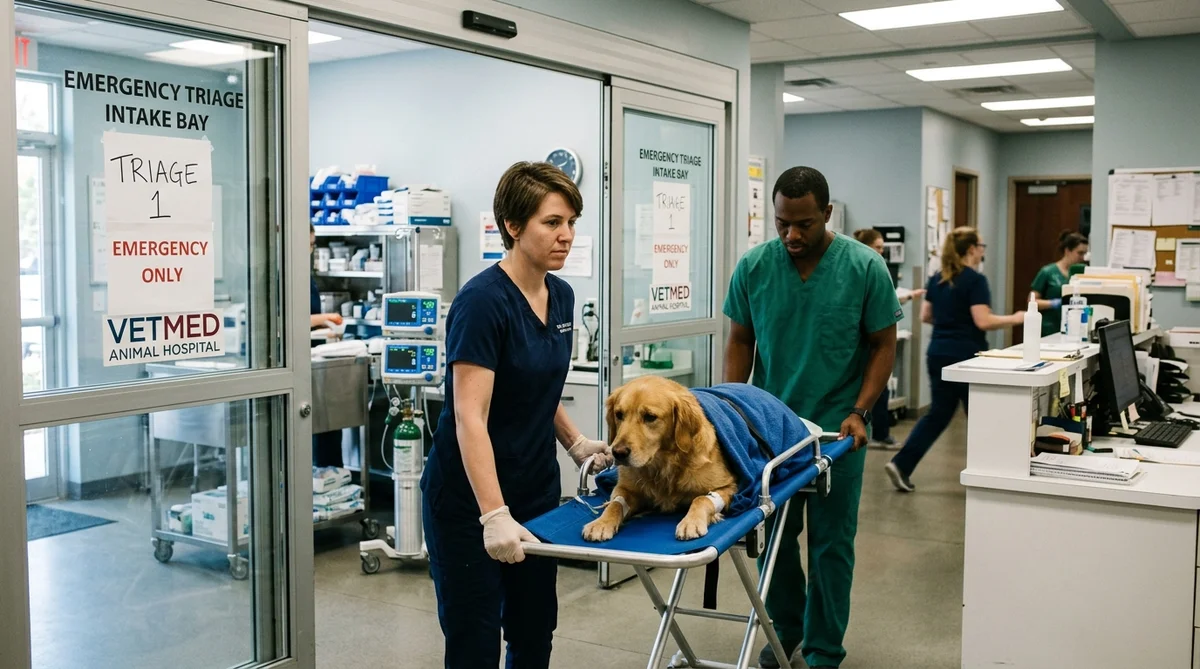
Adhere to these clinical transport rules:
- Muzzling with Discretion: If the animal is snapping and must be handled, apply a temporary soft gauze muzzle or cloth strip across the snout. Absolute contraindications to muzzling: Never muzzle an animal with respiratory distress, facial injuries, bloody nasal discharge, active vomiting, or altered mental consciousness, as muzzling risks fatal asphyxiation or aspiration.
- The Improvised Stretcher for Large Dogs: For dogs weighing over 30 pounds that are recumbent, suspected of spinal trauma, or unable to bear weight, slide a thick, non-stretch blanket, heavy quilt, or plywood board beneath the animal. With two handlers lifting simultaneously on opposite corners, keep the spine straight and level, preventing twisting or sag as you transfer the dog into the vehicle.
- Secure Feline Carrier Loading: Transport cats and small dogs exclusively in rigid carriers. If a cat is distressed or painful, remove the top lid of a two-piece plastic carrier, gently place the cat inside wrapped loosely in a towel (the “kitty burrito” technique), and secure the top shell in place. This avoids forcing an agonized animal through a narrow front metal door.
- Advance Clinic Notification: Call the emergency facility while en route. State the pet’s species, weight, primary red-flag symptom, estimated time of arrival, and whether a stretcher or oxygen setup must be staged at the intake doors upon arrival.
Same-Day Veterinary Care vs. Routine Scheduling
Not every urgent condition requires high-speed emergency transit. Many conditions can be triaged and addressed safely within 12 to 24 hours by your regular primary care veterinary clinic:
- Single Uncomplicated Seizure: A pet that suffers an isolated seizure lasting under 2 minutes, recovers fully within 30 minutes, and demonstrates normal mentation and ambulation can be scheduled for same-day evaluation.
- Mild Gastrointestinal Upset: One or two episodes of vomiting or soft diarrhea without blood, where the pet remains bright, alert, and hydrated without abdominal pain, warrants same-day veterinary contact rather than midnight emergency room visits.
- Corneal Ulcers or Ocular Trauma: Eye injuries (squinting, cloudiness, pawing at the eye) are acutely painful and risk vision loss. They require same-day fluorescein staining and tonometry, but do not require code-red transit ahead of respiratory cases.
- Superficial Lacerations and Bite Wounds: Non-arterial puncture wounds and skin cuts with controlled bleeding should be debrided and sutured within 6 to 12 hours before bacterial contamination progresses into entrenched cellulitis.
- Persistent Coughing without Dyspnea: Paroxysmal coughing (such as infectious tracheobronchitis / kennel cough) where the dog remains energetic, eats normally, and exhibits normal pink gums should be examined by a veterinarian within 24 to 48 hours.
Frequently Asked Questions
What should I do first if my pet is having a seizure?
Prioritize physical safety and timing. Clear hard objects, sharp furniture edges, and stairs away from your pet. Extinguish bright room lights and silence televisions. Do not place fingers, spoons, or objects inside the mouth; pets do not swallow their tongues, and severe bite injuries can result. Time the seizure accurately. If it lasts longer than 5 minutes, or if another seizure occurs before full recovery, transport your pet immediately to an emergency clinic.
How can I tell if my cat’s difficulty breathing is an emergency?
Open-mouth breathing, panting with the tongue out, flared nostrils, extended neck, and noticeable abdominal pumping in a cat are critical medical emergencies. Cats only open-mouth breathe when severe pulmonary compromise, pleural effusion, or congestive heart failure is present. Transport your cat to an emergency hospital immediately in a covered, secure carrier.
Is non-productive retching in a large dog dangerous?
Yes. Non-productive retching—where the dog repeatedly gags or tries to vomit but brings up only small amounts of white foam—is the classic clinical sign of Gastric Dilatation-Volvulus (GDV or bloat). This is a surgical emergency that rapidly progresses to shock and death if not decompressed and corrected surgically within hours.
Can I induce vomiting at home if my dog ate something toxic?
Never induce vomiting without explicit authorization from a veterinarian or an animal poison control specialist. Inducing vomiting is dangerous and contraindicated if the pet swallowed caustic chemicals, battery acids, sharp items, or oil-based petroleum products, or if the pet is lethargic, obtunded, or having seizures, as this can cause fatal chemical aspiration pneumonia.
Sources
Sources checked: September 8, 2026
- Merck Veterinary Manual: What to Do in a Dog or Cat Emergency
- American Animal Hospital Association (AAHA): Emergency Care Guidelines for Dogs and Cats
- VCA Animal Hospitals: Seizures—General for Dogs
- VCA Animal Hospitals: Seizures and Epilepsy in Cats
- Cornell University College of Veterinary Medicine: Heatstroke—A Medical Emergency
- Cornell Feline Health Center: Feline Lower Urinary Tract Disease
- ASPCA Animal Poison Control Center: Emergency Toxicology Management
Source transparency
Reference mix for this guide
Source labels describe the type of organization behind each reference; they are not a claim that any outside organization reviewed this article.
- Merck Veterinary Manual: What to Do in a Dog or Cat Emergency Veterinary organization · merckvetmanual.com
- American Animal Hospital Association (AAHA): Emergency Care Guidelines for Dogs and Cats Veterinary organization · aaha.org
- VCA Animal Hospitals: Seizures—General for Dogs Reference source · vcahospitals.com
- VCA Animal Hospitals: Seizures and Epilepsy in Cats Reference source · vcahospitals.com
- Cornell University College of Veterinary Medicine: Heatstroke—A Medical Emergency Academic or extension · vet.cornell.edu
- Cornell Feline Health Center: Feline Lower Urinary Tract Disease Academic or extension · vet.cornell.edu
- ASPCA Animal Poison Control Center: Emergency Toxicology Management Animal welfare nonprofit · aspca.org