This guide is general education for pet owners. If your pet has urgent symptoms, possible poisoning, injury, breathing trouble, collapse, severe pain, or sudden decline, contact a licensed veterinarian or local emergency service.
Dosages must be calculated by a licensed veterinarian based on species, weight, and bloodwork. Never administer human medications or self-adjust prescription doses for pets.
Editorial standard
How this guide was prepared
Whether a dog steps on broken glass during a trail walk, catches an ear tip in a scuffle, breaks a vascularized nail quick, or suffers a dog-bite puncture wound, acute visible bleeding triggers immediate caregiver panic. Yet two common instinctual reactions by pet owners during a bleeding emergency frequently worsen blood loss and delay healing: (1) lifting the gauze pad every 30 seconds to “peek and see if the bleeding has stopped” (which rips the fragile primary platelet-fibrin plug right off the torn vessel wall and restarts the clock at zero), and (2) pouring harsh cytotoxic liquids—hydrogen peroxide, rubbing alcohol, or undiluted povidone-iodine—into an open laceration, which kills exposed fibroblasts and prevents primary surgical suture closure.
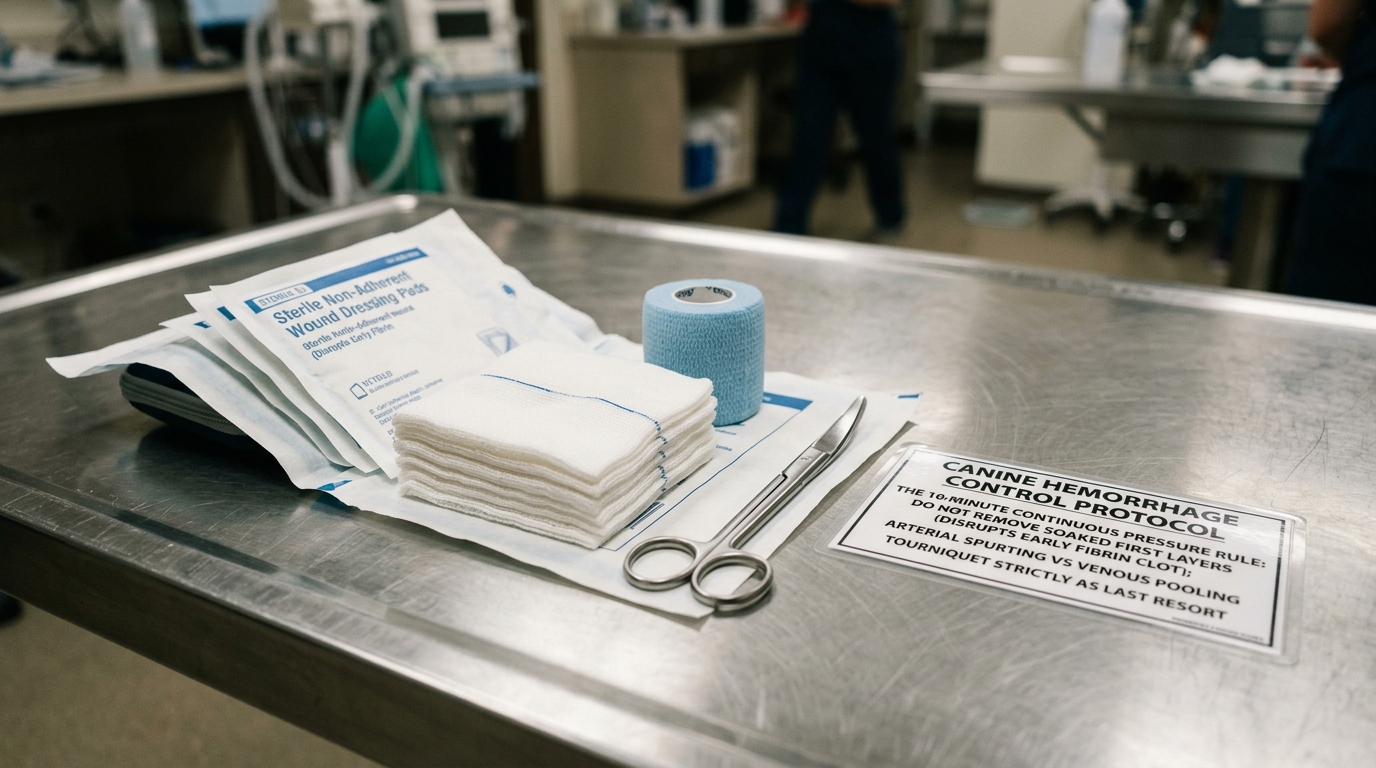
Clinical Quick Answer & Immediate Stabilization Protocol
Primary Clinical Directive for Acute Traumatic External Hemorrhage, Paw-Pad/Pinna Laceration & Puncture Wound Triage: Stop external bleeding using the “Press-Stack-Wrap-Transport” protocol: press a thick stack of clean gauze sponges, a folded cotton washcloth, or a sanitary napkin firmly and continuously against the bleeding wound with the heel of your hand for a full 5 to 10 uninterrupted minutes by the clock. If blood soaks through the pad, NEVER lift or remove the first pad—stack a second thick pad directly on top and maintain firm pressure. For penetrating chest/abdominal wounds or dog-bite punctures (which follow the “iceberg rule” of massive deep tissue dead-space tearing beneath tiny 3-mm skin holes), transport immediately to a veterinarian within the 6-to-8-hour golden window for sterile surgical lavage and drain/suture closure.
Primary Platelet Plug Kinetics, The Dog-Bite “Iceberg Effect” & Cytotoxic Antiseptic Necrosis
When an arterial (bright red, rhythmic pulsatile spurting) or venous (dark red, steady rapid welling) blood vessel is severed, physiological hemostasis requires 3 to 8 minutes of continuous mechanical tamponade to reduce transmural shear stress so Von Willebrand factor can anchor platelets to exposed subendothelial collagen (primary hemostasis) and the coagulation cascade can polymerize a stable cross-linked fibrin mesh (secondary hemostasis). When an anxious caregiver lifts the blood-soaked cloth at 60 seconds to check the wound, the hydrophilic fabric pulls the nascent platelet plug off the arteriole, restarting active hemorrhage. Applying uninterrupted pressure for a full 5 to 10 minutes—while elevating a bleeding limb slightly if no bone fracture is suspected—allows the clot to anchor inside the vessel lumen.
In dog-bite wounds, external blood loss is often deceptively minimal, concealing a life-threatening deep injury. Canine canine teeth function by gripping the skin while the attacking dog shakes its head laterally. Because a dog or cat’s loose skin slides smoothly over the underlying fascia, the small 4-mm puncture holes on the surface conceal massive subcutaneous avulsion (“pocketing” or dead space), crushed intercostal or abdominal musculature, inoculated oral anaerobic/aerobic bacteria (Pasteurella, Staphylococcus, Enterococcus), and potential rib fractures or intestinal perforation—the classic veterinary “tip of the iceberg” phenomenon.
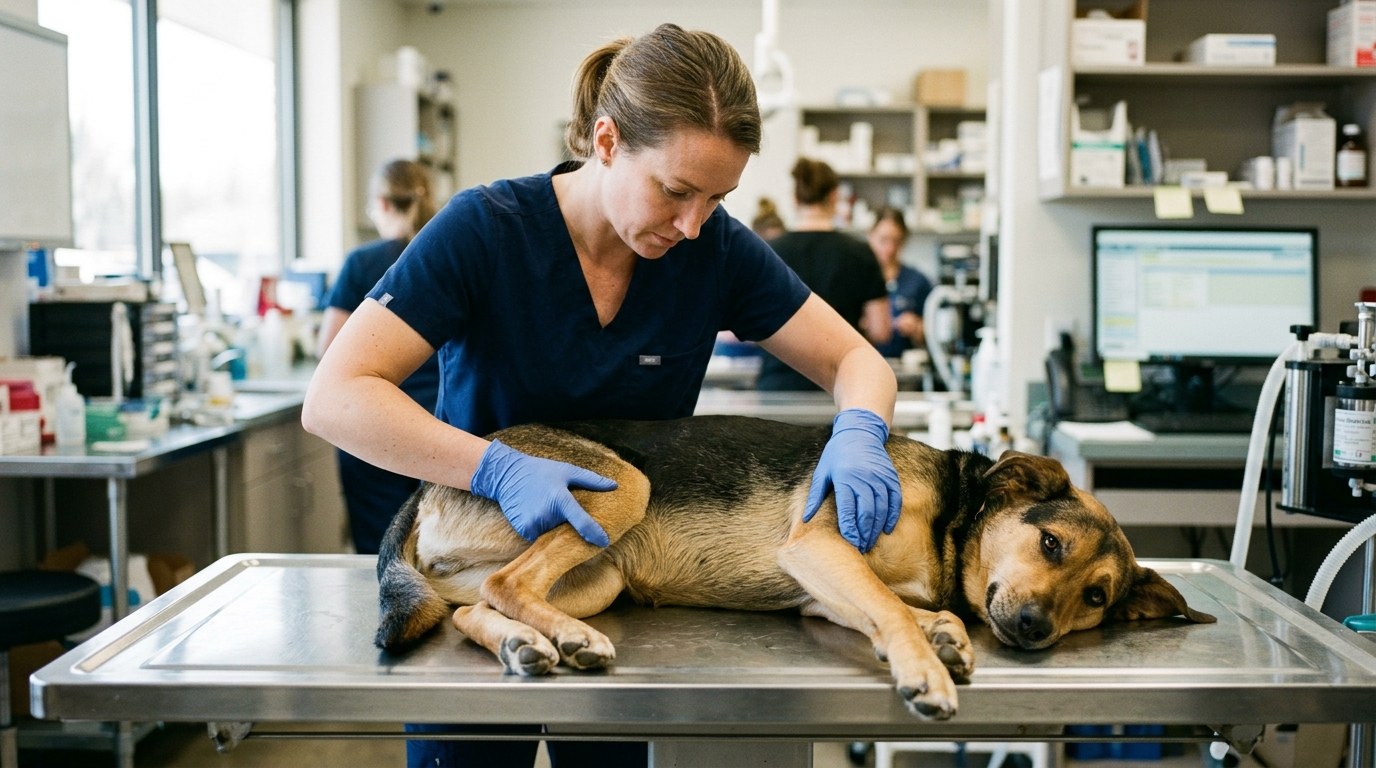
- Paw Pad & Ear Tip (Pinna) Hypervascularity: Digital paw pads bear weight on specialized fibro-adipose cushions laced with dense arteriovenous anastomoses that gape open when cut; ear tips bleed profusely because every head shake flings nascent clots across the room—requiring an instant gentle head wrap (stockinette/towel pinning the ear flat over the top of the head) to stop centrifugal re-bleeding.
- Why Hydrogen Peroxide Destroys Wound Healing: Three-percent hydrogen peroxide effervesces via catalase oxidation, indiscriminately lysing healthy canine/feline fibroblasts, keratinocytes, and capillary endothelial buds while forcing air bubbles into tissue planes; flush contaminated wounds ONLY with sterile 0.9% isotonic saline or clean lukewarm tap water.
- Torn Nail Quick Hemostasis: A broken dewclaw or toenail bleeds briskly from the intra-osseous digital vessel inside the nail bed; pressing cornstarch, flour, or styptic powder (ferric subsulfate / silver nitrate) firmly onto the tip for 3 minutes controls bleeding once the dangling loose nail shell is trimmed by a vet.
- The 6-to-8-Hour Golden Window for Primary Closure: Bacterial contamination on a fresh laceration remains on the surface for the first 6 to 8 hours; after 8 to 12 hours, bacteria invade deep tissue planes (>10^5 CFU/gram), often requiring delayed open-wound management rather than simple stitches.
Emergency Triage Matrix: Clinical Presentation & Required Response
| Triage Level | Clinical Signs & Presentation | Immediate Action Protocol |
|---|---|---|
| Tier 1: Pulsatile Arterial Spurting, Neck/Chest/Abdomen Penetration or Shock (0–30 Mins) | Bright red blood spurting rhythmically, blood pooling rapidly on the floor, any bite or puncture over the chest (sucking sound/dyspnea), throat, or abdomen, or pale/white gums with weakness and rapid heart rate. | Apply firm continuous direct pressure with a thick folded towel right in the car while a second person drives immediately to an emergency veterinary hospital; seal any sucking chest wound with a clean plastic wrap/towel held over the defect. |
| Tier 2: Gaping Skin Laceration (>1 cm), Deep Paw-Pad Cut or Any Bite Puncture (1–4 Hours) | Bleeding slows or stops after 5–10 minutes of direct pressure, but the wound edges gap open exposing pink muscle/yellow fat, a paw pad is sliced, or any animal bite puncture is present. | Cover the wound with a sterile non-stick pad and a loose protective gauze wrap (keep two-finger slack), do NOT apply home ointments or glues, fit an E-collar, and see a veterinarian within 4 hours for surgical clip, sterile lavage, dead-space exploration, and sutures. |
| Tier 3: Superficial Epidermal Scrape or Broken Toenail Tip | Shallow skin graze (does not penetrate full skin thickness) or snagged toenail quick where bleeding stopped completely within 5 minutes of pressure/styptic application and the pet is walking comfortably. | Flush a superficial graze gently with sterile saline, keep an E-collar on so rough tongue papillae do not lick the scrape into a hot spot, and schedule a non-emergency vet visit if a dangling broken nail sheath needs trimming. |
The Stack-Don’t-Peek Compression Rule, Ear-Tip Head Wraps & Why Superglue Traps Infection
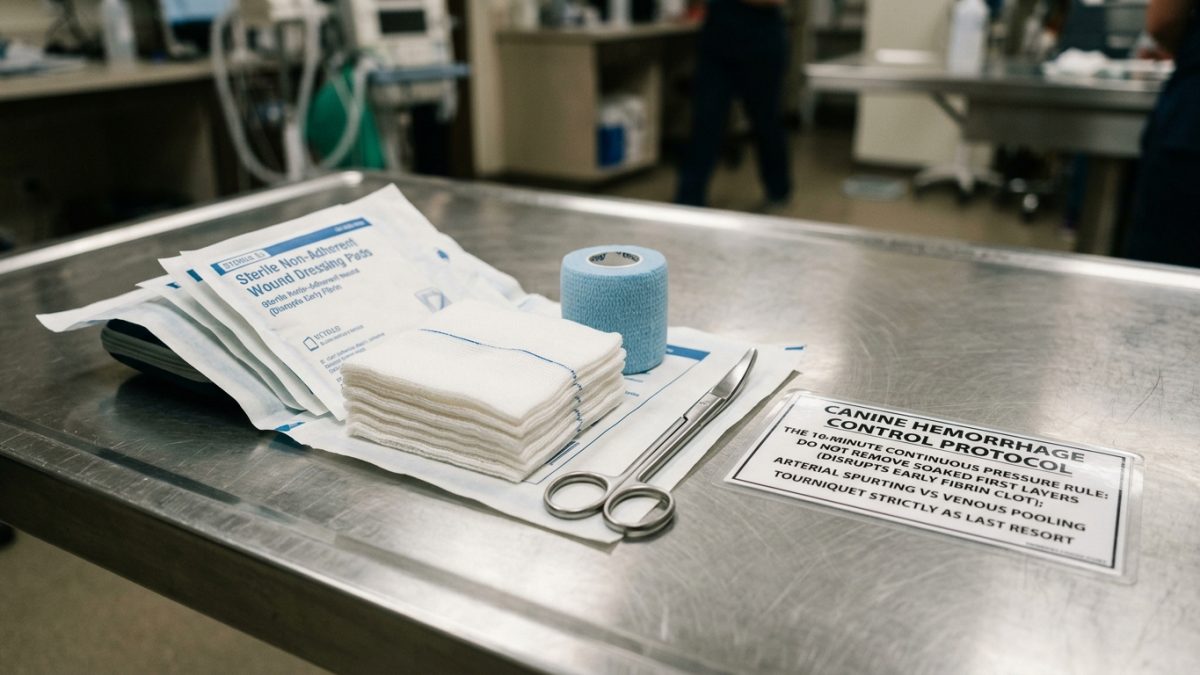
When wrapping a limb laceration or paw-pad cut for transport to the veterinary clinic, always pad from the toes upward: if you wrap a tight bandage solely around the mid-forearm or shin without including the paw, venous outflow from the foot is obstructed and the paw swells rapidly like a balloon within 30 minutes. Place a sterile non-adherent pad (Telfa) and a thick stack of gauze over the wound, wrap a soft roll of cast padding or rolled gauze smoothly from the toes up past the wound, and secure with a self-adherent cohesive layer (Vetrap) that you have unrolled and re-rolled loosely first so the elastic stretch is relaxed. You must be able to slide two fingers comfortably beneath the top rim of the bandage.
Upon arrival at the veterinary clinic, clinicians apply sterile water-soluble lubricating jelly (K-Y jelly) directly into the open wound bed BEFORE clipping surrounding fur with electric clippers (so clipped hair shafts stick to the jelly and rinse right out rather than embedding into the raw muscle), perform high-volume low-pressure (7–8 psi) sterile isotonic lavage using a 35-mL syringe and 18-gauge needle, debride non-viable margins, and place a Penrose or closed-suction Jackson-Pratt drain if deep bite dead space exists.
- Never Put Household Superglue (Cyanoacrylate) or Liquid Bandage on Pet Wounds: Closing an unlavaged pet laceration or paw-pad cut at home with household superglue seals hair, soil, and anaerobic bacteria deep inside the wound while generating an exothermic chemical burn—virtually guaranteeing a deep purulent abscess within 72 hours.
- Why Triple-Antibiotic Ointment (Neosporin) Has Risks in Cats & Dogs: Avoid smearing over-the-counter polymyxin-bacitracin-neomycin ointments into deep wounds before veterinary closure; ointments interfere with surgical suturing, dogs lick the greasy ointment off immediately (re-traumatizing the wound), and polymyxin/neomycin topical products carry rare anaphylactic risk in cats.
- How to Stabilize a Bleeding Ear Tip for Transport: Place a clean gauze pad over the bleeding ear tip, fold the ear flap gently up onto the top of the dog’s skull, and slide a clean cut tube-sock or loose stretch gauze Loop around the head and under the jaw (checking that two fingers fit easily at the throat) so the dog cannot flap the ear during the car ride.
- Internal Bleeding Warning After Blunt Trauma: A dog or cat hit by a car or dropped from a height can have zero external skin bleeding while exsanguinating internally into the abdomen (splenic/hepatic rupture) or chest; pale gums, rapid breathing, and distended abdomen mandate immediate emergency AFAST ultrasound.
Strict Rule S1 Clinical Red Flags: Acute Traumatic External Hemorrhage, Paw-Pad/Pinna Laceration & Puncture Wound Triage
Critical safety boundaries for Canine & Feline (Canis lupus familiaris & Felis catus — All Breeds & Life Stages) caregivers:
- Zero Household Tourniquets (Rubber Bands, String, Zip Ties, Belts) on Limbs or Tails: Never tie a rubber band, hair tie, string, or belt around a bleeding leg or tail; narrow household tourniquets crush peripheral nerves and cut off collateral arterial flow, resulting in limb amputation and fatal reperfusion hyperkalemia.
- Zero Hydrogen Peroxide, Rubbing Alcohol, or Household Superglue in Open Wounds: Never pour peroxide or alcohol into an open cut, and never glue a wound shut at home; use only sterile 0.9% saline (or clean tap water if grossly mud-caked) and clean dry gauze compression before veterinary arrival.
Clinical Preparation & Biosecurity Action Checklist
- Stock your home and car pet first-aid kit with sterile 4×4 gauze sponges, non-adherent Telfa pads, 2-inch rolled gauze, Vetrap cohesive bandage, sterile 0.9% saline pods, and styptic powder.
- Time direct wound pressure strictly with a watch or phone timer for 5 to 10 continuous minutes without lifting the pad to peek.
- Bring every animal-bite puncture wound (even a tiny tooth mark that did not bleed) to a veterinarian the same day for surgical exploration, flushing, and targeted antibiotics.
- Fit a rigid Elizabethan cone collar immediately after any wound or bandage is applied—a single minute of chewing a leg bandage can cause fatal bandage-ingestion intestinal obstruction.
Related Clinical Guides & Triage Protocols
Peer-Reviewed Clinical References & Evidence Grounding
- Initial wound management, hemostasis, and surgical lavage principles in small animal emergency trauma (opens in new tab) (Veterinary Clinics of North America: Small Animal Practice (2017) — Peer-reviewed surgical wound care review indexed on NCBI PubMed (PMID: 28941315).)
- Thoracic and abdominal dog bite wounds in dogs and cats: the iceberg effect, deep surgical exploration, and outcome predictors (opens in new tab) (Journal of Veterinary Emergency and Critical Care (2010) — Retrospective clinical study by Cabon et al. indexed on NCBI PubMed (PMID: 20653714).)
- AVMA First Aid Guidelines for Pet Owners: External Bleeding Control, Direct Compression, and Wound Transport (opens in new tab) (American Veterinary Medical Association emergency pre-hospital triage standards.)
- Merck Veterinary Manual: Initial Wound Management, Lavage Solutions, and Cytotoxicity of Antiseptics in Small Animals (opens in new tab) (Verified veterinary surgical reference on hemostasis, golden-hour debridement, and bite wound management.)
Source transparency
Reference mix for this guide
Source labels classify the institutional category of the references cited above.