This guide is general education for pet owners. If your pet has urgent symptoms, possible poisoning, injury, breathing trouble, collapse, severe pain, or sudden decline, contact a licensed veterinarian or local emergency service.
Editorial standard
How this guide was prepared
Feline Hepatic Lipidosis (FHL)—commonly known as feline fatty liver syndrome—is the most prevalent and potentially lethal acquired hepatobiliary disorder in domestic cats. Unlike dogs or humans, which tolerate multi-day fasting via ketogenic adaptation, obligate carnivorous cats possess high constitutive hepatic protein requirements and restricted capacity to export triglycerides as very-low-density lipoproteins (VLDL). When an overweight or indoor cat stops eating for as little as 3 to 7 days—either due to household stress, an abrupt diet switch, or an underlying inflammatory condition (Over80 percent of cases are secondary to pancreatitis, cholangitis, inflammatory bowel disease, or dental pain)—hormone-sensitive lipase floods the liver with peripheral fatty acids that engorge over 50 percent of hepatocytes with vacuolated triglycerides.
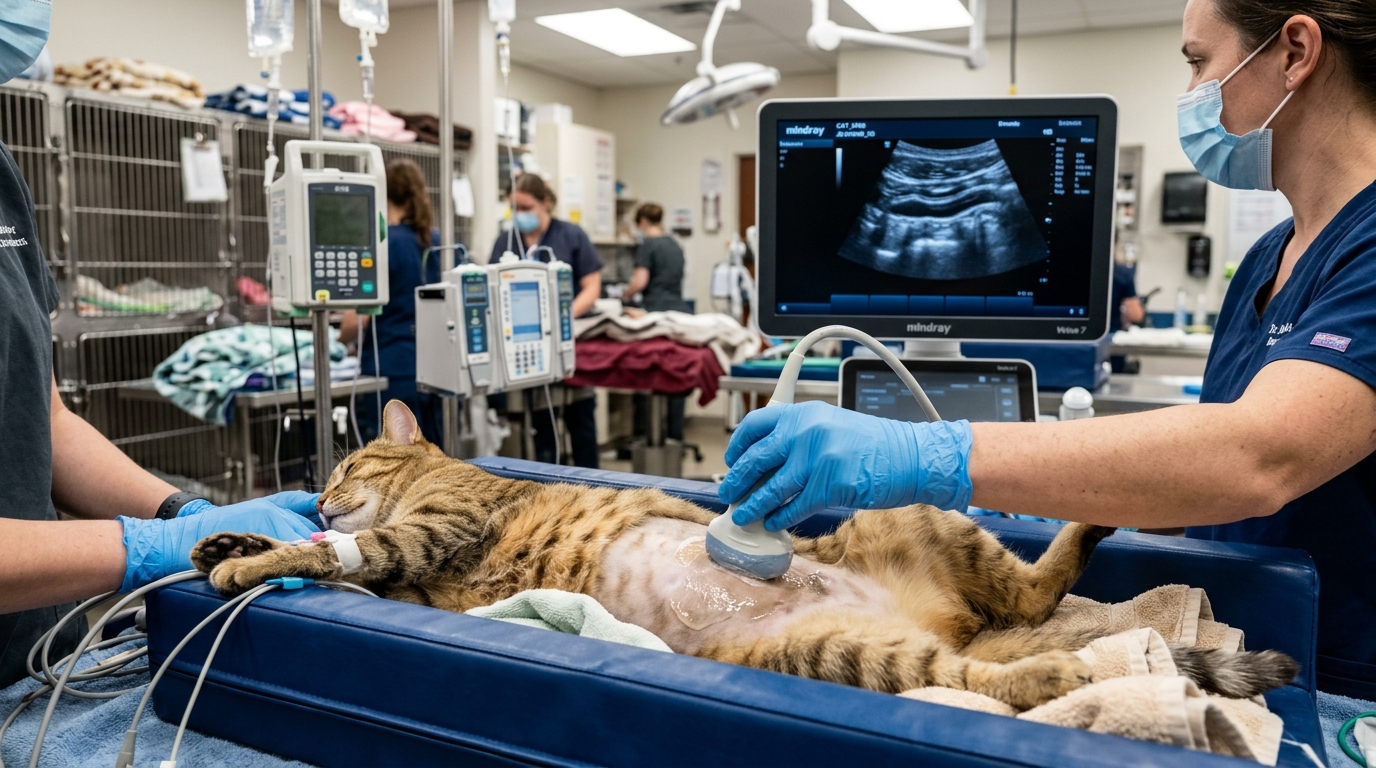
Clinical Quick Answer & Immediate Stabilization Protocol
Primary Clinical Directive for Feline Idiopathic & Secondary Hepatic Lipidosis (Fatty Liver Syndrome): Recognize feline hepatic lipidosis by the progression from multi-day anorexia and rapid muscle loss to overt jaundice (yellow pinnae, sclera, and hard palate), ptyalism (drooling from hepatic encephalopathy or nausea), and generalized weakness. Laboratory hallmarks include marked elevation of serum alkaline phosphatase (ALP, typically 3-to-10-fold higher than ALT), normal or minimally elevated GGT (unless concurrent cholangitis/pancreatitis is present), hyperbilirubinemia, and prolonged prothrombin/PIVKA clotting times. Definitive recovery requires three sequential steps before placing a permanent esophagostomy feeding tube: (1) correct dehydration and hypokalemia/hypophosphatemia with lactate-free crystalloids, (2) administer parenteral Vitamin K1 for 12–24 hours prior to anesthesia or liver aspiration, and (3) initiate trickle enteral feeding via nasoesophageal or esophagostomy tube at 25% of Resting Energy Requirement (RER) on Day 1 to prevent fatal refeeding syndrome.
Carnivorous Lipoprotein Bottlenecks, ALP-vs-GGT Discordance & Vitamin K1 Coagulopathy
During negative energy balance, catecholamines and glucagon activate adipose hormone-sensitive lipase, releasing massive quantities of non-esterified free fatty acids into the portal circulation. In a healthy fed state, hepatocytes either oxidize fatty acids inside mitochondria (via L-carnitine transport) or esterify them into triglycerides packaged with apolipoprotein B100 into VLDL particles for systemic export. In anorexic cats, acute deficiencies of essential dietary amino acids (methionine, arginine, and taurine) and L-carnitine paralyze apolipoprotein synthesis and mitochondrial beta-oxidation. Triglyceride vacuoles distend hepatocytes to three times their normal volume, compressing and collapsing the delicate intracellular bile canaliculi to produce severe intrahepatic cholestasis.
This canalicular compression produces the classic clinicopathologic signature of primary feline hepatic lipidosis: a dramatic surge in serum Alkaline Phosphatase (ALP, which is anchored to canalicular membranes in cats and has a short 6-hour half-life, meaning any elevation is clinically significant) alongside a normal or disproportionately low Gamma-Glutamyl Transferase (GGT, which resides predominantly in larger biliary ducts). When both ALP and GGT are markedly elevated together, clinicians immediately suspect an underlying biliary or pancreatic trigger such as feline triaditis (concurrent cholangitis, pancreatitis, and IBD).
- Vitamin K1 Malabsorption & Jugular Bleeding Risk: Intrahepatic cholestasis prevents bile salts from entering the duodenum, halting micellar absorption of fat-soluble Vitamin K1 and depleting Factors II, VII, IX, and X in over 50% of FHL cats; jugular venipuncture, ultrasound-guided liver aspirates, or esophagostomy tube surgery must be deferred until parenteral phytomenadione (Vitamin K1) normalizes coagulation.
- Arginine Depletion & Hepatic Encephalopathy: Unlike dogs, cats cannot synthesize ornithine or citrulline de novo in the gut; fasting rapidly depletes hepatic arginine, halting the urea cycle within hours and causing hyperammonemia, ptyalism, and obtundation.
- Refeeding Syndrome Electrolyte Collapse: Introducing high-carbohydrate calories or 100% RER on Day 1 triggers an abrupt endogenous insulin surge that drives serum phosphorus, potassium, and magnesium into cells, causing fatal hypophosphatemic hemolytic anemia (<1.5 mg/dL) and diaphragmatic weakness.
- Lactate & Propofol Clearance Impairments: Lipid-engorged hepatocytes exhibit poor lactate clearance and reduced phenol glucuronidation; clinicians favor non-lactated fluids (Normosol-R or 0.9% NaCl) and cautious anesthetic protocols.
Emergency Triage Matrix: Clinical Presentation & Required Response
| Triage Level | Clinical Signs & Presentation | Immediate Action Protocol |
|---|---|---|
| Tier 1: Immediate Emergency (0–2 Hours) | Yellow discoloration of the inner ear flaps (pinnae), gums, or eyes (icterus); profuse drooling (ptyalism), head pressing, or stupor; ventroflexion of the neck (chin resting on chest from severe hypokalemia); or spontaneous bruising. | Transport immediately to a 24-hour emergency veterinary hospital for lactate-free intravenous electrolyte resuscitation, parenteral Vitamin K1 therapy, maropitant/ondansetron antiemesis, and nasoesophageal tube stabilization. |
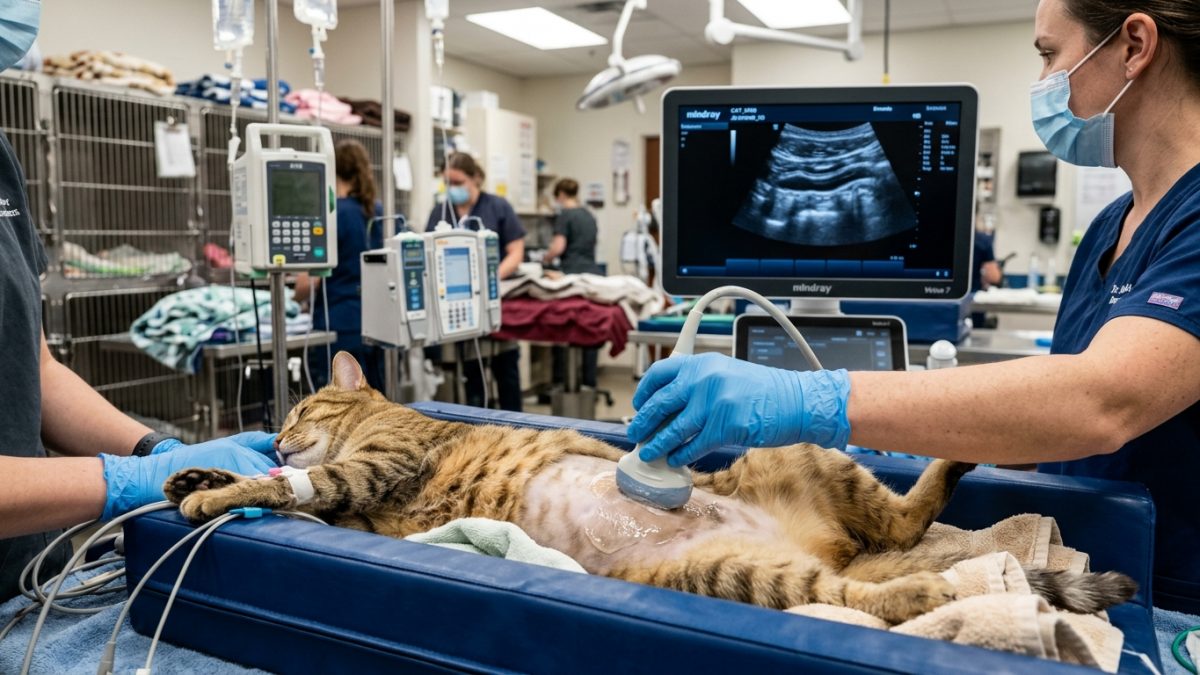
| Tier 2: Urgent Same-Day Evaluation (2–12 Hours) | Overweight or indoor cat that has refused all food (or eaten <25% of normal portions) for 48 to 72 hours, accompanied by hiding, lethargy, or vomiting after a diet change or household stressor. | Schedule a same-day veterinary workup including serum liver enzymes (ALP, GGT, ALT, total bilirubin), fPLI pancreatitis test, electrolytes, and abdominal ultrasound before overt jaundice develops. |
| Tier 3: At-Home Esophagostomy Tube Nutritional Recovery | Stabilized FHL cat discharged home with an indwelling esophagostomy (E-tube) receiving 4 to 6 divided daily blenderized high-protein liquid meals. | Warm liquid diet to body temperature, infuse slowly over 15–20 minutes, flush the E-tube with 5–10 mL warm water before and after every feeding, and keep the tube in place for 4–8 weeks until voluntary eating is self-sustaining. |
Pre-Surgical Vitamin K1 Stabilization, Esophagostomy Tube Mechanics & Metabolic Micronutrients
Cornerstone treatment for feline hepatic lipidosis is aggressive, high-protein, high-fat, low-carbohydrate enteral nutrition (30–40% of calories from protein, unless overt hepatic encephalopathy dictates temporary protein modulation) delivered over 3 to 8 weeks. Because anorexic cats will not eat voluntarily while nauseated and cholestatic—and because oral syringe feeding provokes learned food aversion that delays voluntary eating for weeks—enteral feeding tubes are mandatory. On Day 1 of admission, while coagulopathy and electrolyte deficits preclude general anesthesia, a narrow-bore polyvinylchloride or silicone Nasoesophageal (NE) tube is placed using topical nasal anesthetic to initiate trickle liquid feeding (such as Royal Canin Recovery Liquid or Clinicare).
Once 12 to 24 hours of subcutaneous Vitamin K1 (phytomenadione) and intravenous potassium/phosphate supplementation have restored hemostasis and perfusion, a wider-bore Esophagostomy (E-tube) is placed under brief anesthesia. Caloric intake is stepped up strictly over 96 hours—starting at 25% of calculated Resting Energy Requirement (RER = 70 x [current body weight in kg]^0.75) on Day 1, 50% on Day 2, 75% on Day 3, and 100% on Day 4—while rechecking serum phosphorus and potassium daily for the first 72 hours to intercept refeeding syndrome.
- Hepatoprotective Micronutrient Triad: Evidence-based metabolic supplementation includes L-carnitine (accelerating mitochondrial fatty acid transport and beta-oxidation), taurine (obligate feline bile acid conjugation), S-adenosylmethionine / SAMe (glutathione restoration), and parenteral Vitamin B12 (cobalamin).
- Strict Contraindication of Diazepam & Propylene Glycol: Oral diazepam (historically misused as a feline appetite stimulant) causes idiosyncratic fulminant hepatic necrosis in cats, while propylene glycol carriers induce Heinz-body oxidative hemolysis.
- Esophagostomy Tube Stoma Hygiene & Clog Prevention: Inspect the cervical E-tube exit site daily for erythema or exudate, clean gently with diluted chlorhexidine, and never push dry crushed tablets without dissolving properly and flushing with warm water (never use cranberry juice or soda, which curdle protein formulas).
- Weaning Protocol Before Tube Removal: Always offer fresh aromatic food by bowl for 15 minutes before each tube feeding so the cat associates hunger relief with normal eating; remove the E-tube only after the cat consumes 100% of its RER voluntarily by mouth for 5 to 7 consecutive days.
Strict Rule S1 Clinical Red Flags: Feline Idiopathic & Secondary Hepatic Lipidosis (Fatty Liver Syndrome)
Critical safety boundaries for Feline (Felis catus — Overweight Indoor Cats & Anorexic Feline Patients) caregivers:
- Zero Oral Syringe Force-Feeding: Never hold an anorexic or jaundiced cat down to squirt blended food into its mouth with a syringe; cats aspirate liquid food into their lungs and develop conditioned taste aversion that prolongs liver failure.
- Zero Abrupt Crash-Dieting or Starvation Diet Transitions: Never withhold a cat’s familiar food to force acceptance of a weight-loss or prescription diet; if a cat refuses a new food for 24 hours, return immediately to its accepted diet and consult your veterinarian.
Clinical Preparation & Biosecurity Action Checklist
- Track each individual cat’s daily food intake in multi-cat households (using microchip-activated feeders or separate meal times) so a silent 48-hour fast in an overweight cat is never missed.
- Inspect the inner ear skin (pinnae), gums, and whites of the eyes under white daylight if your cat skips two consecutive meals.
- Warm all esophagostomy-tube liquid diet meals to lukewarm body temperature (98–100°F) in a warm water bath (testing on your wrist to avoid microwave hot spots) before infusing slowly over 15 minutes.
- Flush the esophagostomy tube with 5 to 10 mL of warm tap water before and after every meal and medication dose to prevent protein coagulation clogs.
Related Clinical Guides & Triage Protocols
Peer-Reviewed Clinical References & Evidence Grounding
- 2022 ISFM Consensus Guidelines on the Management of the Inappetent Hospitalised Cat (opens in new tab) (Journal of Feline Medicine and Surgery (2022) — International Society of Feline Medicine Consensus Guidelines indexed on NCBI PubMed (PMID: 35616025).)
- Feline hepatic lipidosis: a retrospective study of 157 cases and clinical features (opens in new tab) (Journal of Veterinary Internal Medicine (2005) — Foundational clinical hepatology study by Center et al. indexed on NCBI PubMed (PMID: 15943162).)
- Cornell Feline Health Center: Feline Hepatic Lipidosis (Fatty Liver Syndrome) (opens in new tab) (Institutional veterinary reference on feline lipid mobilization, refeeding syndrome, and feeding tube care.)
- Merck Veterinary Manual: Feline Hepatic Lipidosis (opens in new tab) (Verified veterinary manual reference on Vitamin K1 stabilization, L-carnitine/taurine biochemistry, and enteral tube protocols.)
Source transparency
Reference mix for this guide
Source labels classify the institutional category of the references cited above.