Health and Safety Boundary
Jump to Emergency Red Flags ↓
This guide is general education for pet owners. If your pet has urgent symptoms, possible poisoning, injury, breathing trouble, collapse, severe pain, or sudden decline, contact a licensed veterinarian or local emergency service.
Editorial standard
How this guide was prepared
Edited for decisions
NewsPet guides are structured around practical owner choices, tradeoffs, and safety boundaries.
Source policy
Sources are listed when a guide relies on outside references.
Veterinary boundary
This article does not diagnose or prescribe; urgent symptoms need veterinary care.
Corrections
Readers can flag unclear, outdated, or inaccurate information through our contact page.
Cat Exposed to Liquid Potpourri: Tongue Necrosis Triage
Clinical Verdict: HIGHLY SEVERE TO CRITICAL
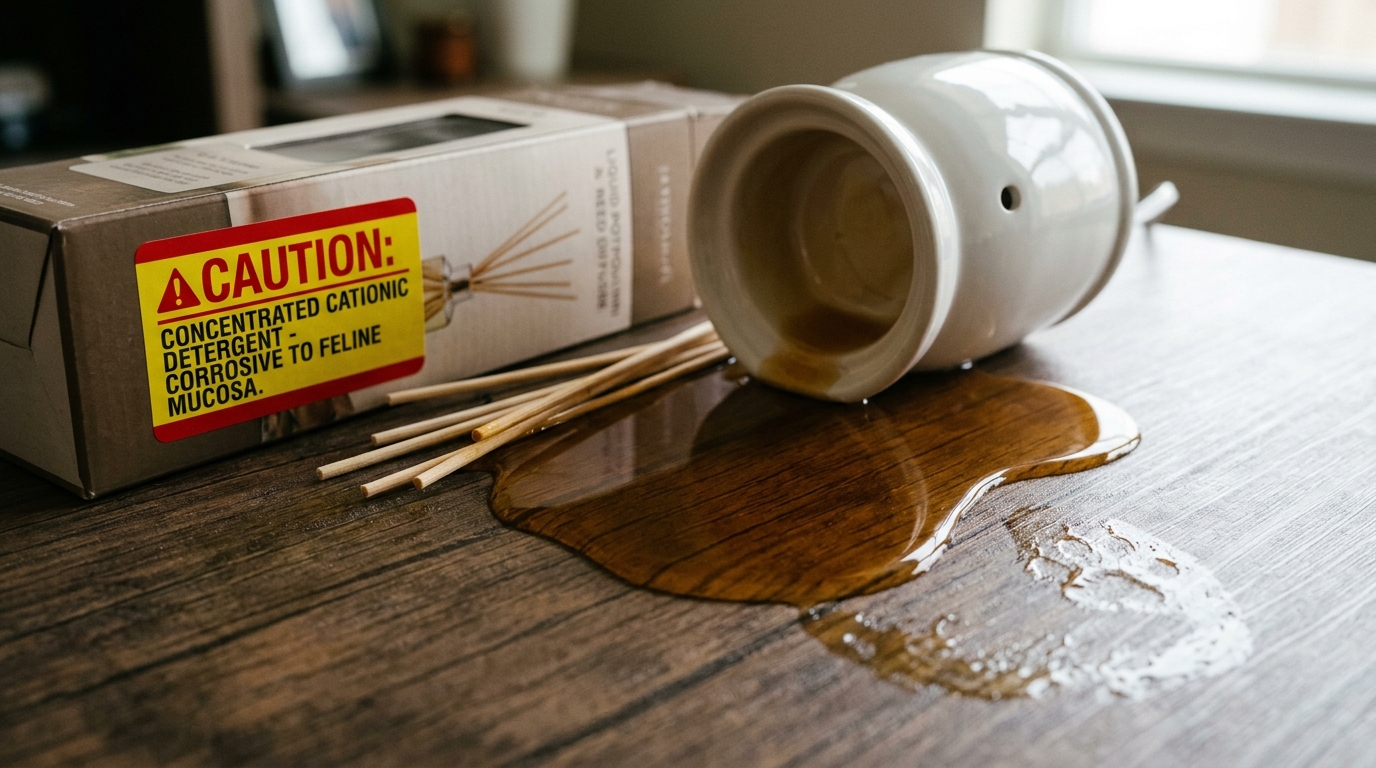
Cats CANNOT be exposed to liquid potpourri or essential oil diffusers. Liquid potpourri contains cationic detergents that cause severe corrosive chemical burns, full-thickness tongue ulcers, and systemic neurotoxicity when groomed off fur.
Toxic Mechanism & Agent
- Toxic Agent: Cationic Surfactants (Alkyl Quaternary Ammonium Compounds)
- Mechanism of Action: Penetrates cell membranes rapidly, causing deep liquefactive chemical burns of mucosal tissue and severe central nervous system depression.
Clinical Signs & Timeline
- Onset Time: Oral pain immediate; full-thickness ulcers and tongue sloughing develop over 12-24 hours.
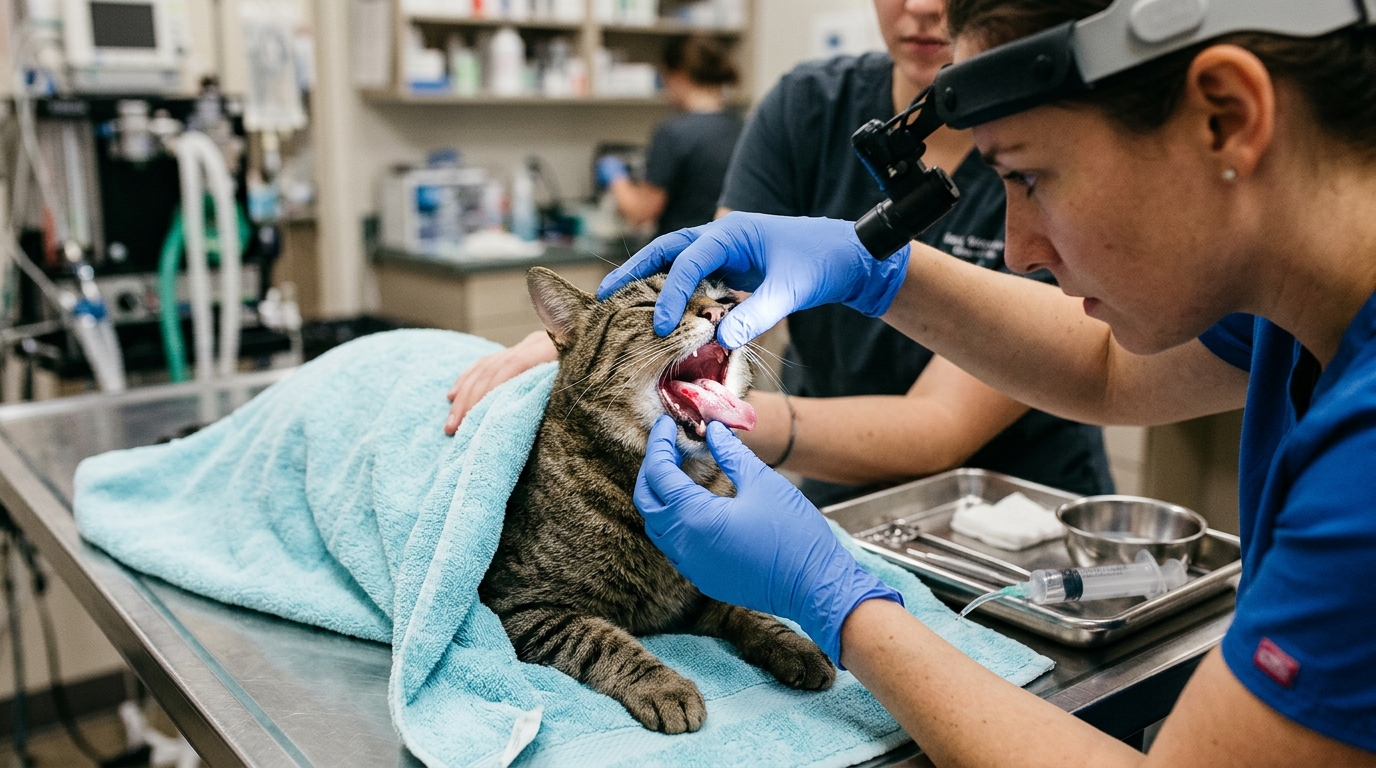
- Primary Symptoms: Profuse hypersalivation, refusal to eat or swallow, extreme pawing at the mouth, vocalization from agony, necrotic white/red oral ulcers, fever, pulmonary edema.
Emergency Triage Protocol
IMMEDIATE ER VISIT / BATHE FUR
Rinse mouth gently with tepid water and bathe any contaminated coat with dish soap. Emergency hospitalization is required for IV analgesia (opioids), gastroprotectants, and often feeding tubes (esophagostomy tube) until oral tissues heal.
Strict Rule S1 Warning
NEVER induce vomiting at home using hydrogen peroxide without direct instruction from a DVM. Inappropriate emesis can cause fatal aspiration pneumonia, esophageal chemical burns, or gastric rupture. Always seek professional veterinary diagnosis.
Printable tools