Editorial standard
How this guide was prepared
Introducing a newly adopted shelter or rescue dog into an established multi-pet household represents an exciting family milestone that simultaneously carries substantial biosecurity risks. Newly arrived dogs frequently enter homes with incomplete immunization records, subclinical incubating respiratory infections, or asymptomatic parasite loads. An intentional, evidence-based preventive veterinary intake examination establishes the critical clinical barrier required to protect resident animals, validate shelter documentation, and build a lasting health baseline for your new companion.
- Mandatory 14-Day Physical Quarantine: House your newly adopted dog in a designated isolation room with separate feeding stations, water bowls, bedding, and toys for a full two-week period. This biosecurity window accommodates incubation intervals for Canine Infectious Respiratory Disease Complex (CIRDC), Canine Parvovirus, and shedding enteric protozoa before any shared communal contact.
- Systematic Veterinary Record Reconciliation: Deliver all shelter intake paperwork, rabies certificates, spay/neuter discharge logs, and municipal vaccine forms to your veterinarian during the initial consultation. Shelter stamps administered without licensed veterinary signatures or batch expiration details require clinical re-evaluation; fragmented core series should be boosted promptly.
- Baseline Diagnostic Screening Triad: Prior to unmasked yard sharing or inter-pet play, complete a centrifugal fecal flotation with Giardia antigen ELISA, an in-clinic SNAP 4Dx Plus serological panel (Dirofilaria immitis, Lyme disease, Anaplasma, and Ehrlichia), and a thorough dermatological screening for active ectoparasites and dermatophytosis.
Subclinical Pathogen Transmission Hazards: Outwardly vigorous rescue dogs can actively shed viral pathogens (including Canine Parvovirus and Bordetella bronchiseptica) or carry contagious zoonotic organisms (such as Microsporum canis ringworm spores and Giardia lamblia cysts) capable of infecting resident dogs, cats, and immunocompromised human household members. Maintain rigorous barrier hygiene: sanitize hands with chlorhexidine or antimicrobial soap, wear dedicated indoor footwear, and change outer garments after handling the isolated dog. If the dog exhibits acute collapse, cyanotic or pale mucous membranes, repeated unproductive retching, or sudden dyspnea, transport the pet immediately to an accredited 24-hour emergency hospital.
The First 14 Days: Establishing Your Primary Veterinary Partnership
Veterinary wellness guidelines from the American Animal Hospital Association (AAHA) and American Veterinary Medical Association (AVMA) recommend conducting a comprehensive veterinary wellness intake within 7 to 14 days of adoption. This crucial visit fulfills four foundational clinical objectives:
- Medical Record Audit & Gap Identification: Shelter intake teams operate under extreme resource constraints. Vaccines administered during intake may lack cold-chain verification, lot serial numbers, or booster documentation. Your primary veterinarian reviews every entry to identify gaps in core immunological defense.
- Head-to-Tail Physical Assessment: A comprehensive physical examination identifies occult pathologies frequently overlooked during high-volume shelter processing, including low-grade heart murmurs, dental malocclusions, ear canal cytological infections, luxating patellas, and subtle orthopedic pain.
- Individualized Parasite Control Architecture: Establishing immediate broad-spectrum chemoprophylaxis neutralizes intestinal helminthes and prevents external parasite vectors from colonizing indoor living spaces.
- Microchip Implantation & Registry Verification: The veterinary team scans the dog’s microchip across all 15-digit ISO standard frequencies, confirms correct anatomical placement between the scapulae, and verifies that ownership registration has officially transferred from the rescue organization to your contact profile.
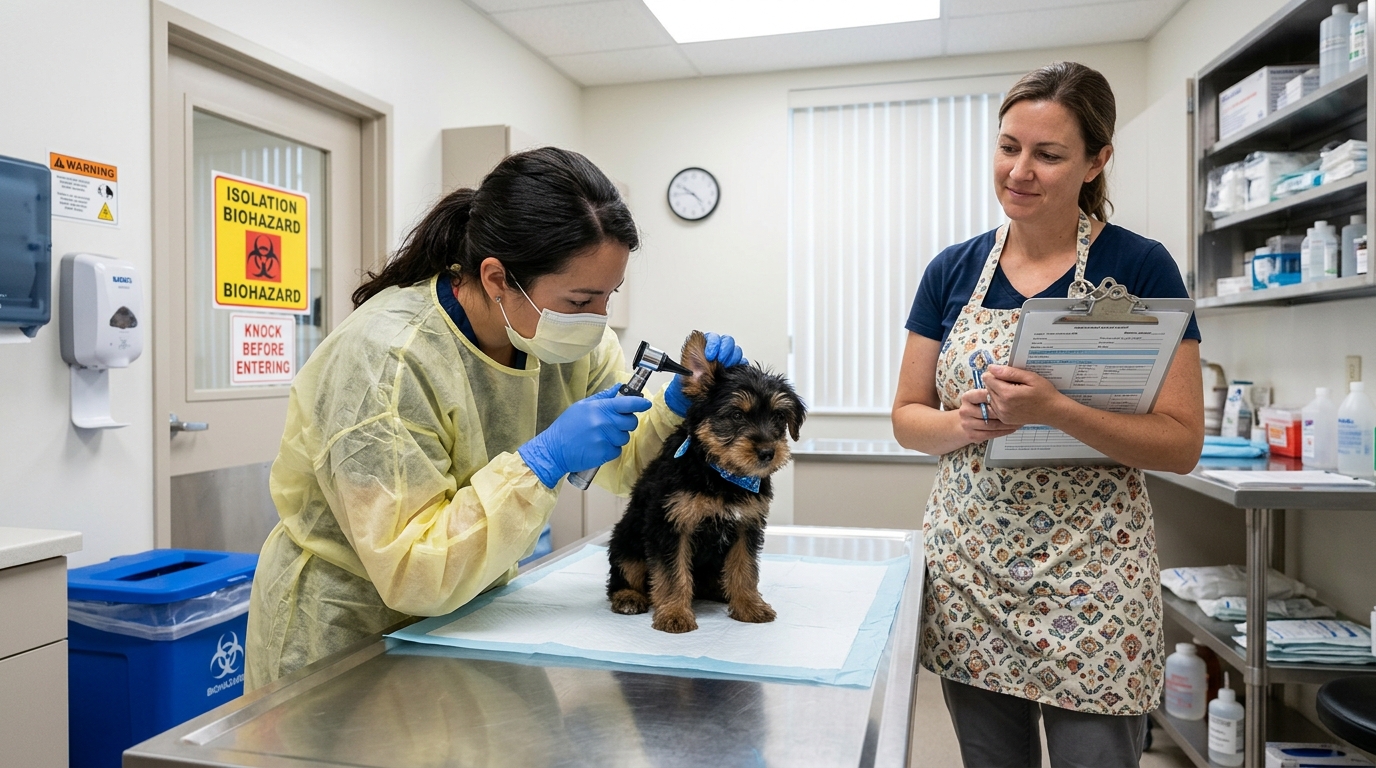
Standardized Preventive Intake Protocols for Newly Adopted Dogs
To establish clinical clarity between routine wellness procedures and risk-stratified diagnostics, veterinary clinicians utilize a standardized intake protocol tailored to multi-pet dynamics:
| Diagnostic Modality | Clinical Focus & Pathology Evaluated | Preventive Target & Action Threshold |
|---|---|---|
| Vaccination Record Audit | Verification of core Rabies and multivalent DA2PP/DHPP (Distemper, Adenovirus, Parvovirus, Parainfluenza) documentation. | Confirm appropriate booster timing and biological viability; immediately administer core booster if documentation is fragmented or unverified. |
| Centrifugal Fecal Flotation & ELISA | Centrifugal flotation with zinc sulfate solution plus Giardia cyst antigen immunoassay. | Identify Ancylostoma caninum (hookworms), Toxocara canis (roundworms), Trichuris vulpis (whipworms), and subclinical Giardia shedding before lawn contamination occurs. |
| Vector-Borne Serological Panel | In-clinic SNAP 4Dx Plus testing for Dirofilaria immitis antigen and antibodies to Borrelia burgdorferi, Anaplasma, and Ehrlichia. | Detect circulating microfilariae or occult tick-borne infections early to initiate staging and doxycycline therapy prior to cardiopulmonary damage. |
| Complete Blood Count (CBC) & Chem 10 | Hematology and serum chemistry profiling for mature adults and senior rescues. | Establish baseline renal values (BUN, creatinine, SDMA), hepatic enzyme activity (ALT, ALP), and systemic leukogram before starting chronic pharmacotherapy. |
Clinical Preparation Workflow for Multi-Pet Households
Preparing for your dog’s initial clinical consultation requires proactive organization across dietary, behavioral, and pharmacological domains:
| Consultation Pillar | Standard Operating Procedure | Multi-Pet Household Benefit |
|---|---|---|
| Dietary Transition Log | Obtain the exact shelter diet formulation and gradually blend it with your target adult food over a 10-day transition curve (75/25, 50/50, 25/75, 100). | Prevents acute osmotic dietary diarrhea that complicates infectious enteritis screening and creates household hygiene stress. |
| Resident Pet Vaccine Verification | Review vaccination certificates and booster dates for all existing household dogs and cats prior to bringing the new dog home. | Ensures robust herd immunity against kennel cough complex (Bordetella bronchiseptica) and canine viral enteritis across all resident companions. |
| Stool Sample Collection | Collect a fresh, golf-ball-sized fecal sample within 4 to 6 hours of the appointment and refrigerate it in a sealed, labeled container. | Maximizes parasite ova recovery rates and ensures same-day targeted anthelmintic prescription if shedding is confirmed. |
| Behavioral Baseline Documentation | Record video clips of kennel reactivity, resource guarding over food or toys, and leash arousal during the first 72 hours at home. | Provides objective behavioral evidence for your clinician to discuss low-stress counter-conditioning or medical intervention early. |
Targeted Questions for Your Initial Veterinary Visit
Arriving at your appointment with structured, clinically relevant questions maximizes consultation value and prevents critical oversights. Prioritize these discussions with your veterinarian:
- “Based on this dog’s documented geographic origin and our regional tick burden, which specific lifestyle vaccines (Leptospirosis 4-way, Lyme, Bordetella bronchiseptica, Canine Influenza H3N2/H3N8) should be added to the core series?”
- “Do the shelter vaccination dates satisfy our municipal and state legal requirements for rabies registration, or is an immediate booster mandated by local ordinance?”
- “What broad-spectrum oral or topical antiparasitic protocol do you recommend that safely coordinates flea, tick, heartworm, and tapeworm coverage alongside our existing pets’ regimens?”
- “Given this dog’s estimated age and dental score, what is the timeline and staging recommended for a professional ultrasonic dental scaling under general anesthesia?”
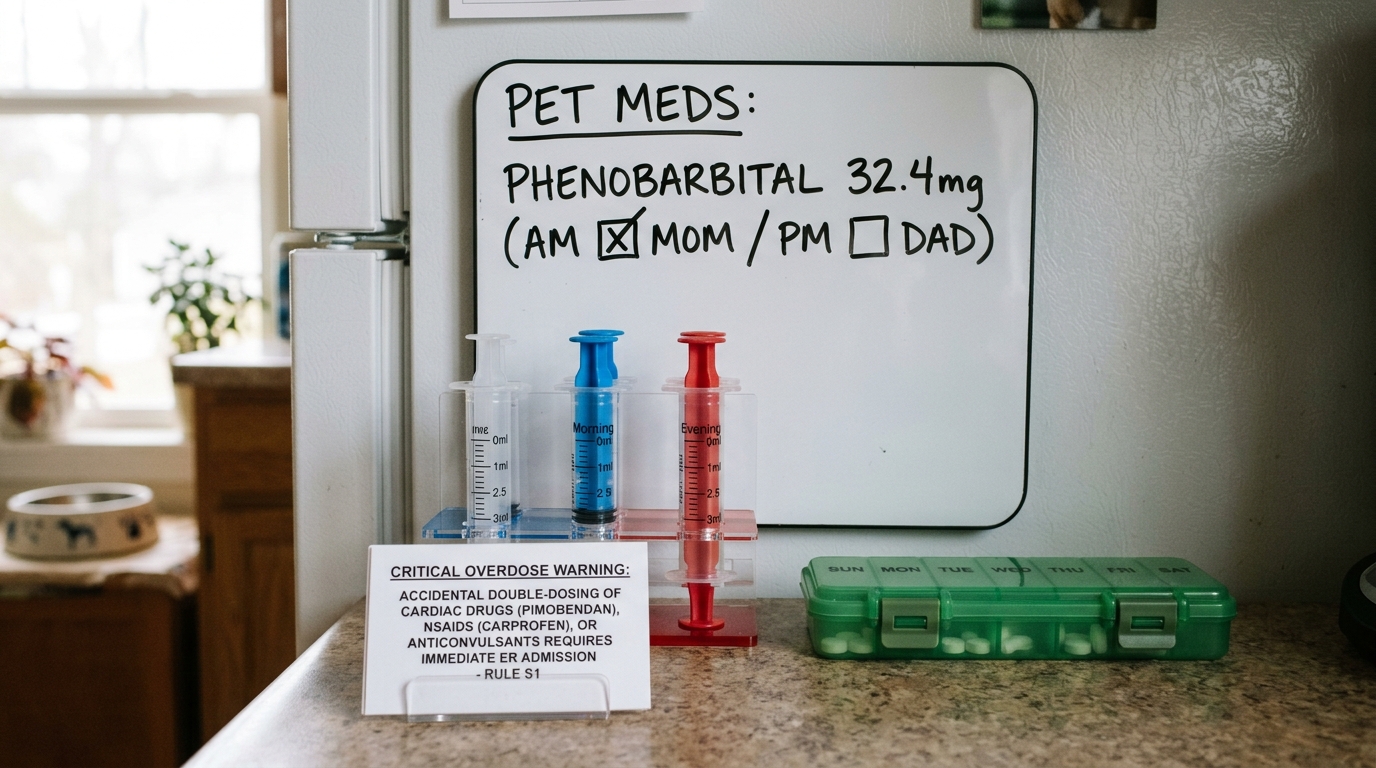
Broad-Spectrum Systemic Ecto- and Endoparasite Control
Implementing continuous, year-round broad-spectrum chemoprophylaxis is non-negotiable in multi-pet environments. Cohabiting animals share lawns, grooming tools, and indoor resting areas where cross-transmission readily occurs:
- Systemic Isoxazoline Class (Fluralaner, Afoxolaner, Sarolaner): These oral antiparasitics provide rapid therapeutic kill curves, terminating adult fleas and deer ticks within 8 to 12 hours of attachment. This rapid action prevents vector pathogens (such as Borrelia burgdorferi) from transmitting and stops flea reproductive cycles before environmental egg seeding penetrates carpeting and furniture.
- Macrocyclic Lactones (Milbemycin Oxime, Moxidectin): Monthly administration eliminates circulating Dirofilaria immitis L3 and L4 tissue stages acquired from mosquito bites while maintaining intestinal clearance against zoonotic hookworms and roundworms.
- Tapeworm Prophylaxis (Praziquantel): If the newly adopted dog has evidence of current or historical flea exposure, oral praziquantel eradicates adult Dipylidium caninum tapeworms, eliminating unsightly proglottid shedding around pet bedding.
Red-Flag Triage Matrix: New Adopter Transition Escalation
Caregivers must distinguish between transient transition stress and clinical emergencies requiring immediate veterinary intervention:
| Observed Symptom | Triage Urgency Tier | Underlying Pathophysiology | Mandatory Action Protocol |
|---|---|---|---|
| Paroxysmal Honking Cough or Purulent Nasal Discharge | Tier 2: Urgent (Within 24 Hours) | Infectious tracheobronchitis (CIRDC) involving Bordetella, Canine Adenovirus-2, or Parainfluenza. | Isolate immediately from resident dogs; schedule clinical thoracic auscultation and PCR respiratory swab. |
| Profuse Hemorrhagic Diarrhea & Lethargy | Tier 1: Immediate Emergency | Severe viral enteritis (Canine Parvovirus), acute hemorrhagic gastroenteritis (AHGE), or invasive bacterial infection. | Transport immediately to emergency hospital for intravenous fluid resuscitation, antiemetics, and barrier isolation. |
| Mild Soft Stool With Normal Energy & Appetite | Tier 3: Routine Monitoring (48-72h) | Dietary indiscretion, abrupt shelter food change, or transient neuroendocrine cortisol stress. | Feed bland diet (boiled chicken breast and white rice); submit fecal sample if stool does not firm within 48 hours. |
| Facial Angioedema, Hives, or Acute Dyspnea Post-Vaccine | Tier 1: Immediate Emergency | Type I IgE-mediated hypersensitivity reaction (anaphylaxis) following biological administration. | Emergency hospital transport for intramuscular epinephrine, diphenhydramine, and dexamethasone therapy. |
Frequently Asked Questions
Should I vaccinate my newly adopted dog if the rescue cannot provide proof of previous shots?
Yes. In veterinary medicine, an undocumented vaccine is considered an unadministered vaccine. Vaccinating an already-immune adult dog carries negligible immunologic risk compared to leaving an animal unprotected against fatal pathogens such as Parvovirus or Distemper. Your veterinarian can either administer a complete primary adult series or perform an in-clinic antibody titer test (such as VacciCheck) to evaluate circulating humoral immunity.
How long must I wait before taking my new rescue dog to public dog parks?
Maintain strict home quarantine for a minimum of 14 days following adoption. Do not visit public dog parks, communal grooming salons, or high-density canine daycares until your veterinarian has completed physical examinations, validated negative fecal flotation results, and confirmed that core vaccinations (DA2PP, Rabies, Leptospirosis, and Bordetella) are fully boosted and effective.
Can my resident cat catch diseases from the newly adopted dog?
While most viral pathogens (such as Parvovirus and Distemper) are strictly species-specific, several severe zoonotic and cross-species parasites transmit readily between dogs and cats. These include fleas (Ctenocephalides felis), Sarcoptes scabiei mites, Microsporum canis fungal ringworm spores, Giardia, and tapeworms. Complete veterinary intake screening and separate quarantine prevent household transmission.
Peer-Reviewed Clinical References & Evidence Grounding
- AAHA Canine Vaccination Guidelines: Ellis J, et al. 2022 AAHA Canine Vaccination Guidelines. Journal of the American Animal Hospital Association. 2022;58(5):213-230. PubMed PMID: 35914136
- AAHA/AVMA Preventive Healthcare Guidelines: American Animal Hospital Association & American Veterinary Medical Association. Canine Preventive Healthcare Guidelines Designed to Improve Pet Health. J Am Vet Med Assoc. 2011;239(9):1196-1200. PubMed PMID: 21908476
- CAPC Parasite Control Guidelines: Companion Animal Parasite Council. Current Advice on Canine Endoparasite and Ectoparasite Screening and Control. CAPC Veterinary Portal
- WSAVA Global Vaccination Guidelines: Day MJ, et al. WSAVA Guidelines for the Vaccination of Dogs and Cats. Journal of Small Animal Practice. 2024. WSAVA Resource Centre
Printable tools
Download the matching worksheet
Source transparency
Reference mix for this guide
Source labels describe the type of organization behind each reference; they are not a claim that any outside organization reviewed this article.
- Preventive Visit Preparation: Busy Household Protocol Reference source · newspet.net
- Dog First 90 Days: A Calm Owner Roadmap Reference source · newspet.net
- Veterinary Visit Preparation Sheet Veterinary organization · newspet.net
- Annual Pet Wellness Exam Guide Reference source · newspet.net
- PubMed PMID: 35914136 Government or public agency · pubmed.ncbi.nlm.nih.gov
- PubMed PMID: 21908476 Government or public agency · pubmed.ncbi.nlm.nih.gov
- CAPC Veterinary Portal Veterinary organization · capcvet.org
- WSAVA Resource Centre Veterinary organization · wsava.org