This guide is general education for pet owners. If your pet has urgent symptoms, possible poisoning, injury, breathing trouble, collapse, severe pain, or sudden decline, contact a licensed veterinarian or local emergency service.
Dosages must be calculated by a licensed veterinarian based on species, weight, and bloodwork. Never administer human medications or self-adjust prescription doses for pets.
Editorial standard
How this guide was prepared
A bee or wasp sting can turn from a minor nuisance into a life-threatening emergency in a matter of minutes. Knowing the difference between localized swelling and systemic anaphylaxis dictates whether you monitor at home or rush to the nearest veterinary emergency room. This clinical distinction determines the entire trajectory of patient care and survival outcomes.
Quick Answer: Sting Triage
- Localized: Swelling only at the sting site. Monitor closely.
- Systemic Warning: Hives spreading beyond the sting site, generalized facial swelling (even if stung on the paw). Requires urgent veterinary evaluation.
- Anaphylaxis (Emergency): Difficulty breathing, pale gums, sudden vomiting, diarrhea, extreme weakness, or collapse. Go to the ER immediately.
Local vs. Systemic Reactions: What the Swelling Pattern Tells You
Most insect stings result in localized reactions. You will notice immediate pain, redness, and swelling confined precisely to the area where the venom entered the skin. This localized response represents a normal inflammatory cascade. The immune system recruits white blood cells and inflammatory mediators to isolate the venom. Pain typically peaks within the first hour and gradually subsides. The swelling might persist for a few days, but the dog generally behaves normally, eating and drinking without issue.
Monitoring the strict borders of a local reaction provides crucial diagnostic information. If the swelling remains less than two inches in diameter and does not spread after the initial hour, the immune system is handling the venom appropriately. Cold compresses manage the localized pain efficiently. Excessive licking or chewing at the site must be prevented to avoid secondary bacterial infections, often requiring an Elizabethan collar.
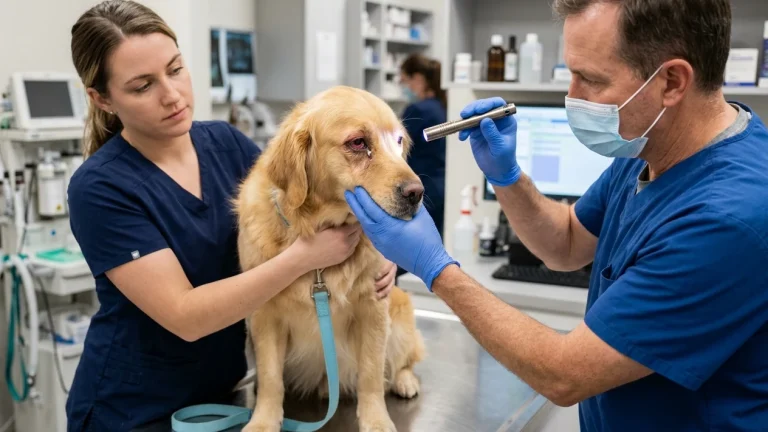
Systemic reactions present a completely different clinical picture. Venom triggers an exaggerated immune response that spreads throughout the body, far beyond the initial sting site. Hives, known clinically as urticaria, may erupt on the belly, groin, or back. The face, muzzle, or eyelids might swell dramatically in a condition called angioedema, regardless of the actual sting location. These systemic signs indicate the dog’s immune system is overreacting. The condition is moving rapidly toward a dangerous threshold.
Recognizing the transition from local to systemic involvement is critical. A sting on the paw that causes the entire face to swell is a systemic reaction. A sting on the nose that causes hives on the abdomen is a systemic reaction. Any swelling that continues to expand rapidly over a short period warrants immediate medical evaluation. Do not wait to see if the swelling goes down on its own. Delaying professional assessment allows the histamine cascade to build momentum, making it harder to control even with potent intravenous medications.
The Anaphylaxis Cascade: Why Minutes Matter
Anaphylaxis represents the extreme, life-threatening end of the allergic spectrum. This acute, multi-organ reaction typically begins within minutes of envenomation. Mast cells, specialized immune cells scattered throughout the body’s connective tissues, undergo massive, sudden degranulation. They dump immense quantities of histamine, prostaglandins, leukotrienes, and other potent inflammatory mediators directly into the bloodstream in a coordinated, catastrophic release.
This biochemical flood causes systemic vasodilation. Blood vessels rapidly widen across the entire circulatory system, leading to a catastrophic drop in blood pressure. We call this vascular collapse or anaphylactic shock. Concurrently, fluid leaks from the dilated, permeable vessels into the surrounding tissues. When this fluid accumulation occurs in the throat or lungs, it causes laryngeal edema or pulmonary edema. The airway narrows or closes completely. The dog gasps for breath, the gums turn white or muddy gray, and oxygen starvation rapidly affects the brain and vital organs.
Canine anatomy dictates unique shock organ responses. Unlike humans, dogs often exhibit severe gastrointestinal signs during anaphylaxis because the canine liver and gastrointestinal tract are primary shock organs. The hepatic veins constrict tightly, pooling blood in the liver and intestines, severely dropping circulating blood volume. Sudden, explosive diarrhea or intense vomiting immediately following a sting is a major red flag for anaphylactic shock in a dog. Neurological signs may also develop. Severe tremors or collapse indicate insufficient blood flow to the brain.
Without the immediate administration of epinephrine by a veterinarian to constrict blood vessels, stabilize mast cells, and open airways, this cascade is frequently fatal. Epinephrine acts as a physiological antagonist to the inflammatory mediators. Intravenous fluids are also mandatory to expand blood volume and counteract the massive vasodilation. Minutes truly matter in an anaphylactic crisis.
Clinical Emergency Triage Matrix
| Triage Tier | Clinical Presentation | Action Required |
|---|---|---|
| Tier 1: Immediate Emergency (0-2h) | Respiratory distress, pale or blue gums, collapse, severe generalized facial swelling, sudden vomiting, explosive diarrhea, multiple stings (swarm attack), severe tremors. | RUSH to nearest veterinary ER. Epinephrine administration and aggressive IV fluid therapy are required to prevent death. |
| Tier 2: Urgent Same-Day (12-24h) | Spreading hives (urticaria), single sting with mild but expanding facial swelling, excessive generalized itchiness (pruritus), severe restlessness, facial rubbing. | Call veterinarian immediately for an urgent appointment. Systemic antihistamines and corticosteroids may be necessary to halt progression. |
| Tier 3: Home Monitoring | Mild, localized swelling strictly confined to the sting site. Normal breathing, normal energy levels, normal gum color, no systemic spread, normal appetite. | Monitor closely for 2-4 hours. Restrict exercise. Do not administer medications without veterinary guidance. Keep the dog cool. |
First Aid: What to Do at Home
Assess the airway immediately before doing anything else. If the dog is breathing comfortably and acting normally, systematically examine the sting site. Bees leave their stinger behind, complete with a pulsating venom sac; wasps and hornets retain their stingers and can strike multiple times. Removing a visible bee stinger quickly stops further venom injection, as the sac continues to pump venom for several minutes after the bee detaches.
Use the edge of a credit card, driver’s license, or a stiff piece of cardboard to gently scrape the stinger away from the skin. Apply the scraping motion parallel to the skin surface to flick the stinger out. Apply a cool compress or an ice pack wrapped in a thin towel to the localized area. Apply the cold therapy for 10 to 15 minutes to reduce pain, vasoconstrict local blood vessels, and minimize localized inflammation. Ice packs numb the nerve endings temporarily, providing immediate relief for the sharp pain associated with hymenoptera envenomation.
Confine the dog to a quiet, easily observable area indoors. Keep the animal calm to prevent increased heart rate, which circulates venom faster through the bloodstream. Monitor strictly for at least two hours, watching for any progression to Tier 2 or Tier 1 symptoms. Restricting physical activity reduces blood flow to the sting site and slows the systemic absorption of venom.
Observe the dog’s gum color and capillary refill time constantly during the monitoring window. Press firmly on the pink part of the gums above the canine tooth; the color should blanch white and return to pink in under two seconds. Prolonged refill times or pale, gray, or blue gums indicate poor circulation and require an immediate ER visit. Check the body frequently for the appearance of hives by running your hands backward through the fur, feeling for small, raised bumps on the skin surface.
Dangerous Home Pitfalls: What NOT to Do (Rule S1)
NEVER attempt to treat systemic allergic reactions or suspected anaphylaxis with over-the-counter human medications. True anaphylaxis requires intravenous epinephrine; oral antihistamines take far too long to absorb in the gastrointestinal tract and absolutely cannot reverse vascular collapse or open a swollen airway. NEVER administer Benadryl (diphenhydramine) or any other allergy medication without direct, real-time veterinary guidance. Human formulations often contain toxic additives like xylitol, and weight-based dosing requirements differ vastly from canine physiology. Giving human medications blindly places your dog at risk for severe secondary complications.
NEVER give a dog a medication based on internet dosage charts, as administering the wrong amount can cause toxicity or obscure critical diagnostic symptoms that emergency veterinarians rely on for accurate triage. NEVER squeeze a visible stinger with tweezers or your fingers. This pinching action acts exactly like squeezing a syringe, forcefully injecting the remaining venom sac contents directly into the dog’s skin and worsening the reaction. NEVER apply home remedies like baking soda pastes, meat tenderizer, tobacco juice, or essential oils to oral stings or open skin lesions. These substances are entirely ineffective at neutralizing venom and can easily be ingested when the dog licks the site, causing secondary toxicities, chemical burns, or severe gastrointestinal distress.
Sources
- Anaphylaxis in dogs and cats (PMID: 16553805)
- Hymenoptera venom allergy in dogs (PMID: 11311145)
- Emergency management of canine anaphylaxis (PMID: 22816997)
Caregiver Checklist
- [ ] Verify normal breathing rate and effort (no wheezing or gasping).
- [ ] Check gum color (must be bright pink, not pale or blue).
- [ ] Inspect entire body for spreading hives (urticaria).
- [ ] Check for generalized facial swelling (angioedema).
- [ ] Scrape away stinger (if visible) with a rigid edge (no tweezers).
- [ ] Apply cold compress to localized sting site for 10-15 minutes.
- [ ] Restrict exercise and keep the dog calm indoors.
- [ ] Monitor closely for a minimum of 2 hours.
- [ ] Locate nearest emergency vet clinic number and address just in case.
Source transparency
Reference mix for this guide
Source labels describe the type of organization behind each reference; they are not a claim that any outside organization reviewed this article.
- Anaphylaxis in dogs and cats (PMID: 16553805) Government or public agency · pubmed.ncbi.nlm.nih.gov
- Hymenoptera venom allergy in dogs (PMID: 11311145) Government or public agency · pubmed.ncbi.nlm.nih.gov
- Emergency management of canine anaphylaxis (PMID: 22816997) Government or public agency · pubmed.ncbi.nlm.nih.gov