This guide is general education for pet owners. If your pet has urgent symptoms, possible poisoning, injury, breathing trouble, collapse, severe pain, or sudden decline, contact a licensed veterinarian or local emergency service.
Dosages must be calculated by a licensed veterinarian based on species, weight, and bloodwork. Never administer human medications or self-adjust prescription doses for pets.
Quick Answer
Ingestion of chocolate or grapes requires immediate veterinary triage. While chocolate toxicity depends on cocoa concentration (dark and baker’s chocolate carry the highest theobromine risks for cardiac arrhythmias), grapes and raisins trigger acute irreversible renal failure with no established safe dose. Contact poison control immediately; emesis is effective only within two hours.
Discovering that your dog has consumed a forbidden household food item is one of the most heart-stopping moments in pet parenting. Among all common kitchen pantry items, chocolate and grapes (including raisins, sultanas, and currants) account for a disproportionate volume of emergency veterinary admissions. Yet despite their widespread prevalence, dangerous myths persist: many caregivers assume that a small piece of dark chocolate is harmless if the dog does not immediately vomit, or that a dog who ate three grapes with no prior symptoms has a ‘cast-iron stomach.’ In clinical veterinary toxicology, waiting for clinical signs to manifest is often catastrophic: by the time clinical signs appear, toxins have already been absorbed from the gastrointestinal tract into systemic circulation, causing profound cardiac arrhythmias or irreversible acute kidney failure.
Editorial standard
How this guide was prepared

The Critical 2-Hour Decontamination Window
When a dog swallows any toxic substance, the single most critical prognostic factor is time elapsed since ingestion:
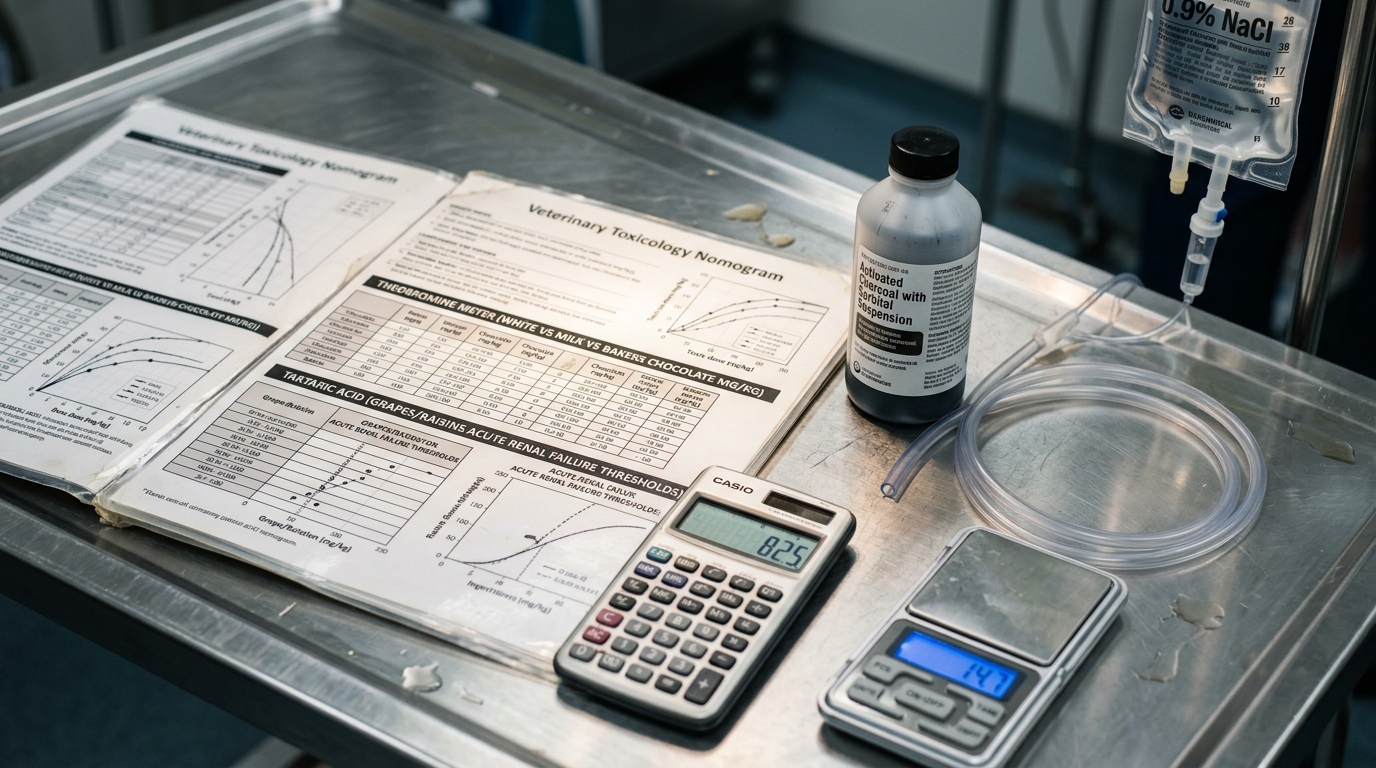
Phase 1: The Gastric Window (0 to 2 Hours): Food material remains inside the stomach cavity for approximately 90 to 120 minutes before passing through the pyloric sphincter into the duodenum. During this brief window, a veterinarian can safely induce emesis (therapeutic vomiting) using targeted emetic agents (such as apomorphine or ophthalmic ropinirole). Decontaminating the stomach in this initial phase recovers up to 60% to 80% of ingested toxins before they enter the bloodstream, preventing organ damage entirely.
Phase 2: Post-Gastric Absorption (Beyond 2 to 4 Hours): Once chocolate or grapes pass into the small intestine, emesis is ineffective and contraindicated. The dog requires emergency hospitalization, intravenous fluid diuresis, activated charcoal administration, and intensive organ monitoring.
Caregivers can rapidly check dangerous food items against clinical toxicity databases using our interactive Pet Toxic Food Fast-Checker.
Chocolate Toxicity: The Theobromine Danger Matrix
Chocolate is derived from the roasted seeds of Theobroma cacao, which contain natural alkaloids called methylxanthines—predominantly theobromine and caffeine. Humans metabolize theobromine rapidly via liver enzymes; canines, however, lack efficient hepatic clearance pathways, resulting in a prolonged theobromine biological half-life of 17.5 hours.
Theobromine acts as a competitive adenosine receptor antagonist and phosphodiesterase inhibitor, stimulating the central nervous system, increasing myocardial contractility, and relaxing smooth muscle.
Cocoa Concentration Dictates Severity:
- White Chocolate: Contains virtually zero cocoa solids (only cocoa butter). It carries negligible methylxanthine toxicity, though high fat content creates severe risk of acute pancreatitis.
- Milk Chocolate: Contains modest theobromine (approximately 44 to 60 mg per ounce). Ingestion requires medical concern in small toy breeds or large volume consumption.
- Dark Chocolate (60% to 85% Cocoa): Contains high theobromine (approximately 130 to 160 mg per ounce). Ingestion of even 1 to 2 ounces can cause severe toxicity in medium-sized dogs.
- Baker’s Unsweetened Chocolate & Dry Cocoa Powder: The most lethal forms (390 to 800 mg theobromine per ounce). Ingestion of a small 1-ounce square can trigger life-threatening seizures in a 10-kilogram (22 lb) dog.
Clinical Toxicity Tiers:
- Mild Toxicity (approx. 20 milligrams for each kilogram of body weight): Polydipsia, abdominal bloating, vomiting, and diarrhea. If your dog experiences sudden gastrointestinal distress, review our triage guide on Dog Vomiting: Home Monitoring vs. Emergency Red Flags.
- Cardiovascular Toxicity (approx. 40 to 50 milligrams for each kilogram of body weight): Severe sinus tachycardia (resting heart rate over 180 to 220 bpm), premature ventricular contractions (PVCs), hypertension, and restless hyperactivity.
- Severe Neurological Toxicity (60 milligrams for each kilogram of body weight and higher): Muscle tremors, hyperthermia, grand mal epileptic seizures, cardiac arrest, and coma.
Grape and Raisin Toxicity: The Tartaric Acid Mystery Solved
For decades, veterinary toxicologists could not identify the specific molecule responsible for grape and raisin toxicity. In 2021, landmark clinical research confirmed that tartaric acid and its salt, potassium bitartrate, are the definitive nephrotoxic agents.
Canines exhibit unique idiosyncratic sensitivity to tartaric acid, which induces acute renal tubular epithelial necrosis within 24 to 72 hours of ingestion. Unlike chocolate, where toxicity can be calculated mathematically against body weight, grapes and raisins have no established safe threshold. Some dogs have developed fatal acute kidney failure after eating a single grape, while others have survived eating a handful. Furthermore, because raisins and currants are dried and concentrated, they carry significantly higher concentrations of tartaric acid per ounce. Every grape or raisin ingestion must be treated as a medical emergency.
Clinical Emergency Triage Matrix
Use this clinical matrix to determine the immediate action required following toxic ingestion:
| Triage Tier | Clinical Ingestion Scenario & Physical Signs | Mandatory Action |
|---|---|---|
| Tier 1: Immediate Emergency (0–2 Hours) | Dog consumed any quantity of grapes, raisins, baker’s chocolate, or dark cocoa within the last 2 hours; dog is displaying muscle tremors, extreme pacing, rapid panting, heart pounding through chest, or seizures. | Transport immediately to the nearest 24/7 veterinary emergency hospital. Call en route so staff can prepare injectable emetics (apomorphine), activated charcoal slurry with sorbitol, and continuous ECG telemetry. For detailed ingestion protocols, consult our comprehensive Toxic Foods & Plants Emergency Guide. |
| Tier 2: Same-Day Veterinary Care (2–6 Hours Post-Ingestion) | Dog consumed milk chocolate exceeding mild threshold several hours ago; vomiting or diarrhea has begun; resting heart rate is elevated but no tremors or seizures are observed. | Transport to a veterinary clinic for gastric lavage if indicated, repeated activated charcoal doses to interrupt enterohepatic recirculation, and intravenous fluid diuresis to protect renal tubules. |
| Tier 3: Structured Observation & Monitoring | Large dog (over 35 kg) consumed a single small milk chocolate chip cookie or a drop of chocolate syrup; calculated theobromine dose is far below the 20 milligrams for each kilogram threshold; dog is bright, alert, and normal. | Contact Pet Poison Helpline to confirm calculated safety margin. Monitor for mild vomiting or diarrhea for 24 hours. If hyperactivity or panting develops, advance immediately to Tier 2 care. |
Dangerous Home Pitfalls: What NOT to Do (Rule S1)
Panicked caregivers trying to induce vomiting at home frequently cause fatal complications worse than the toxin itself:
- Never give table salt to induce vomiting: This dangerous old folk remedy is lethal. Force-feeding tablespoons of dry table salt or concentrated salt water floods the dog’s bloodstream with sodium, creating acute hypernatremia. Water is pulled out of brain cells into the hyperosmolar blood, causing brain shrinkage, tearing of cerebral blood vessels, subdural hemorrhage, intractable seizures, and fatal brain death.
- Never administer syrup of ipecac or raw mustard: Syrup of ipecac is cardiotoxic and produces prolonged, unmanageable vomiting and severe mucosal ulceration. Ground mustard is ineffective and causes severe gastritis.
- Never administer 3% hydrogen peroxide without veterinary authorization: While low-dose 3% peroxide is occasionally recommended by emergency clinicians in remote wilderness settings, indiscriminate administration causes hemorrhagic gastritis, gastric ulcer perforation, and fatal gas embolisms in the bloodstream. Never give peroxide to a lethargic, seizing, or sedated dog, as aspiration into the lungs causes fatal chemical pneumonitis.
- Never wait for symptoms to appear before calling a professional: By the time a dog exhibits theobromine tremors or grape-induced uremic vomiting, toxins have already inflicted extensive systemic damage. Early decontamination is safe, inexpensive, and curative.
Critical Contraindications & Safety Boundaries (Rule S1)
- Consult a vet or poison control before inducing vomiting—timing and substance determine whether emesis is safe.
- Never use salt water to induce vomiting, as sodium toxicity is more dangerous than most chocolate exposures.
- Avoid assuming vomiting resolved the problem; theobromine has a 17.5-hour half-life in dogs and symptoms can appear hours later.
- Stop calculating chocolate toxicity using total bar weight, since cocoa percentage determines theobromine concentration.
| Triage Tier | Clinical Ingestion Scenario | Mandatory Action |
|---|---|---|
| Tier 1 | Ingested dark/baker’s chocolate (>1oz per 10lbs body weight), any amount of xylitol/birch sugar, any grapes or raisins regardless of quantity, tremors or seizures after chocolate ingestion. | Immediate veterinary intervention required. |
| Tier 2 | Ingested milk chocolate in moderate amount, vomiting or diarrhea within 6 hours of chocolate ingestion, single grape consumed by a large breed dog. | Same-day veterinary care. |
| Tier 3 | Licked chocolate frosting or ate tiny amount of milk chocolate, ingestion >72 hours ago with no symptoms. | Monitor closely. |
Frequently Asked Questions
How quickly does chocolate or grape toxicity affect a dog?
Theobromine from chocolate begins absorbing within 1 to 2 hours, with peak cardiac stimulation, vomiting, and tremors appearing between 6 and 12 hours. Grape and raisin toxicity affects dogs unpredictably; acute kidney injury can begin within 24 to 48 hours without early clinical signs. Rapid decontamination within 2 hours of ingestion is critical for survival.
What type of chocolate is the most toxic to dogs?
Toxicity is directly proportional to cocoa solids content. Cocoa powder, unsweetened baker’s chocolate, and dark chocolate contain the highest theobromine and caffeine concentrations, requiring emergency care at tiny ingestion amounts. Milk chocolate carries moderate risk, while white chocolate has negligible theobromine but carries a severe pancreatitis risk due to high fat content.
Should I induce vomiting at home if my dog ate chocolate or grapes?
Never induce vomiting without direct guidance from a veterinarian or pet poison hotline. Using home substances like salt water causes fatal hypernatremia, and hydrogen peroxide can trigger severe hemorrhagic gastritis. If the dog is already showing neurological symptoms, vomiting carries a fatal aspiration pneumonia risk.
Sources
- PMID: 38885492: 2024 AAHA Fluid Therapy Guidelines for Dogs and Cats (J Am Anim Hosp Assoc, 2024) (opens in new tab)
- PMID: 30847984: ACVIM consensus statement on the treatment of immune-mediated hemolytic anemia in dogs (J Vet Intern Med, 2019) (opens in new tab)
- PMID: 37167252: 2023 AAHA Selected Endocrinopathies of Dogs and Cats Guidelines (J Am Anim Hosp Assoc, 2023) (opens in new tab)
- Washington State University College of Veterinary Medicine — Clinical Toxicology Guide (opens in new tab)
Caregiver Safety Checklist
- Grapes, raisins, and dark chocolate represent acute medical emergencies; seek veterinary guidance immediately upon discovery.
- The 2-hour window is critical; veterinary emetics recover up to 80% of toxins before bloodstream absorption occurs.
- Never use table salt to induce vomiting at home; salt causes severe hypernatremic brain damage and fatal seizures.
- Dark chocolate and baker’s cocoa contain lethal concentrations of theobromine that trigger life-threatening cardiac arrhythmias.
Key Clinical Takeaways & Action Summary
- Identify the exact substance ingested.
- Estimate the amount consumed accurately.
- Note the precise time of exposure.
- Call a veterinarian immediately.
Source transparency
Reference mix for this guide
Source labels classify the institutional category of the references cited above.