This guide is general education for pet owners. If your pet has urgent symptoms, possible poisoning, injury, breathing trouble, collapse, severe pain, or sudden decline, contact a licensed veterinarian or local emergency service.
Quick Answer
While hairball elimination produces a cylindrical wad of fur and fluid after brief retching, frequent dry hacking where the cat crouches low to the floor with an extended neck indicates lower airway coughing or feline asthma. If coughing recurs weekly, breathing exceeds 30 breaths per minute while sleeping, or the cat pants with an open mouth, seek immediate veterinary care.
One of the most pervasive diagnostic misconceptions in feline care is assuming that every dry, hacking cough is simply a cat trying to cough up a hairball. Because coughing felines assume a characteristic low-to-the-ground crouch with an outstretched neck—frequently followed by a hard swallow—caregivers routinely wait days or weeks for a hairball that never appears. In clinical veterinary reality, cats do not cough up hairballs; hairballs are vomited or regurgitated from the stomach. When a cat repeatedly exhibits dry, paroxysmal hacking, the problem is situated in the lower respiratory tract, most commonly signaling chronic feline asthma or allergic bronchitis.
Editorial standard
How this guide was prepared
The Core Anatomical Distinction: Retching versus Coughing
Distinguishing gastrointestinal expulsion from lower respiratory disease requires observing the mechanics of the episode:
- Gastric Trichobezoar Expulsion (Hairball Retching): A gastrointestinal event. The cat exhibits pronounced abdominal heaving, rhythmic visceral contractions, and audible retching sounds. The episode concludes within one to two minutes with the physical expulsion of gastric fluid and a tubular, compressed mass of ingested hair (trichobezoar). Normal, short-haired cats rarely produce more than one hairball every few months.
- Feline Bronchial Coughing (Asthma Attack): A lower respiratory event. The cat crouches low to the floor, extends its neck completely horizontal to the ground, points its elbows outward, and produces a repetitive, dry, raspy wheeze or hack that sounds like clearing the throat. At the conclusion of the coughing fit, the cat frequently swallows noticeably; this is the swallowing of accumulated bronchial mucus coughed up into the pharynx, not hair. No vomited material is expelled.
Pathophysiology: What Happens Inside Asthmatic Lungs
Feline asthma is a chronic, progressive Type I hypersensitivity disorder affecting the lower airways:
When an allergic feline inhales microscopic environmental antigens, sensitive immune cells release histamine, serotonin, and leukotrienes. This chemical cascade triggers three severe pulmonary abnormalities:
- Airway Hyperreactivity and Bronchospasm: The smooth muscle rings surrounding the bronchioles contract violently, drastically narrowing the airway lumen.
- Excessive Mucus Secretion: Hypertrophied goblet cells pump thick, viscous mucus into the bronchial tree, creating physical plugs that trap air within the delicate pulmonary alveoli.
- Eosinophilic Airway Remodeling: Chronic, unaddressed inflammation causes eosinophils to infiltrate bronchial walls, leading to permanent fibrosis, thickening, and irreversible loss of lung elasticity.
Clinical Respiratory Triage Matrix
Use this clinical matrix to determine the required level of medical urgency based on objective respiratory indicators:
| Triage Tier | Clinical Presentation & Breathing Effort | Mandatory Action |
|---|---|---|
| Tier 1: Immediate Emergency (0–2 Hours) | Open-mouth breathing or panting with tongue protruding; blue, pale, or grayish gums and tongue (cyanosis); severe abdominal effort where the belly visibly heaves with every breath; orthopneic posture (sitting upright, neck stretched high, elbows pinned outward); collapse or vocalizing in terror. | Transport immediately to the nearest 24/7 emergency veterinary hospital. Handle the cat with extreme gentleness; severe respiratory patients can experience fatal cardiac arrest from handling stress. Call en route so technicians can prepare an oxygen induction cage. |
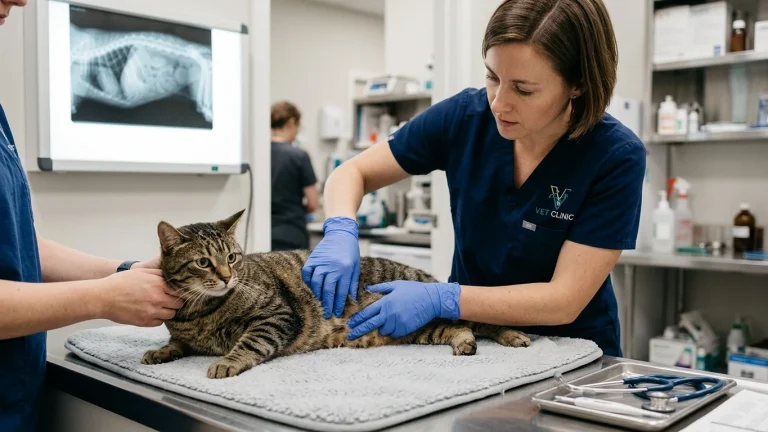
| Tier 2: Same-Day Veterinary Evaluation (12–24 Hours) | Repeated dry hacking episodes occurring daily or several times per week; audible wheezing, whistling, or rattling sounds during exhalation; resting respiratory rate exceeding 30 breaths per minute while deeply asleep; decreased stamina and refusing to play. | Schedule a same-day or urgent veterinary diagnostic appointment. Your clinic will perform two-view thoracic radiographs to inspect for classic ‘bronchial donuts’ and ‘tramlines’ characteristic of asthma. |
| Tier 3: Structured Home Hairball Management & Monitoring | Isolated hacking episode occurring once every two to three months that successfully yields a cylindrical hairball; normal pink oral membranes; resting respiratory rate strictly under 30 breaths per minute while sleeping; cat immediately resumes eating and purring. | Brush your cat daily to remove dead undercoat fur before grooming. If episodes increase to more than once per month or fail to produce actual hair, advance to Tier 2 veterinary consultation. |
The Gold-Standard Diagnostic Benchmark: Resting Respiratory Rate (RRR)
The single most powerful, evidence-grounded screening test caregivers can conduct at home is monitoring Resting Respiratory Rate (RRR):
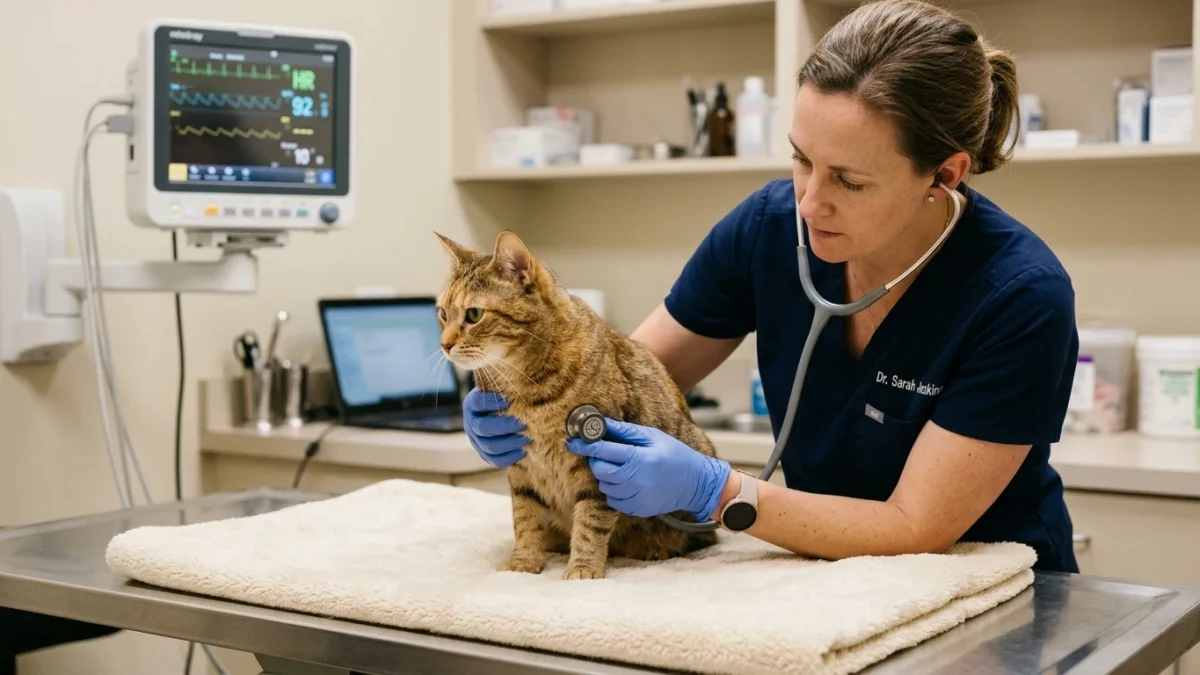
Wait until your cat is quietly sleeping or deeply resting in a cool, comfortable room. Observe the rise and fall of their chest wall. One full cycle of inhalation and exhalation equals one breath. Count the total number of breaths over 30 seconds and multiply by two to calculate breaths per minute.
Clinical Benchmark: In a healthy cat, the normal resting respiratory rate is strictly below 30 breaths per minute (typically 16 to 24 bpm). A persistent RRR consistently above 30 bpm while sleeping—even in the absence of active coughing fits—indicates chronic subclinical airway inflammation or early fluid accumulation. You can record, time, and track your cat’s exact breathing rates using our interactive Resting Respiratory Rate 30-Second Tap Timer.
Dangerous Home Pitfalls: What NOT to Do (Rule S1)
Managing feline respiratory distress requires strict adherence to safety protocols:
- Never ignore open-mouth breathing in a cat: Unlike dogs, cats never pant to cool down under normal household conditions. A panting cat is in advanced respiratory decompensation and has exhausted its physiological oxygen reserves.
- Never administer human over-the-counter cough medications: Human cough syrups contain dextromethorphan, acetaminophen, pseudoephedrine, or artificial flavorings that cause acute liver failure, toxic cardiac arrhythmias, and fatal methemoglobinemia in felines.
- Do not force petroleum-based hairball pastes or butter down an active coughing cat’s throat: Attempting to syringe lubricants into the mouth of a coughing or wheezing cat easily causes accidental aspiration into the trachea, triggering fatal lipoid pneumonia.
- Eliminate household respiratory triggers immediately: Discontinue dusty clay litters (switch to low-dust paper or wood pellets), scented candles, incense, plug-in air fresheners, and ultrasonic essential oil diffusers. Volatile organic compounds from eucalyptus, tea tree, and citrus oils directly trigger acute asthmatic bronchospasms.
Sources
- Feline Lower Airway Disease: Clinical Update on Diagnosis and Inhaled Therapeutics. Journal of Feline Medicine and Surgery / PubMed. Checked September 21, 2026.
- Resting and Sleeping Respiratory Rates in Healthy Dogs and Cats in the Home Setting. Journal of Feline Medicine and Surgery / PubMed. Checked September 21, 2026.
- Cornell Feline Health Center: Feline Asthma and Respiratory Emergencies. Cornell University College of Veterinary Medicine. Checked September 21, 2026.
Caregiver Safety Checklist
- Frequent dry hacking with an outstretched neck is a lower airway cough, not a hairball; veterinary x-rays are required.
- Open-mouth breathing or blue-tinted gums in a cat is a zero-delay medical emergency requiring emergency oxygen.
- Measure resting respiratory rate while sleeping; a rate consistently above 30 breaths per minute indicates airway disease.
- Eliminate dusty clay litter, aerosol sprays, and essential oil diffusers, which directly provoke acute asthmatic attacks.
Interactive Resting Respiratory Rate (RRR) Counter
Count your resting or sleeping pet's breaths per minute using our timed clinical tap tool. Resting respiratory rate below 30 breaths/min is the veterinary baseline for canine and feline home monitoring.
Source transparency
Reference mix for this guide
Source labels describe the type of organization behind each reference; they are not a claim that any outside organization reviewed this article.
- Feline Lower Airway Disease: Clinical Update on Diagnosis and Inhaled Therapeutics Government or public agency · pubmed.ncbi.nlm.nih.gov
- Resting and Sleeping Respiratory Rates in Healthy Dogs and Cats in the Home Setting Government or public agency · pubmed.ncbi.nlm.nih.gov
- Cornell Feline Health Center: Feline Asthma and Respiratory Emergencies Academic or extension · vet.cornell.edu