Health and Safety Boundary
Jump to Emergency Red Flags ↓
This guide is general education for pet owners. If your pet has urgent symptoms, possible poisoning, injury, breathing trouble, collapse, severe pain, or sudden decline, contact a licensed veterinarian or local emergency service.
Editorial standard
How this guide was prepared
Edited for decisions
NewsPet guides are structured around practical owner choices, tradeoffs, and safety boundaries.
Source policy
Sources are listed when a guide relies on outside references.
Veterinary boundary
This article does not diagnose or prescribe; urgent symptoms need veterinary care.
Corrections
Readers can flag unclear, outdated, or inaccurate information through our contact page.
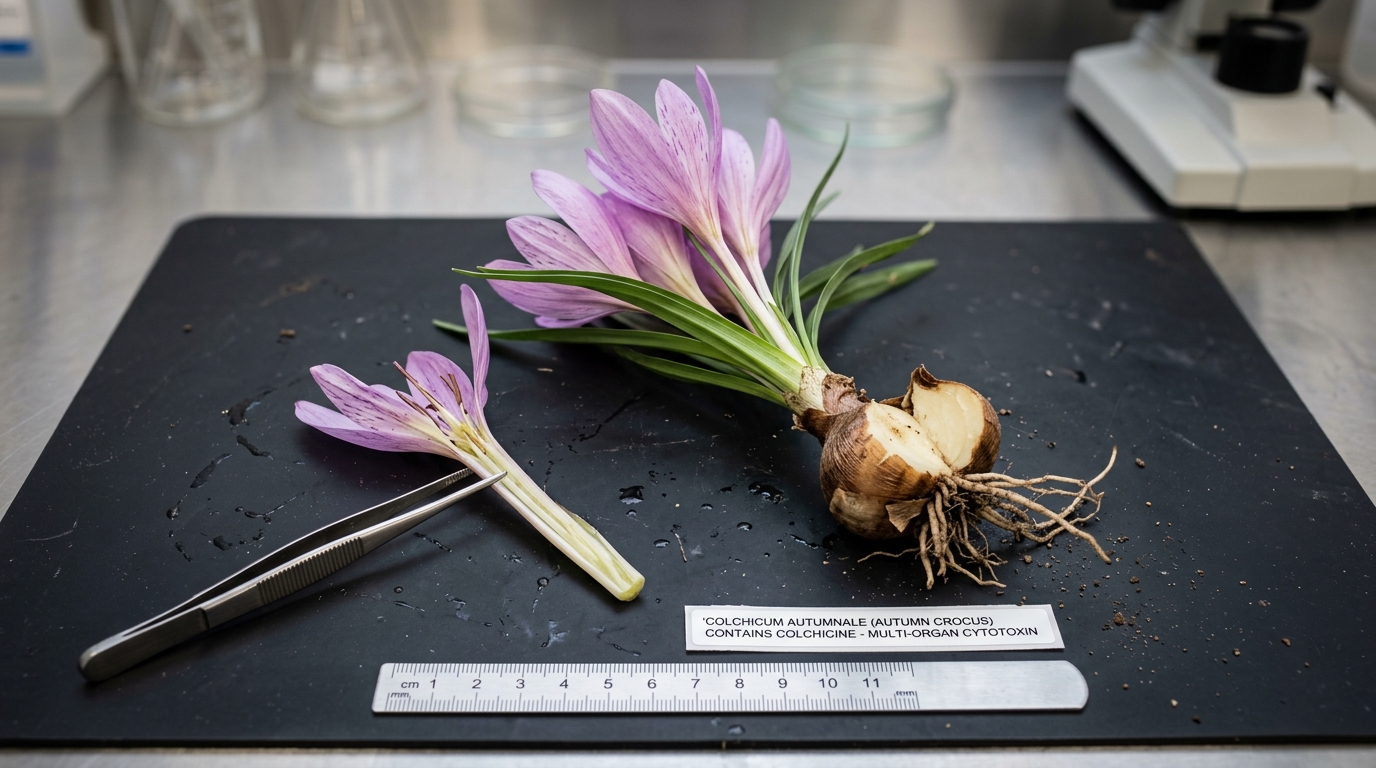
Dog Ate Autumn Crocus: Colchicine Multi-Organ Triage
Clinical Verdict: EXTREMELY FATAL (Widespread Multi-Organ Destruction)
Dogs CANNOT ingest Autumn Crocus. Distinct from the spring crocus, Autumn Crocus contains the potent antimitotic alkaloid colchicine. Ingestion causes catastrophic multi-organ failure and has a high mortality rate.
Toxic Mechanism & Agent
- Toxic Agent: Colchicine and Related Alkaloids
- Mechanism of Action: Binds to tubulin dimers, arresting cellular microtubule assembly and halting mitosis in rapidly dividing cells throughout the bone marrow, gastrointestinal tract, liver, and kidneys.
Clinical Signs & Timeline
- Onset Time: Delayed clinical onset; 2 to 24 hours post-ingestion.
- Primary Symptoms: Severe bloody diarrhea, abdominal collapse, hypovolemic shock, pancytopenia (bone marrow suppression), acute respiratory distress syndrome (ARDS), hepatic and renal failure.
Emergency Triage Protocol
IMMEDIATE ER VISIT (Life-Threatening Emergency)
Immediate aggressive hospital decontamination and supportive therapy. There is no specific antidote; patients require continuous IV fluids, gastrointestinal protectants, broad-spectrum antibiotics, and whole blood/plasma transfusions.
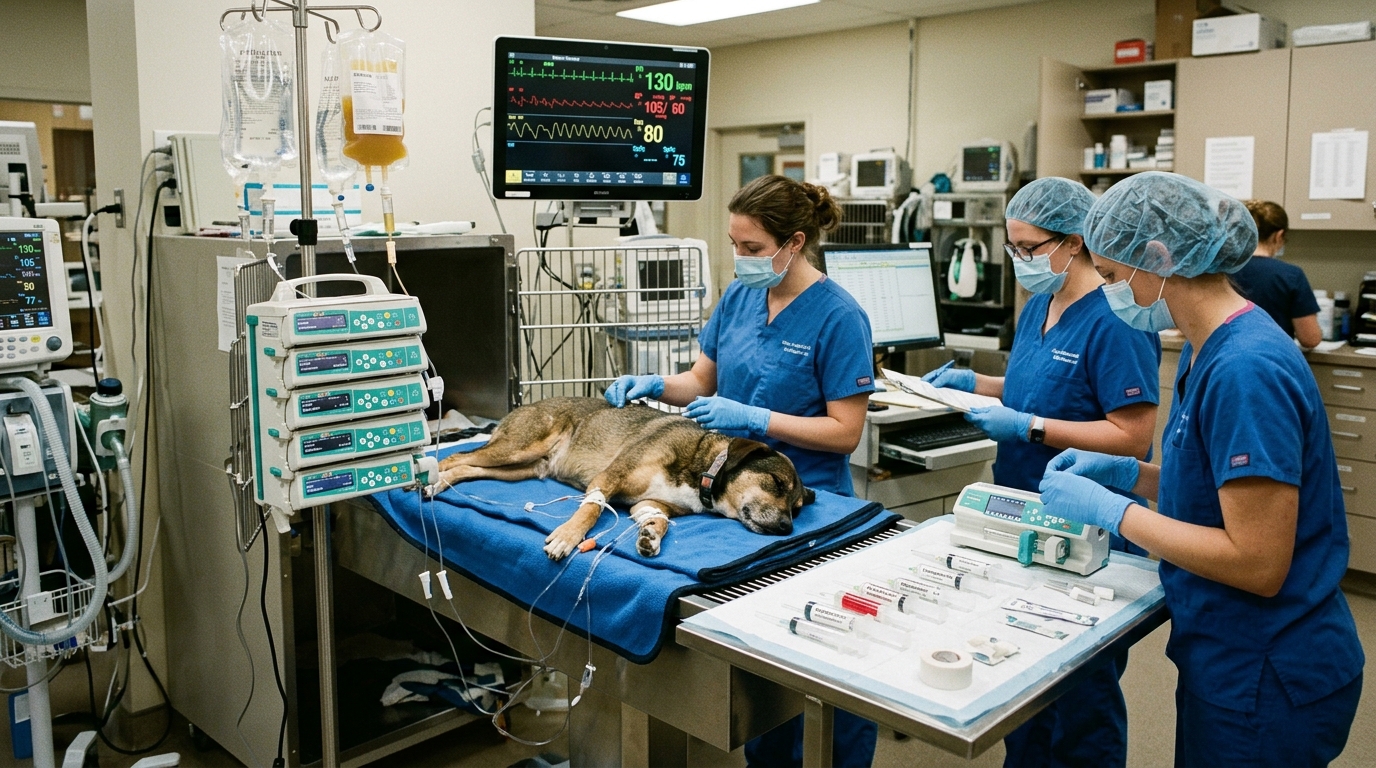
Strict Rule S1 Warning
NEVER induce vomiting at home using hydrogen peroxide without direct instruction from a DVM. Inappropriate emesis can cause fatal aspiration pneumonia, esophageal chemical burns, or gastric rupture. Always seek professional veterinary diagnosis.
Printable tools