This guide is general education for pet owners. If your pet has urgent symptoms, possible poisoning, injury, breathing trouble, collapse, severe pain, or sudden decline, contact a licensed veterinarian or local emergency service.
Editorial standard
How this guide was prepared
Canine Eclampsia—more accurately termed Puerperal Tetany or periparturient hypocalcemia—is an acute, life-threatening metabolic crisis occurring predominantly in small-breed and toy-breed nursing dams (such as Chihuahuas, Yorkshire Terriers, Miniature Pinschers, Shih Tzus, and Toy Poodles) nursing large litters. Presenting most commonly 1 to 4 weeks postpartum when maternal milk production and puppy growth demands peak (though occasionally occurring in late gestation during fetal skeletal mineralization), eclampsia develops when massive mammary export of calcium into milk outstrips intestinal calcium absorption and parathyroid-hormone-mediated osteoclastic bone mobilization. As extracellular ionized calcium plummets below 0.8 mmol/L, neuronal voltage-gated sodium channels become hyperexcitable, progressing rapidly from facial itching and panting to rigid extensor tetany, severe hyperthermia (>105.0°F), and fatal respiratory or cardiac arrest.
Clinical Quick Answer & Immediate Stabilization Protocol
Primary Clinical Directive for Canine Puerperal Tetany (Eclampsia / Periparturient Ionized Hypocalcemia): Suspect puerperal tetany immediately in any nursing or late-term pregnant bitch that develops restlessness, frantic panting, whining, facial rubbing/pruritus, hypersalivation, or a stiff “wooden” stilted gait that escalates within 30 to 60 minutes into generalized tonic-clonic muscle spasms and hyperthermia. Unlike epilepsy, eclamptic dams often remain conscious during tetanic spasms and lack a post-ictal drowsiness phase. Emergency stabilization requires removing the litter from the dam immediately and administering slow intravenous 10% calcium gluconate over 15 to 30 minutes under continuous electrocardiogram (ECG) monitoring, followed by active cooling for hyperthermia, dextrose check, and transition to oral calcium carbonate and vitamin D3 with puppy weaning or supplemental bottle feeding.
Voltage-Gated Sodium Channel Hyperexcitability, Gestational PTH Downregulation & Tetanic Hyperthermia
Extracellular ionized calcium (iCa2+, the biologically active 50–55% fraction of total serum calcium) normally binds to the exterior surface of voltage-gated sodium channels on peripheral motor nerve axons and skeletal muscle sarcolemma, stabilizing the resting threshold potential required to fire an action potential. When massive mammary milk secretion depletes plasma ionized calcium below 0.8–0.9 mmol/L (total serum calcium <6.5–7.0 mg/dL), the resting threshold potential shifts closer to the resting membrane potential. Consequently, peripheral nerves fire spontaneously and repetitively in response to minimal mechanical or auditory stimuli, producing continuous motor unit recruitment, fasciculations, and sustained tetanic muscle contractions.
A widespread nutritional mistake among breeders is supplementing pregnant bitches with calcium powders, cottage cheese, or bone meal during gestation. High dietary calcium during pregnancy keeps serum ionized calcium slightly elevated, which suppresses the chief cells of the parathyroid glands via negative feedback and stimulates thyroid C-cell calcitonin release. When sudden lactational calcium demand hits after whelping, the atrophied parathyroid glands require several days to upregulate Parathyroid Hormone (PTH) synthesis and activate osteoclastic bone resorption and renal 1,25-dihydroxycholecalciferol production—leaving the nursing dam undefended against precipitous hypocalcemic collapse.
- Conscious Tetany vs. Epileptic Seizures: In puerperal tetany, the dam frequently remains alert with wide, dilated pupils and anxious tachycardia while her limbs are locked in rigid extensor spasm, and she rarely loses urinary/fecal sphincter control.
- Malignant Tetanic Hyperthermia (>105.0–107.0°F): Unrelenting whole-body skeletal muscle contraction generates extreme metabolic heat that rapidly induces heatstroke-like disseminated intravascular coagulation (DIC), cerebral edema, and concurrent hypoglycemia.
- Alkalosis-Driven Ionized Calcium Drop: Frantic hyperventilation and panting induce respiratory alkalosis (elevated blood pH), which increases negative charges on serum albumin molecules; albumin binds more free calcium ions, further dropping active ionized calcium even before total calcium falls further.
- Cardiotoxicity of Rapid IV Calcium Boluses: Infusing intravenous calcium gluconate too rapidly causes acute hypercalcemic vagal stimulation and myocardial irritability, manifesting on ECG as sudden bradycardia, shortening of the QT interval, ST-segment elevation, and fatal ventricular fibrillation.
Emergency Triage Matrix: Clinical Presentation & Required Response
| Triage Level | Clinical Signs & Presentation | Immediate Action Protocol |
|---|---|---|
| Tier 1: Immediate Emergency (0–30 Minutes) | Nursing or heavily pregnant bitch with muscle tremors, ear/facial twitching, rigid extended legs, inability to stand, heavy panting with rectal temperature >103.5°F, or seizure-like spasms. | Separate all puppies from the dam immediately, transport the dam to the nearest 24-hour emergency hospital, and administer slow ECG-monitored IV 10% calcium gluconate over 15–30 minutes plus active evaporative cooling. |
| Tier 2: Urgent Same-Day Evaluation (1–4 Hours) | Nursing dam (1–4 weeks postpartum) displaying sudden anxiety, pacing, disinterest in her puppies, intense rubbing of her muzzle/face on the carpet, whining, or mild stiff-legged walking. | Remove puppies for bottle feeding and present the dam for an urgent same-day blood ionized calcium and blood glucose evaluation before full tetanic convulsions begin. |
| Tier 3: Post-Resuscitation Lactation & Weaning Management | Stabilized postpartum dam discharged on oral calcium carbonate and calcitriol/vitamin D after an acute eclampsia episode. | Permanently wean puppies onto gruel if >3–4 weeks old (or suspend nursing for 24 hours and hand-supplement with canine milk replacer if <3 weeks old) while administering divided oral calcium with meals. |
ECG-Guided 10% Calcium Gluconate Infusion, Concurrent Hypoglycemia & Post-Crisis Weaning
In the emergency room, diagnosis is confirmed within minutes using a point-of-care blood gas/electrolyte analyzer measuring ionized calcium (<0.8–1.0 mmol/L); treatment is never delayed for reference laboratory total calcium results. Importantly, because protein-bound calcium fluctuates with serum albumin, correcting total calcium formulas for hypoalbuminemia is unreliable in critical dogs and cats—ionized calcium is the sole definitive standard. Simultaneously, clinicians check capillary blood glucose and core rectal temperature, as intense muscular work frequently depletes hepatic glycogen stores (concurrent hypoglycemia <60 mg/dL) and drives core temperatures above 105.0°F.
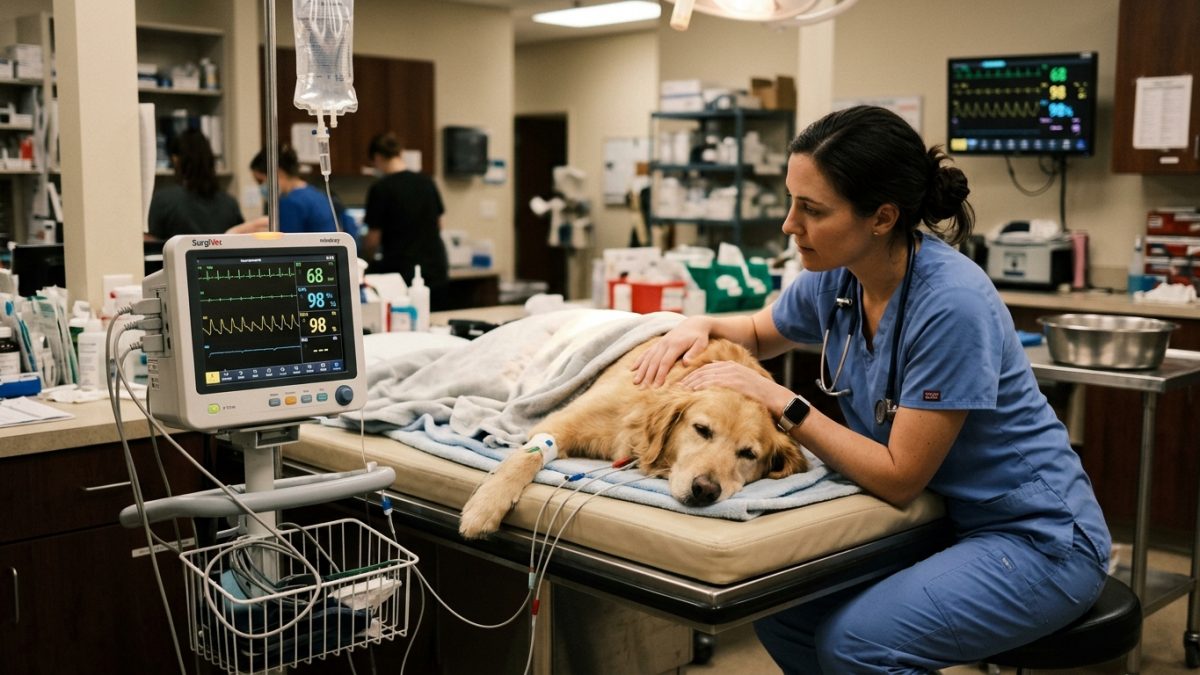
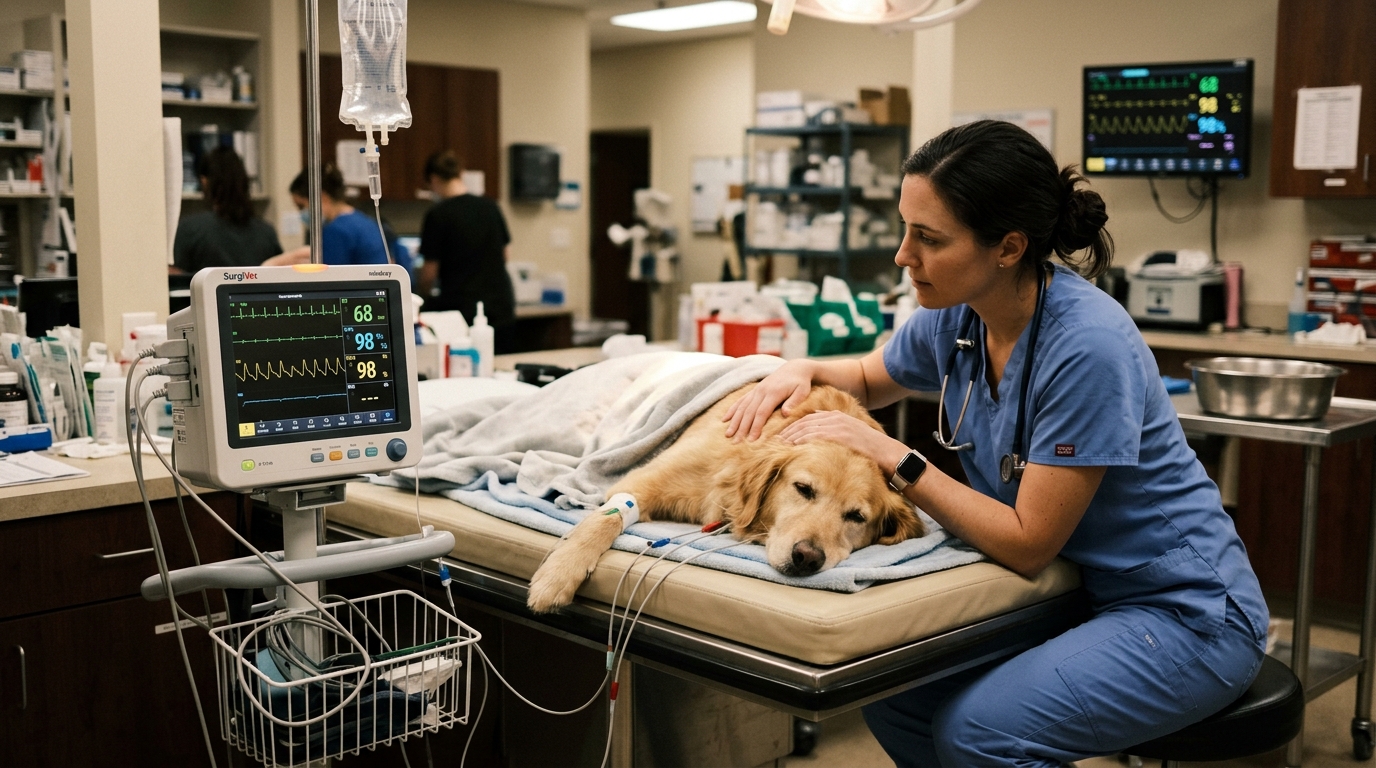
Parenteral rescue utilizes 10% Calcium Gluconate (which contains 9.3 mg of elemental calcium per mL and is far less tissue-necrotizing than 10% calcium chloride, which contains 27.2 mg/mL and causes severe sloughing if perivascular extravasation occurs). The veterinary-calculated weight-specific volume of 10% calcium gluconate is infused intravenously slowly over 15 to 30 minutes while an assistant continuously auscultates the heart and observes the Lead II ECG. If bradycardia (a drop in heart rate >20%), premature ventricular complexes, or QT-interval shortening appears, the infusion is paused immediately until the rhythm normalizes, then resumed at half the previous rate.
- Strict Prohibition of Subcutaneous Calcium Chloride: Never administer calcium chloride subcutaneously, and avoid routine subcutaneous calcium gluconate injections unless diluted 1:1 in 0.9% saline after IV stabilization, as concentrated subcutaneous calcium salts cause sterile abscessation and full-thickness skin necrosis (calcinosis cutis).
- Neurological Lag Despite Normalized Blood Calcium: Although muscle tremors typically cease within 15 minutes of IV calcium gluconate, severely hyperthermic or prolonged tetanic patients may remain obtunded for several hours due to cerebral edema, requiring mannitol or diazepam seizure control.
- 24-Hour Nursing Suspension & Weaning Rule: All puppies must be kept off the dam for at least 12 to 24 hours following an eclamptic crisis and fed warm commercial canine milk replacer (never cow’s milk). If puppies are 3 weeks of age or older, they should be permanently weaned onto puppy starter gruel; if a dam suffers a relapse after resuming nursing, permanent weaning is mandatory regardless of puppy age.
- Preventive Nutritional Strategy for Future Litters: Feed pregnant bitches a balanced, AAFCO-approved growth/all-life-stages puppy diet during the final third of gestation without adding any supplemental calcium powders; begin oral calcium supplementation only after whelping is complete in high-risk toy dams.
Strict Rule S1 Clinical Red Flags: Canine Puerperal Tetany (Eclampsia / Periparturient Ionized Hypocalcemia)
Critical safety boundaries for Canine (Canis lupus familiaris — Postpartum Nursing Small-Breed & Toy-Breed Dams) caregivers:
- Zero Oral Calcium Supplementation During Pregnancy: Never add calcium carbonate tablets, Tums, bone meal, or crushed eggshells to a pregnant dog’s diet prior to giving birth; gestational calcium supplementation suppresses parathyroid hormone release and directly triggers post-whelping eclampsia.
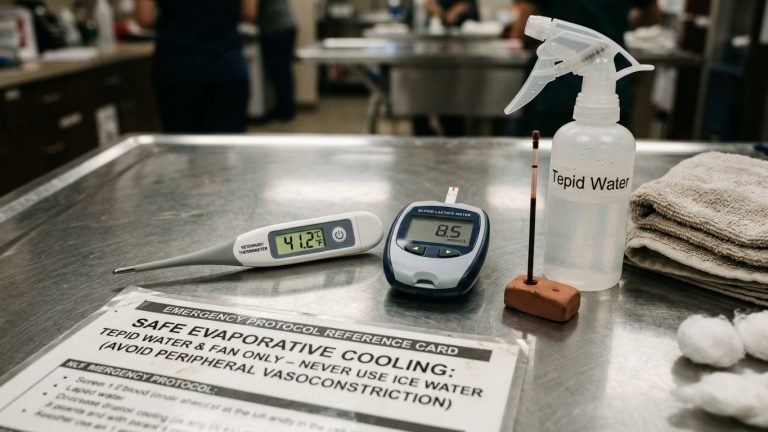
- Zero Ice-Water Immersion for Tetanic Hyperthermia: If a trembling nursing dam feels burning hot, cool her with tepid/cool tap water on her abdomen and paw pads plus a fan during transport—never submerge her in an ice bath, which causes peripheral vasoconstriction and traps core heat.
Clinical Preparation & Biosecurity Action Checklist
- Remove all nursing puppies from the mother dog the instant you observe facial rubbing, nervous pacing, stiff walking, or muscle tremors.
- Keep a sealed can of commercial canine milk replacer powder and sterile feeding bottles/syringes on hand whenever a small-breed dog whelps a litter of 4 or more puppies.
- Feed the lactating mother dog unrestricted (free-choice) portions of an energy-dense, AAFCO-formulated puppy growth diet divided into 3 to 4 meals daily after whelping.
- Begin introducing warm moistened puppy starter gruel to large litters at 3 weeks of age to reduce lactational calcium drain on the dam.
Related Clinical Guides & Triage Protocols
Peer-Reviewed Clinical References & Evidence Grounding
- Periparturient hypocalcemia in dogs: 31 cases (1982-1995) — clinical signs, ionized calcium, and outcomes (opens in new tab) (Journal of the American Veterinary Medical Association (2000) — Landmark clinical study by Drobatz & Casey indexed on NCBI PubMed (PMID: 10961646).)
- Disorders of calcium metabolism in small animal emergency and critical care (opens in new tab) (Veterinary Clinics of North America: Small Animal Practice (2017) — Peer-reviewed critical care electrolyte review indexed on NCBI PubMed (PMID: 28464915).)
- WSAVA Global Nutrition Committee Guidelines on Gestational and Lactational Canine Nutrition (opens in new tab) (World Small Animal Veterinary Association consensus nutritional standards on calcium-to-phosphorus homeostasis in breeding dogs.)
- Merck Veterinary Manual: Eclampsia in Small Animals (Puerperal Tetany) (opens in new tab) (Verified veterinary reference on ionized hypocalcemia, ECG-monitored 10% calcium gluconate infusion, and weaning protocols.)
Source transparency
Reference mix for this guide
Source labels classify the institutional category of the references cited above.