Editorial standard
How this guide was prepared
Scratching is an involuntary, biologically essential behavior that domestic felines must perform daily to maintain musculoskeletal integrity, shed dead claw sheaths, and deposit territorial pheromones. When a cat targets an upholstered armchair or carpet runner, they are not acting out of malice or spite; they are selecting the sturdiest, tallest, and most socially prominent marking post available in their territory.
Clinical Quick Answer & Immediate Actions
Scratching is an involuntary, biologically essential behavior required for feline physical and emotional health. Cats scratch to groom their claws (shedding the dull outer horn sheath), stretch their musculoskeletal system, and mark territory through visible vertical scratches and interdigital pheromone glands located between their paw pads. Successfully protecting furniture requires providing attractive alternatives that match the cat’s preferred substrate, height, and angle, placed directly adjacent to target furniture pieces.
By understanding feline biomechanics and interdigital scent communication, caregivers can seamlessly redirect scratching onto appropriate, attractive substrates without resorting to fear, punishment, or harmful surgical procedures. Contact a veterinarian immediately if your cat displays sudden limping, bleeding from the nail bed, painful swelling of the digits, or acute aggression when their paws are touched.
The Three Inseparable Biological Drivers of Scratching
Understanding feline biology transforms how caregivers approach household scratching. The act of scratching represents an intricate intersection of orthopedic exercise, keratin maintenance, and chemical communication.
1. Claw Health and Ungueal Husk Shedding
Unlike human fingernails which grow continuously from a nail matrix as a flat plate, feline claws grow in concentric, layered sheaths resembling nested cones. As the inner claw grows, the oldest outer stratum corneum layer becomes dull, brittle, and dry. Scratching acts as a mechanical wedge: hooking the sharp tips into woven fibers exerts tension that cleanly fractures and sloughs off the old outer husk, exposing the razor-sharp, freshly formed claw beneath.
2. Musculoskeletal Conditioning and Isometric Extension
During a vertical scratch, a cat digs its claws firmly into a fibrous substrate and pulls backward with significant muscular force. This action engages the deep digital flexor tendons, biceps, triceps, latissimus dorsi, and lumbar spinal erector muscles. It serves as feline isometric resistance training, allowing the animal to stretch after waking, release spinal compression, and maintain shoulder joint flexibility essential for hunting and agile jumping.
3. Visual and Olfactory Pheromonal Communication
Between the digital paw pads of domestic felines lie specialized interdigital sebaceous and eccrine glands (podosebaceous glands). When a cat flexes its toes and rakes down a surface, these glands secrete territorial lipid pheromones that communicate residency, reproductive status, and social presence to other animals. Simultaneously, the prominent shredded claw marks leave a stark visual signpost. Scratching is therefore concentrated at territorial boundaries—doorways, resting perches, and social gathering zones.
Forensic Furniture Audit: Decoding Your Cat’s Exact Preferences
Before purchasing replacement scratchers, audit the specific furniture your cat has targeted. Every shredded armrest, carpet patch, or door molding contains precise diagnostic data regarding preferred orientation, material resistance, and elevation.
| Observed Damage Pattern | Biomechanical Meaning | Ideal Replacement Specifications |
|---|---|---|
| Vertical shreds on the high upper corner of an upholstered sofa arm (24 to 32 inches high). | Prefers full vertical extension with heavy resistance; relies on sturdy furniture mass that does not shift under pulling force. | Heavy-duty vertical post (minimum 32–36 inches high) wrapped in woven sisal fabric, anchored by a wide, solid wood base (16×16 inches minimum). |
| Horizontal fraying on carpet near bedroom doorways or under rugs. | Prefers horizontal or low-angle traction where the entire body weight can be used to brace and rake claws. | Wide, corrugated cardboard scratcher lounge (minimum 18 inches long) or flat sisal floor mats weighted with non-skid rubber backing. |
| Shreds on soft microfibers or woven linen fabrics. | Prefers tightly woven textile fibers that allow claws to penetrate smoothly and catch without snagging or ripping painfully. | Woven sisal fabric (carpeting style) rather than coiled sisal rope. Upholstery fabric wrapped tightly over solid plywood panels. |
| Gouges on solid pine door frames, soft wood moldings, or baseboards. | Prefers rigid, unyielding organic grain that produces acoustic feedback and substantial resistance. | Natural cedar or bark-on soft wood scratching logs, or vertical cedar planks mounted securely to wall studs. |
| Damage concentrated beside the caregiver’s bed or favored armchair. | Social marking: placing visual and scent markers in areas saturated with the caregiver’s scent to establish mutual social security. | Place replacement scratcher immediately in that primary social space; never exile the scratcher to a distant laundry room or basement. |
The Anatomy of an Ideal Scratching Post: Height, Stability, and Substrate
The vast majority of commercially manufactured scratching posts fail because they are designed for human aesthetics rather than feline physics. Understanding three critical engineering criteria ensures your replacement station is actively utilized:
1. Usable Height (The Full Stretch Rule)
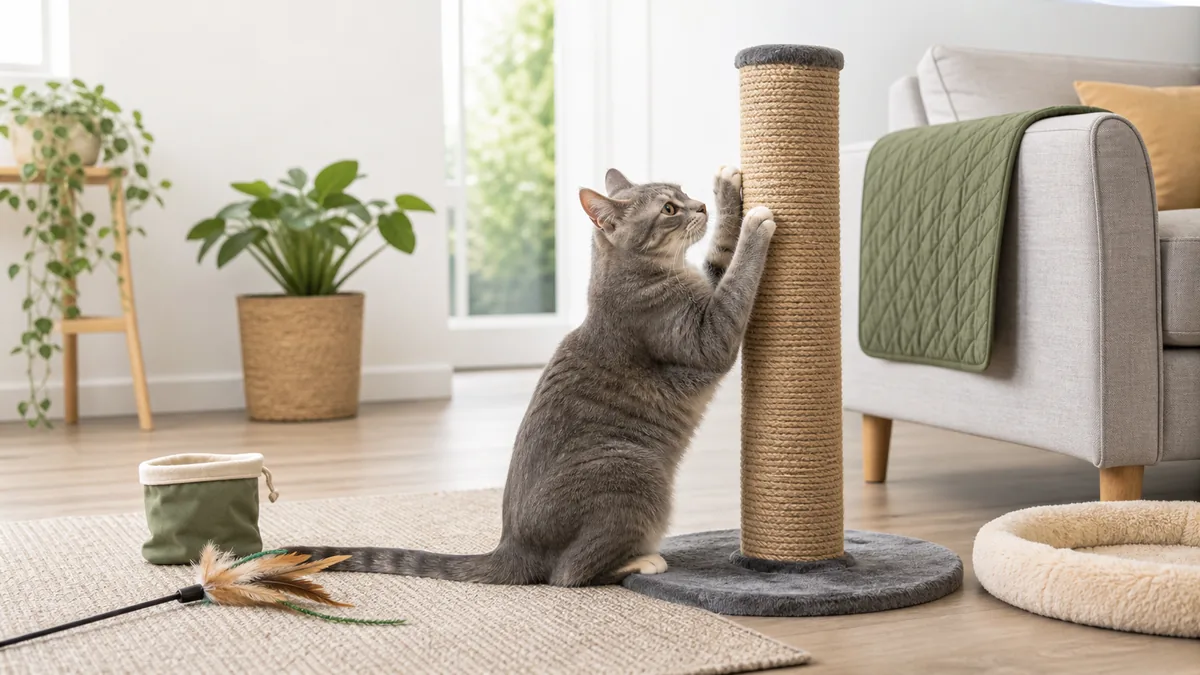
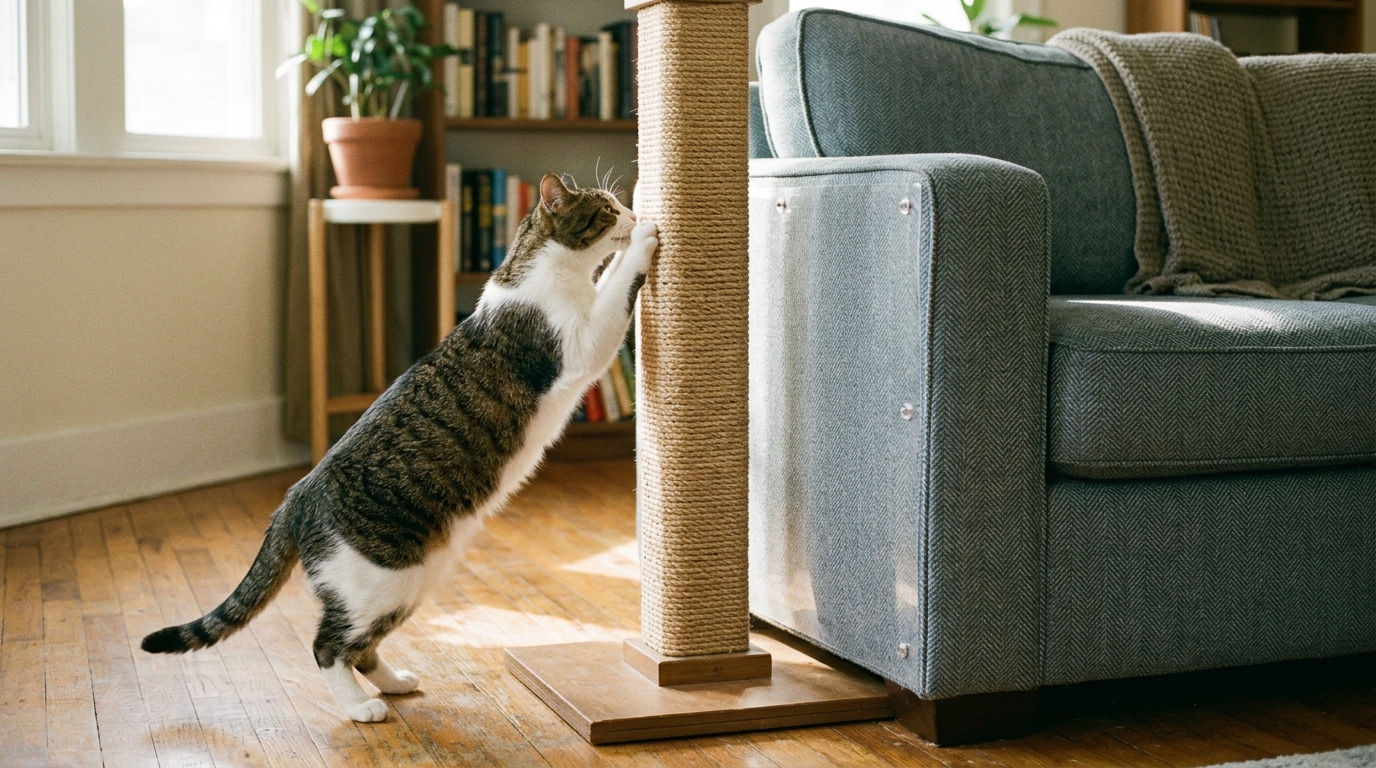
An adult cat must be able to stand completely erect on its hind limbs, reach upward with extended forelegs, and dig its claws into the upper third of the post without running out of scratching material. A standard domestic adult cat reaches 28 to 34 inches during a full stretch. Posts shorter than 30 inches force the cat to hunch or arch uncomfortably, prompting them to abandon the post for the full height of your sofa.
2. Uncompromising Base Stability
When a 10-to-15-pound feline digs its claws into a post and leans back with full body weight, substantial torque is exerted on the base. If the post wobbles by even half an inch, the cat perceives it as structurally unsafe and will never use it again. Choose scratchers with heavy solid-wood bases, or secure wall-mounted vertical panels that bolt into drywall studs.
3. Sisal Fabric vs. Coiled Sisal Rope
While coiled sisal rope is common, many cats dislike it because their claws repeatedly get caught in the horizontal ridges between wraps, preventing a smooth downward stroke. Woven sisal fabric (similar to natural sisal carpeting) is vastly superior: it allows claws to slide cleanly downward while producing an exceptionally satisfying shredding sensation and audible feedback that cats adore.
The Five-Step Stepwise Redirection Protocol
To retrain a cat that has established an habitual furniture-scratching pattern, follow this veterinary behavior modification protocol:
- Position the Alternative Directly at the Crime Scene: Place the new heavy-duty scratcher flush against the exact corner of the furniture the cat has been scratching. Do not place it 5 feet away; it must occupy the physical space the cat naturally approaches upon waking.
- Temporarily Protect the Furniture Surface: Apply clear, medical-grade double-sided cat training tape (such as Sticky Paws) or smooth polycarbonate furniture shields over the shredded upholstery corner. Cats find sticky or ultra-slick surfaces unrewarding to touch, which interrupts the habitual motor pattern.
- Prime the New Station with Olfactory Attractants: Rub organic catnip, silvervine powder (Actinidia polygama), or valerian root vigorously into the sisal fibers. You can also spray Feliway Classic or synthetic feline facial pheromones around the room to reduce underlying territorial anxiety.
- Reward Voluntary Exploration Instantly: Never physically grab your cat’s paws and rub them against the post. This creates fear and tactile resistance. Instead, dangle a feather wand or laser pointer near the post so the cat’s claws naturally make contact with the sisal during play. The moment their claws engage, click or praise and deliver a high-value treat.
- The Micro-Relocation Rule: Once the cat is utilizing the post consistently for 14 consecutive days, you may gradually move the post toward your preferred household location at a rate of no more than 2 to 3 inches per day. If the cat relapses to the furniture, return the post immediately to the previous position.
The Medical Reality of Declawing (Onychectomy): Why It Is Banned
Despite widespread misconceptions, declawing is not a simple cosmetic nail trimming; it is a major, irreversible orthopedic amputation. The American Veterinary Medical Association (AVMA) and the American Association of Feline Practitioners (AAFP) formally condemn elective onychectomy due to profound documented physiological and behavioral harm.
What Onychectomy Actually Involves
A cat’s claw is not an appendage of the skin; it grows directly out of the third digital phalanx (P3), the terminal bone of the feline toe. To permanently remove the claw, a surgeon must amputate the entire distal phalanx, transecting the deep digital flexor tendon, joint capsules, sensory nerves, and collateral ligaments. In human anatomical terms, this is precisely equivalent to amputating each human finger at the first knuckle joint.
Lifelong Chronic Sequelae of Declawing
- Altered Digitigrade Biomechanics: Cats are digitigrade animals, meaning they walk on their toes. Amputating P3 forces the cat to bear weight unnaturally on the severed ends of the second phalanx (P2) or heel pads, inducing chronic compensatory osteoarthritis in the carpal joints, elbows, and lumbar spine.
- Neuropathic Phantom Pain: Surgical nerve damage frequently results in severe neuromas, burning neuropathic pain, and phantom limb sensations that persist for the animal’s entire lifetime.
- Litter Box Aversion and House Soiling: Declawed cats exhibit a 300% higher incidence of chronic litter box avoidance. Digging in conventional clay or gravel litter creates agonizing pressure against amputated toe bones, conditioning the cat to seek soft substrates like carpets, laundry piles, or beds.
- Increased Biting Behaviors: Deprived of their primary defense mechanism, declawed cats demonstrate significantly higher rates of defensive biting. Because they can no longer deliver a warning claw swat, they escalate directly to severe bite wounds when stressed.
Cooperative Care: A Fear-Free Guide to Trimming Claws at Home
Regular claw trimming reduces household furniture wear by removing the sharp, hooked tip of the claw without interfering with normal biomechanics or scent marking. By employing Fear-Free cooperative conditioning, trimming becomes a stress-free bonding routine:
- Desensitize Paw Handling: During relaxed cuddle sessions, gently stroke the cat’s shoulders, moving down toward the forelegs. Touch the paw for 1 second, then immediately offer a lick of churu puree or chicken baby food. Repeat over several days until the cat willingly extends its paws.
- Condition the Pad Press: Gently press your thumb on top of the toe and your index finger on the digital paw pad to gently extend the claw. Reward with a treat and release immediately.
- Introduce the Trimmer Sound: Let the cat sniff the stainless steel trimmers. Clip a piece of uncooked dry spaghetti near the cat’s ear to habituate them to the sharp snapping sound, pairing each snap with a treat.
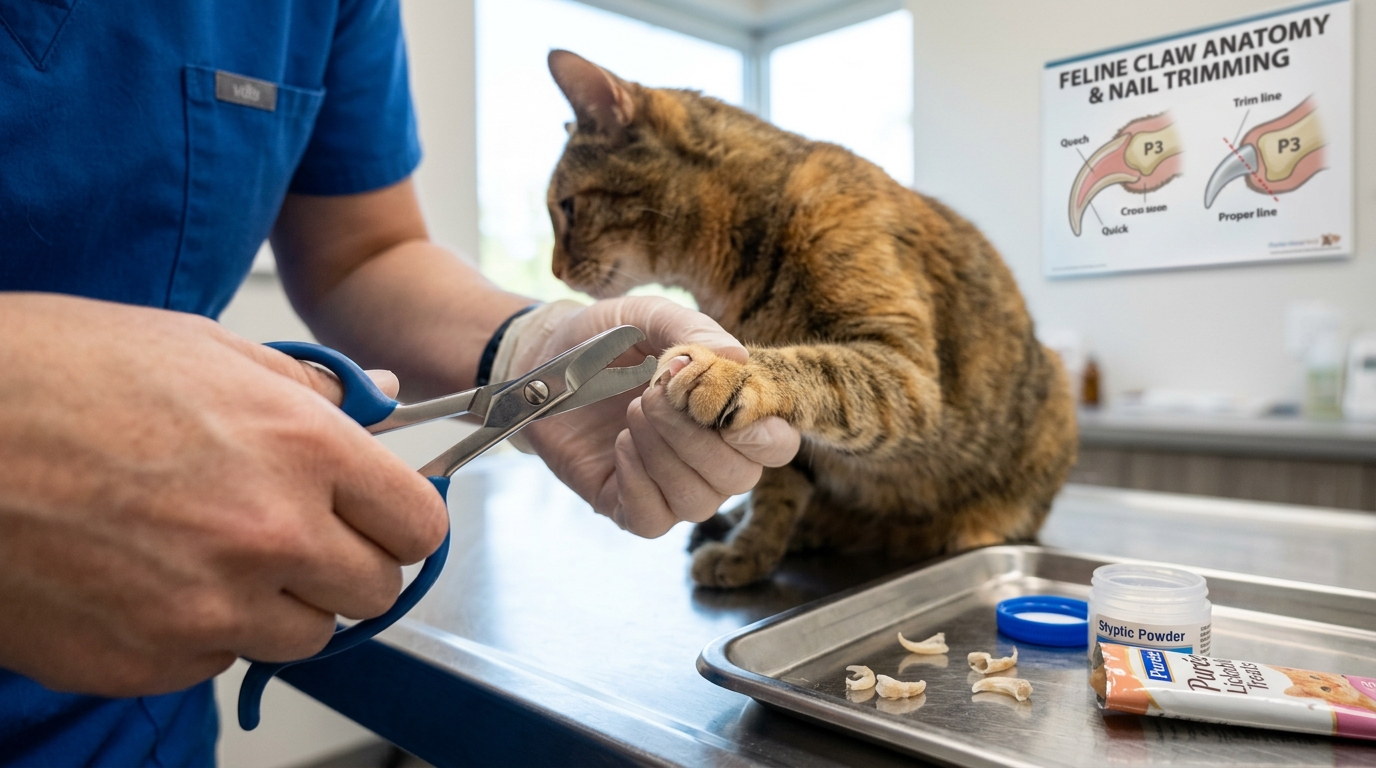
- Trim the Clear Tip Only: Inspect the extended claw under bright daylight. Locate the quick—the pink triangular vascular core containing nerves and blood vessels. Position your trimmers at least 2 millimeters past the pink zone, cutting solely through the translucent curved tip.
- One Claw at a Time: Never force a cat to endure all ten front claws in a single wrestling match. Trim one or two claws while the cat happily licks a treat from a silicone mat, then stop. Conclude every session on an overwhelmingly positive note.
Multi-Cat Households: Resource Defense and Boundary Scratching
In homes with multiple felines, scratching serves an intensified territorial function. When cats feel insecure regarding territory or social hierarchy, scratching frequency near shared doorways, feeding stations, and stairways escalates dramatically.
To eliminate inter-cat conflict and territorial competition, follow the N+1 Scratching Formula: provide one dedicated, high-quality scratching post per cat, plus one extra station in an independent room. Ensure stations are placed along separate travel paths so one confident cat cannot block access to scratching outlets.
When to Seek Veterinary Care for Scratching Changes
Contact a veterinarian immediately if your cat displays sudden limping, bleeding from the nail bed, painful swelling of the digits, or acute aggression when their paws are touched. In older felines, sudden changes in scratching habits often indicate medical pathology.
Seek prompt veterinary advice for any sudden cessation of grooming, overgrown curling claws penetrating paw pads, or signs of feline osteoarthritis affecting mobility. Feline degenerative joint disease (DJD) affects over 90% of cats over 12 years of age. An arthritic cat may stop using vertical posts because rear-limb extension causes severe hip or lumbosacral pain; transitioning to a gentle, low-incline horizontal scratcher can instantly restore comfort and protect your home.
For additional feline environmental strategies, consult our guide to multi-cat home setup and resource guarding, and review our clinical framework for meeting natural indoor cat enrichment needs.
Clinical Practice Tool: Cat Enrichment Rotation Calendar
Coordinate vertical scratching posts, tactile substrates, and interactive wand play routines with our printable Cat Enrichment Rotation Calendar. Download and print your copy of the Cat Enrichment Rotation Calendar, or explore all practical pet care guides in the NewsPet Resource Center.
Frequently Asked Questions
Why do cats scratch furniture and upright household surfaces?
Scratching is an essential physiological behavior that sheds old outer claw sheaths, marks territory with interdigital scent glands, and provides vital full-body spinal and forelimb muscle stretching.
How can caregivers effectively redirect a cat from scratching valuable furniture?
Place sturdy, tall scratching posts (at least 32 inches high to permit full stretch) made of sisal rope directly adjacent to targeted furniture, and make the furniture temporarily unappealing using double-sided sticky tape or smooth blankets.
Why is declawing strongly opposed by veterinary medical associations?
Declawing is an elective partial digit amputation of the third phalanx bone (equivalent to amputating human fingertips at the first knuckle). It frequently leads to chronic phantom nerve pain, early onset arthritis, and increased biting behaviors.
Sources
Sources checked: September 8, 2026.
- American Association of Feline Practitioners (AAFP) & ISFM: Feline Environmental Needs Guidelines
- American Veterinary Medical Association (AVMA): Welfare Position on Feline Declawing (Onychectomy)
- American Society for the Prevention of Cruelty to Animals (ASPCA): Managing Destructive Scratching in Cats
- Merck Veterinary Manual: Feline Territorial Marking and Scratching Behaviors
- Cats Protection UK: Understanding Feline Scratching Needs and Claw Care
Emergency Triage Matrix: Clinical Presentation & Required Response
| Triage Level | Clinical Signs & Presentation | Immediate Action Protocol |
|---|---|---|
| Tier 1: Immediate Emergency (0–2 Hours) | Active profuse hemorrhage from a torn claw, nail torn completely from the digital nail bed, or claw avulsion with exposed distal phalanx bone following entanglement in fabric. | Immediate veterinary emergency care; digital nerve block, surgical claw excision or debridement, sterile bandaging, and systemic analgesia. |
| Tier 2: Urgent Veterinary Care (Same-Day) | Ingrown claw puncturing the digital paw pad with swelling, purulent discharge, or limping; or sudden frantic clawing accompanied by tail lashing and hyperesthesia. | Same-day veterinary examination; professional claw clipping, surgical removal of embedded claw tips, antiseptic soaking, and systemic antimicrobial therapy. |
| Tier 3: Home Monitoring & Scheduled Care | Healthy cat scratching upholstered sofa corners, carpets, or doorframes without lameness, bleeding, or distress. | Install heavy, non-wobble vertical scratching posts directly in front of targeted furniture, apply double-sided sticky tape temporarily, and reward post usage with catnip or treats. |
Rule S1 Boundaries & Feline Claw Management Warnings
Ethical and medical veterinary standards govern feline claw management:
- NEVER declaw (onychectomy) a cat to protect household furniture: Onychectomy is not a nail trim; it is ten to eighteen amputations of the third phalanx (distal toe bones), leading to chronic neuropathic pain, flexor tendon contracture, chronic arthritis, and severe litter box avoidance.
- NEVER use water spray bottles, shouting, or physical punishment: Punishment does not stop the biological need to scratch; it damages the feline-human bond, elevates urinary cortisol, and causes the cat to scratch when the owner leaves the room.
- NEVER cut into the vascular quick during home claw trims: Cutting the digital blood vessel and nerve triggers sharp pain, persistent bleeding, and severe fear-conditioning that makes future nail maintenance impossible.
- NEVER purchase lightweight or wobbly scratching posts: If a post tips, wobbles, or collapses during a full-weight stretch, the cat experiences acute fear and will permanently revert to sturdy, immovable sofa arms.
Caregiver Scratching Redirection Action Checklist
- Determine the cat’s preferred posture (vertical stretch, horizontal carpet, or diagonal ramp) and favorite texture (woven sisal, cardboard, softwood).
- Position a tall (minimum 32-inch), heavy-base, non-wobbly post directly beside the furniture piece currently being scratched.
- Apply double-sided sticky tape or smooth furniture protectors over the sofa corner to make it tactilely unappealing.
- Rub fresh organic catnip, silver vine, or drag a feather wand across the new scratching post to encourage initial claw engagement.
- Trim the sharp distal tips of claws every 2 to 3 weeks using specialized feline nail clippers, staying well clear of the pink vascular quick.
Related Clinical Guides & Tools
Peer-Reviewed Clinical References & Evidence Grounding
- PMID: 21243990: Cat-scratch Disease (Am Fam Physician, 2011) (opens in new tab)
- PMID: 11189710: Cat-scratch disease (Rev Sci Tech, 2000) (opens in new tab)
- PMID: 29489252: Cat Scratch Disease (Veterinary Journal, 2025) (opens in new tab)
- mdpi.com (opens in new tab)
Printable tools
Download the matching worksheet
Source transparency
Reference mix for this guide
Source labels describe the type of organization behind each reference; they are not a claim that any outside organization reviewed this article.
- American Association of Feline Practitioners (AAFP) & ISFM: Feline Environmental Needs Guidelines Veterinary organization · catvets.com
- American Veterinary Medical Association (AVMA): Welfare Position on Feline Declawing (Onychectomy) Veterinary organization · avma.org
- American Society for the Prevention of Cruelty to Animals (ASPCA): Managing Destructive Scratching in Cats Animal welfare nonprofit · aspca.org
- Merck Veterinary Manual: Feline Territorial Marking and Scratching Behaviors Veterinary organization · merckvetmanual.com
- Cats Protection UK: Understanding Feline Scratching Needs and Claw Care Reference source · cats.org.uk
- Indoor Cat Enrichment: Build a Home That Meets Nat Reference source · newspet.net
- Cat Litter Box Problems: Causes & Solutions (V Reference source · newspet.net
- Multi-Cat Home Setup: How to Reduce Conflict and R Reference source · newspet.net